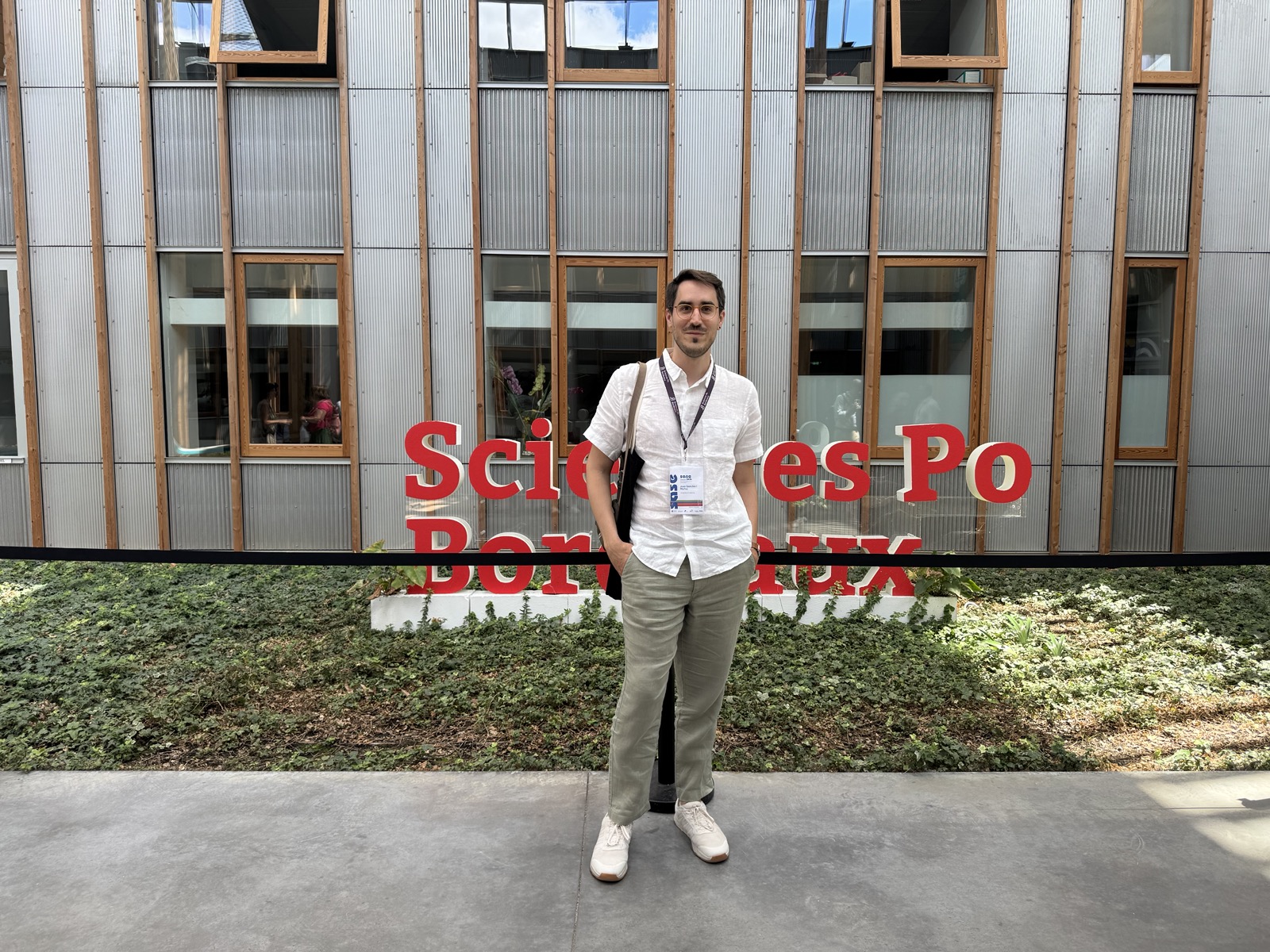
Econcult professor and researcher Joan Sanchis take part in the annual conference of the Society for the Advancement of Socio-Economics (SASE), which will be held from 1 to 4 July at the Sciences Po Bordeaux campus in France.
Econcult has presented in the SASE annual conference at Sciences Po Bordeaux
Econcult professor and researcher Joan Sanchis has presented a paper on working time reduction, the right to time and cultural participation.
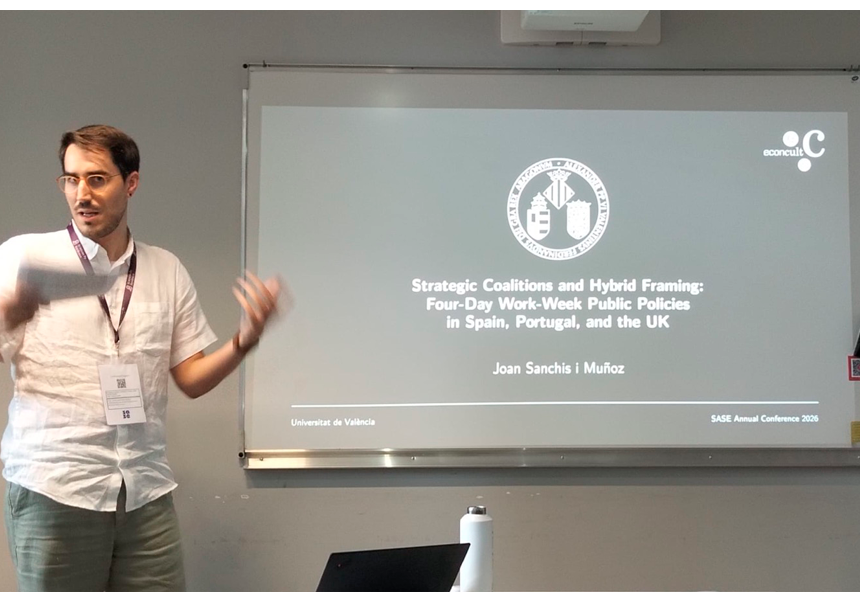
Econcult professor and researcher Joan Sanchis has participated in the annual conference of the Society for the Advancement of Socio-Economics (SASE), which will be held from 1 to 4 July at the Sciences Po Bordeaux campus in France.
Founded in 1989, SASE is an international and interdisciplinary organisation with members in more than fifty countries across five continents. It brings together disciplines such as economics, sociology, political science, management, psychology, law, history and philosophy, and also involves professionals from the business sector and policymakers from public administrations and international organisations.
Its annual conference is one of the most relevant international events in the interdisciplinary field connecting economics, sociology and political science. In this 38th edition, the conference is entitled “Fighting Divisions: Conflict and Power in a Post-Globalisation Order”.
Joan Sanchis has presented a paper on 1 July at the specialised mini-conference on working time reduction. Based on his doctoral thesis, the paper starts from the idea that the right to time is a necessary condition for cultural life: having free time makes it possible to meet cultural needs and nourish cultural consumption.
From this perspective, he argues that reducing working hours can act as a stimulus both for citizens’ cultural participation and for the creative sectors.