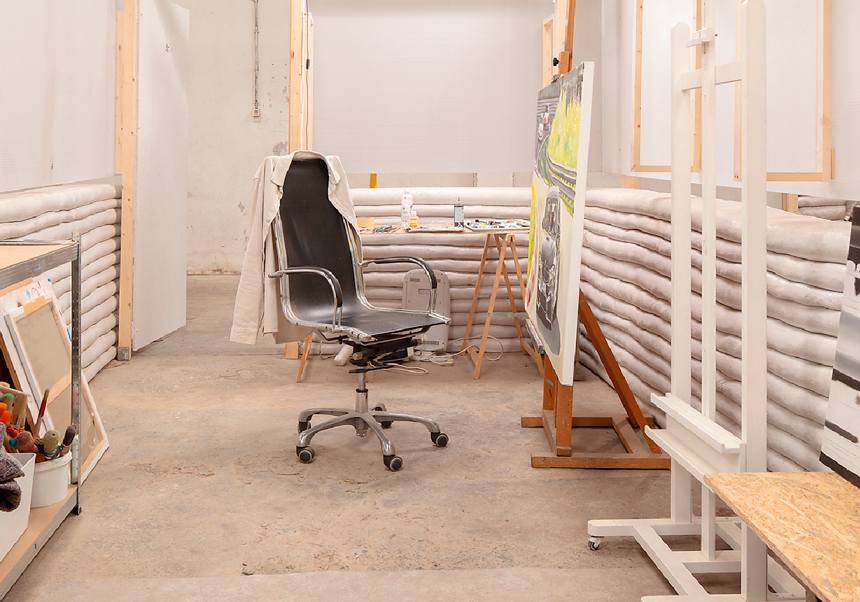
The ESPACIOS Chair of the University of Valencia will hold the event “Beyond the Museum / Urban Cultural Infrastructures: Between Fragility and New Strategies” on 12 June 2026, a meeting that will bring together researchers, professionals and cultural project leaders to reflect on the material conditions that make contemporary cultural production possible and on the challenges faced by independent, community-based and local cultural spaces.
ESPACIOS Chair · Econcult
The ESPACIOS Chair opens a debate on urban cultural infrastructures beyond major cultural facilities
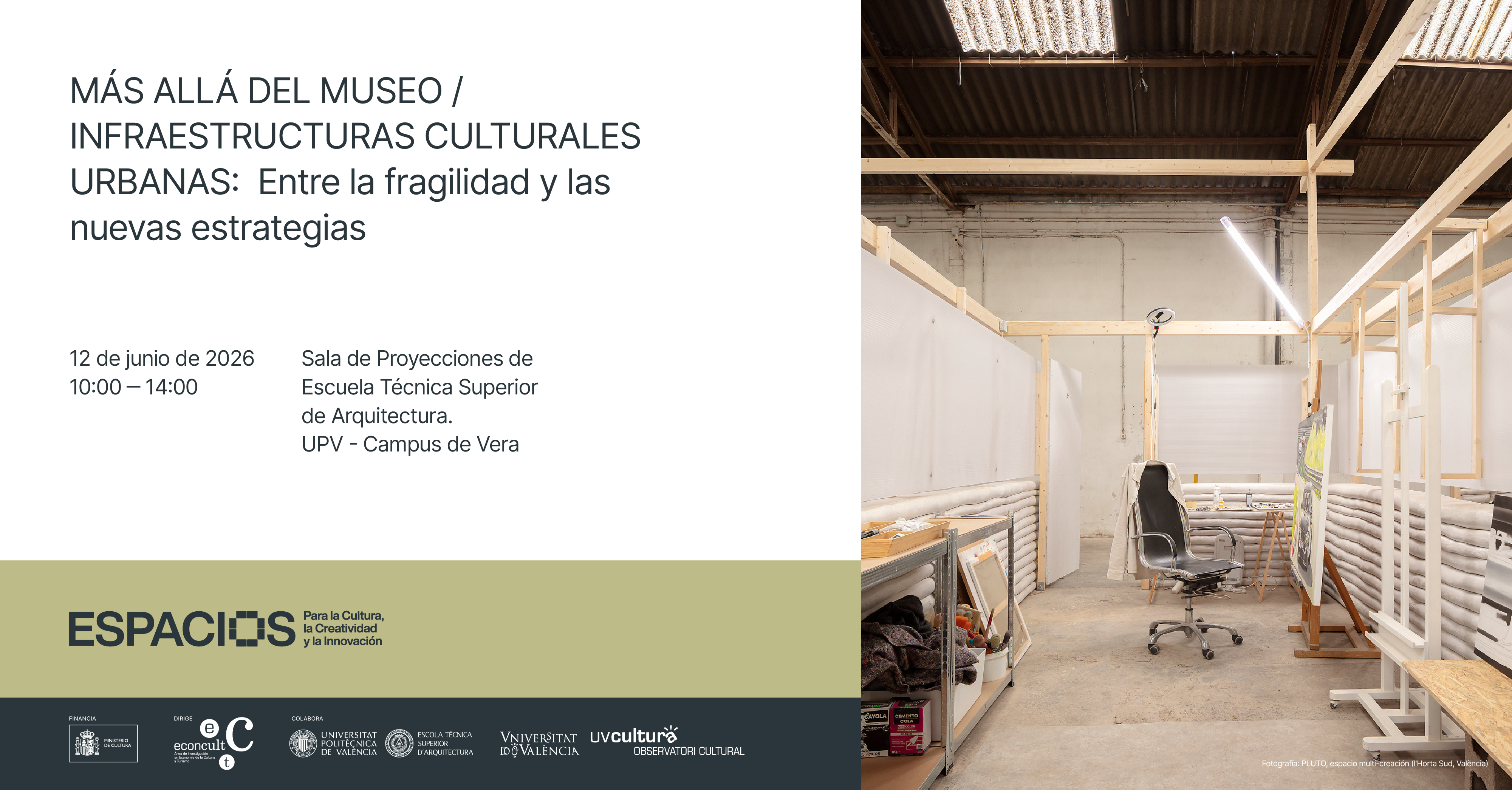
The ESPACIOS Chair of the University of Valencia will hold the event “Beyond the Museum / Urban Cultural Infrastructures: Between Fragility and New Strategies” on 12 June 2026, a meeting that will bring together researchers, professionals and cultural project leaders to reflect on the material conditions that make contemporary cultural production possible and on the challenges faced by independent, community-based and local cultural spaces.
The activity will take place from 10:00 a.m. to 2:00 p.m. in the Screening Room of the School of Architecture of the Universitat Politècnica de València (Vera Campus). The event is organised by the ESPACIOS Chair of the University of Valencia, funded by the Spanish Ministry of Culture and promoted by the Econcult research unit, in collaboration with the School of Architecture of the UPV and the Cultural Observatory of the University of Valencia.
The initiative starts from a simple suspicion: perhaps we are looking too much at large cultural containers and too little at the material conditions that make culture possible in a broad sense.
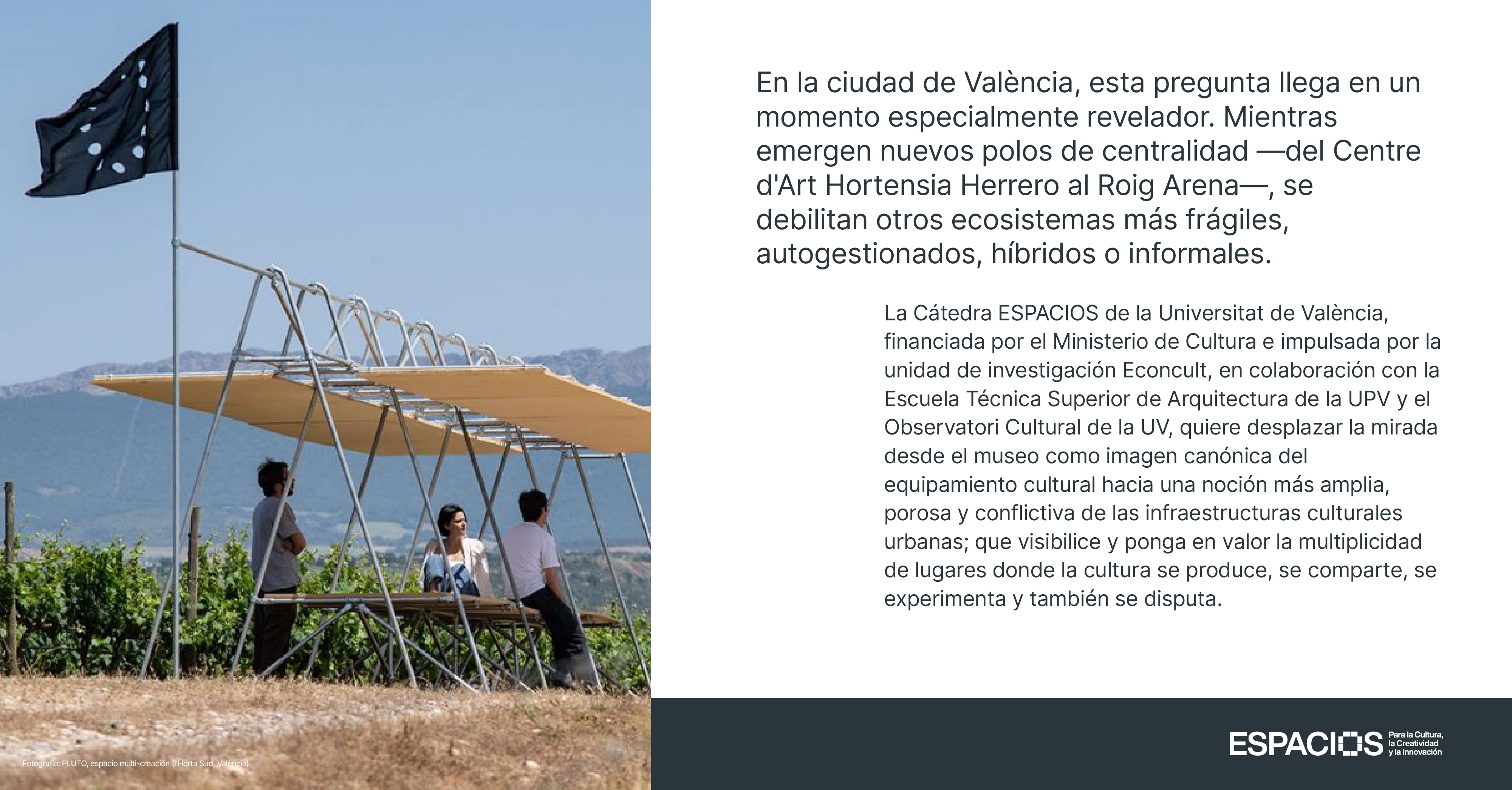
In the city of València, this question arrives at a particularly revealing moment. While new poles of centrality are emerging —from the Centre d'Art Hortensia Herrero to the Roig Arena—, other more fragile, self-managed, hybrid or informal ecosystems are weakening.
The ESPACIOS Chair of the University of Valencia, funded by the Spanish Ministry of Culture and promoted by the Econcult research unit, in collaboration with the School of Architecture of the UPV and the Cultural Observatory of the UV, seeks to shift the focus from the museum as the canonical image of cultural facilities towards a broader, more porous and more conflictive notion of urban cultural infrastructures; one that makes visible and values the multiplicity of places where culture is produced, shared, experienced and also contested.
Programme
Nuria Matarredona (ETSA-UPV). Welcome and introduction to a meeting that will bring together researchers, practitioners and cultural project leaders to reflect on the material conditions that make contemporary cultural production possible, as well as on the challenges faced by independent, community-based and local cultural spaces.
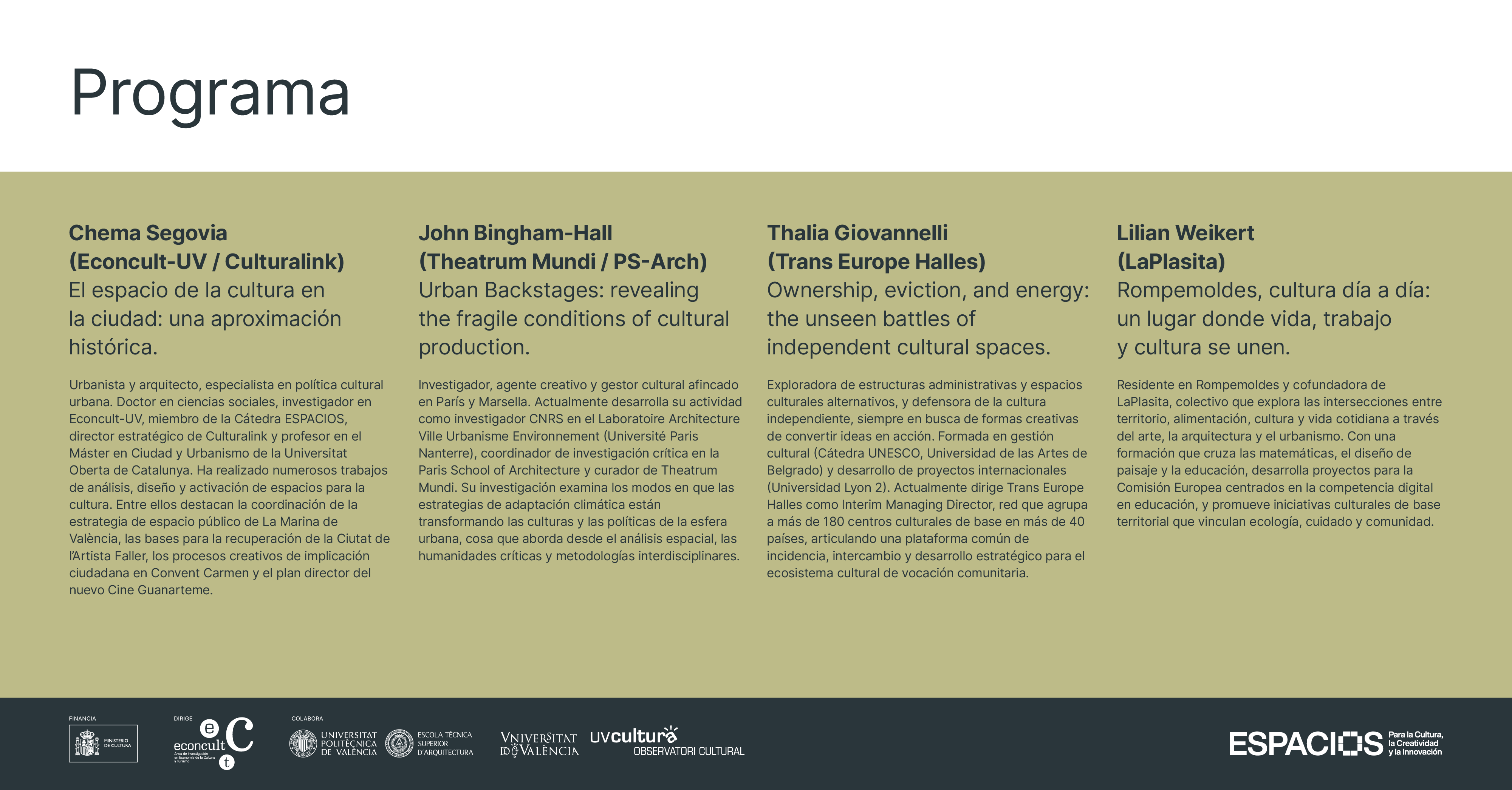
Chema Segovia
The space of culture in the city: a historical approach.
An urban planner and architect specialising in urban cultural policy. He holds a PhD in Social Sciences, is a researcher at Econcult-UV, a member of the ESPACIOS Chair, strategic director of Culturalink and lecturer in the Master's Degree in City and Urban Planning at the Universitat Oberta de Catalunya.
He has carried out numerous projects involving the analysis, design and activation of spaces for culture. These include the coordination of the public space strategy of La Marina de València, the foundations for the recovery of the Ciutat de l’Artista Faller, creative processes of citizen engagement at Convent Carmen and the master plan for the new Cine Guanarteme.
John Bingham-Hall
Urban Backstages: revealing the fragile conditions of cultural production.
A researcher, creative agent and cultural manager based in Paris and Marseille. He currently works as a CNRS researcher at the Laboratoire Architecture Ville Urbanisme Environnement (Université Paris Nanterre), Critical Research Coordinator at the Paris School of Architecture and curator of Theatrum Mundi.
His research examines the ways in which climate adaptation strategies are transforming the cultures and politics of the urban sphere, an issue he approaches through spatial analysis, critical humanities and interdisciplinary methodologies.
Thalia Giovannelli
Ownership, eviction, and energy: the unseen battles of independent cultural spaces.
An explorer of administrative structures and alternative cultural spaces, and an advocate for independent culture, always seeking creative ways to turn ideas into action.
She trained in cultural management (UNESCO Chair, University of Arts in Belgrade) and international project development (Université Lyon 2). She currently leads Trans Europe Halles as Interim Managing Director, a network that brings together more than 180 grassroots cultural centres in more than 40 countries, articulating a common platform for advocacy, exchange and strategic development for the community-oriented cultural ecosystem.
Lilian Weikert
Rompemoldes, culture day by day: a place where life, work and culture come together.
A resident of Rompemoldes and co-founder of LaPlasita, a collective that explores the intersections between territory, food, culture and everyday life through art, architecture and urbanism.
With a background that crosses mathematics, landscape design and education, she develops projects for the European Commission focused on digital competence in education, and promotes place-based cultural initiatives that connect ecology, care and community.
Through this set of perspectives, the event aims to generate a space for debate on the fragility, sustainability and new strategies of contemporary urban cultural infrastructures, as well as to help make visible the diversity of spaces and practices that make the cultural life of cities possible.
Links: