

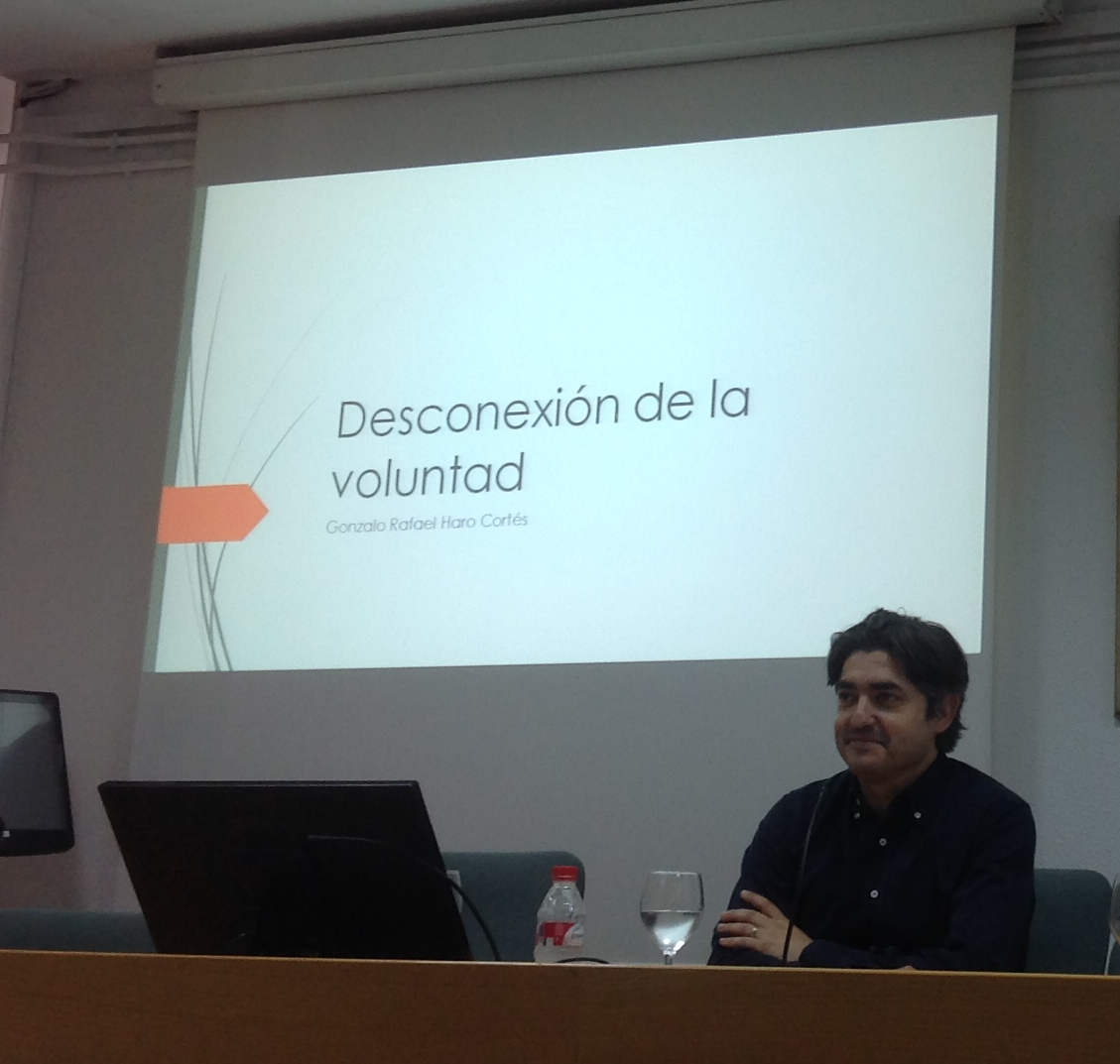
Dr Gonzalo Haro is a Psychiatrist and Adjunct Professor. Department of Medicine. CEU Cardenal Herrera University. Castelló de la Plana. Member of the Addictive Disorders Network.
He presented a clinical case that he is taking care of in the Psychiatry unit, in order to show how difficult it is to rehabilitate the human encephalon. He signaled that the conjunction of social, medical and affective interventions associated to biological factors influence the neurological development affecting the activity of the individual. The patient, treated for detoxification, had previously suffered an intervention that disconnected the limbic area, isolating the emotions of the executive control, presenting mismatch and problematic situations, being very relevant the difficulty to delay the immediate reinforcement and learn from fear.
He explained that motivation, as a force to activate and direct the conduct is related to the dopaminergic system. The nucleus accumbens, target structure of both the dopamine and of the drugs, would act as a bridge to reach the objectives with all the strength necessary (dopaminergic activation) and using the previous experience (connection with the amygdala).
From other perspectives and in other times the “willingness” made reference to the concept of motivation; will as an indication of the capacity to control the conduct and strive to achieve it.
What happens when the brain presents a willingness disconnection? How is it restructured? He highlighted the importance of a multidimensional and multidisciplinary treatment, as well as the need to use tools that permit to assess the intervention they are helping to perform. He pointed out that the inhibition of the shock response (Pre-pulse inhibition Test [PPI]) is used as a psychophysiological indicator, as the inhibition value that the subject is carrying out is related to alterations produced by the drug consumption or psychiatric diseases".



