.jpeg)
The Family Business Chair at the University of Valencia (CEFUV) highlights the importance of communication, mutual trust, and the professionalization of family owners who are not involved in the day-to-day management of the business.
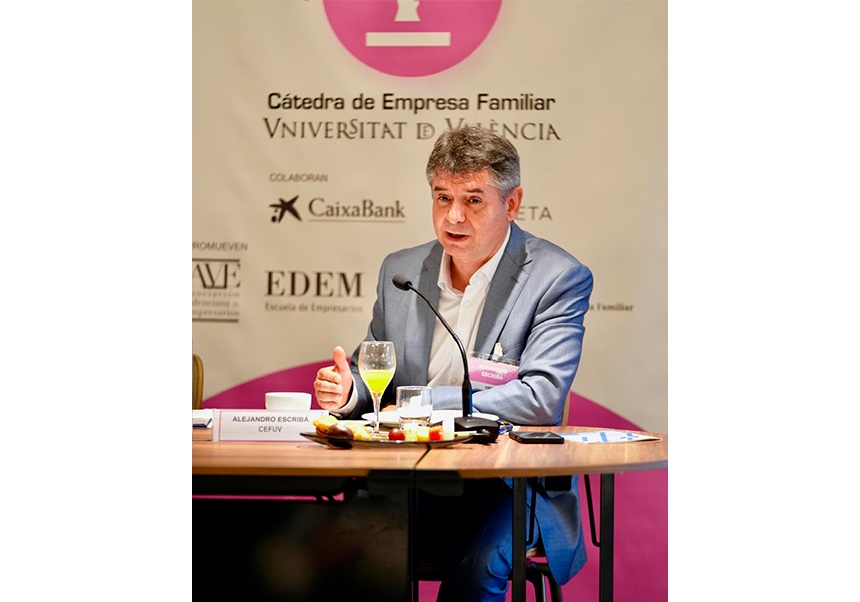
The continuity of a family business does not depend solely on the success of those who take charge of its daily management. A fundamental, yet often invisible, pillar lies in those family members who, while not holding managerial or operational positions, share ownership, legacy, and transgenerational responsibility. With this premise in mind, the Family Business Chair at the University of Valencia (CEFUV) hosted a new working breakfast, providing a forum for analysis and discussion that shed light on the indispensable role and perspective of non-managing family shareholders.
On this occasion, Laura Pascual (Guzmán Global) and Javier Vallejo (Isaval Global) took part in a discussion moderated by Alejandro Escribá, Director of CEFUV.
During the event, participants agreed that harmony and strong relationships among family shareholders are essential assets that positively influence the company’s day-to-day operations. To achieve this balance, they emphasized the need for ongoing communication, full transparency, and a clear strategic roadmap. In this way, a relationship of mutual trust is created in which the management team feels supported in carrying out its responsibilities, while non-managing shareholders gain peace of mind and confidence in the company’s direction.
Another major topic discussed was the promotion of a sense of belonging and pride in the family legacy. Participants highlighted the effectiveness of creating spaces for interaction that combine information sharing, active listening, and informal activities aimed at transmitting family values. They also stressed the importance of institutionalizing governance bodies such as the Family Council. In addition, the discussion underscored the value of professionalized decision-making processes and the need to engage future generations through training programs and internships that prepare them to become responsible owners and, potentially, future executives.
Finally, the session explored the prevention and management of internal disagreements. Participants emphasized the importance of normalizing conflict as an inherent aspect of any organization and ensuring that mechanisms for conflict resolution are established in advance. In this regard, they concluded that observations made by family members who are not involved in management should always be viewed as cooperative and constructive feedback, aimed at integrating different perspectives to support the continuous improvement of the business project, which should also strive to generate a positive and meaningful impact on society.
Images:

.jpeg)
.jpeg)
.jpeg)
.jpeg)