On 6 October 2004 is held at the Aula Magna of La Nau the discussion event: «Valencia-Alemania: Irradiación cultural y viaje» (‘Valencia-Germany: cultural irradiation and travel’), an initiative promoted by the Grupo Oswald, preceding the current lines of research developed by RIALE, in cooperation with the Office of the Vice-Principal for International Relations at the Universitat de València, and the Johannes Gutenberg-Universität Mainz.
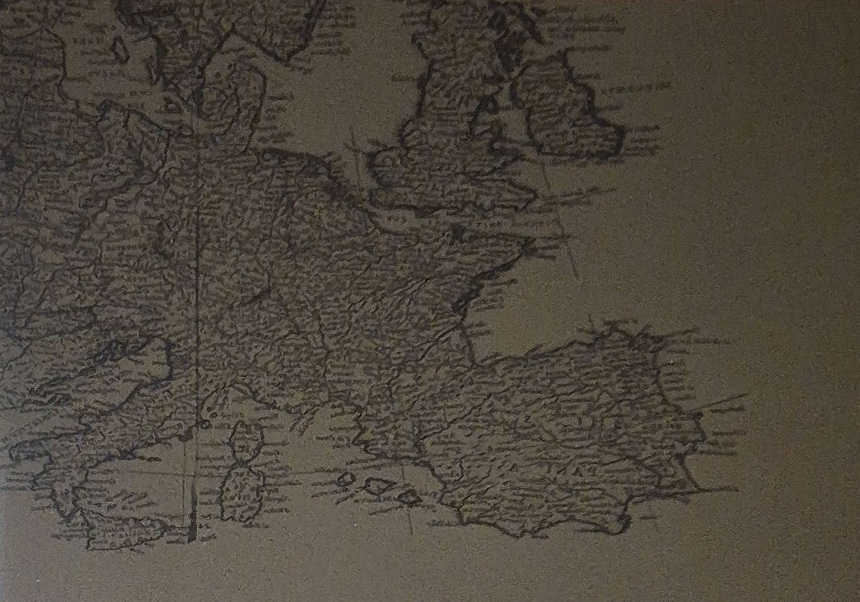
The event is organised in the frame of the celebrations of the cooperation agreement between both universities, and it coincides with the inauguration of the Viajar para saber (‘Travel to know’) exhibition, focused on the importance of travelling and cultural exchange for the construction of European knowledge.
The meeting is intended to reflect on historical and cultural relationships between Valencia and Germany, analysing several intellectual, academic, and human links that have connected both spaces throughout centuries. Beyond physical displacement, the event tackles the concept of travelling as a vehicle for cultural transfer, exchange of ideas, and knowledge spreading.
The session starts with a historical panoramic of German-Valencian relations undertaken by the German romanist Dietrich Briesemeister, who analyses the evolution of contacts between Germany and Valencia from the Middle Ages to the Contemporary Era. Afterwards, the Germanist Jordi Jané gives a conference in honour of Georg Forster and his contribution to the enlightenment thinking in Mainz.
During the afternoon session, the historian Antonio Mestre Sanchis examines the role of Gregorio Mayans as a cultural interlocutor between Spain and Germany in the 18th century, whereas the law philosopher Ernesto Garzón Valdés reflects on the influence of German thinkers in the Spanish intellectual tradition. The event concludes with the discourse of the writer Manuel Blas Carbonell, focused on the existence of German and Mainzer travellers in Valencia.
Coordinated by Berta Raposo and the Grupo Oswald, the event gathers specialists of fields such as philology, history, philosophy, and cultural studies, establishing an interdisciplinary line of work focused on the exchanges between Spanish and German-speaking worlds.
With this initiative, the group strengthens one of the lines that will further mark its research career: the study of cultural mobility, travel literature, and intellectual transfer between Spain and Germany, understood as key elements to understand the construction of a shared European cultural identity.