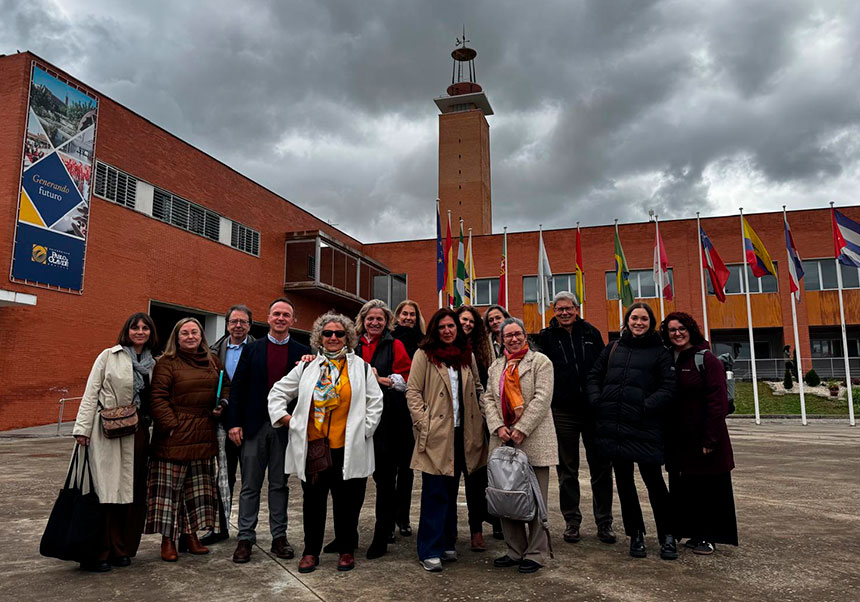
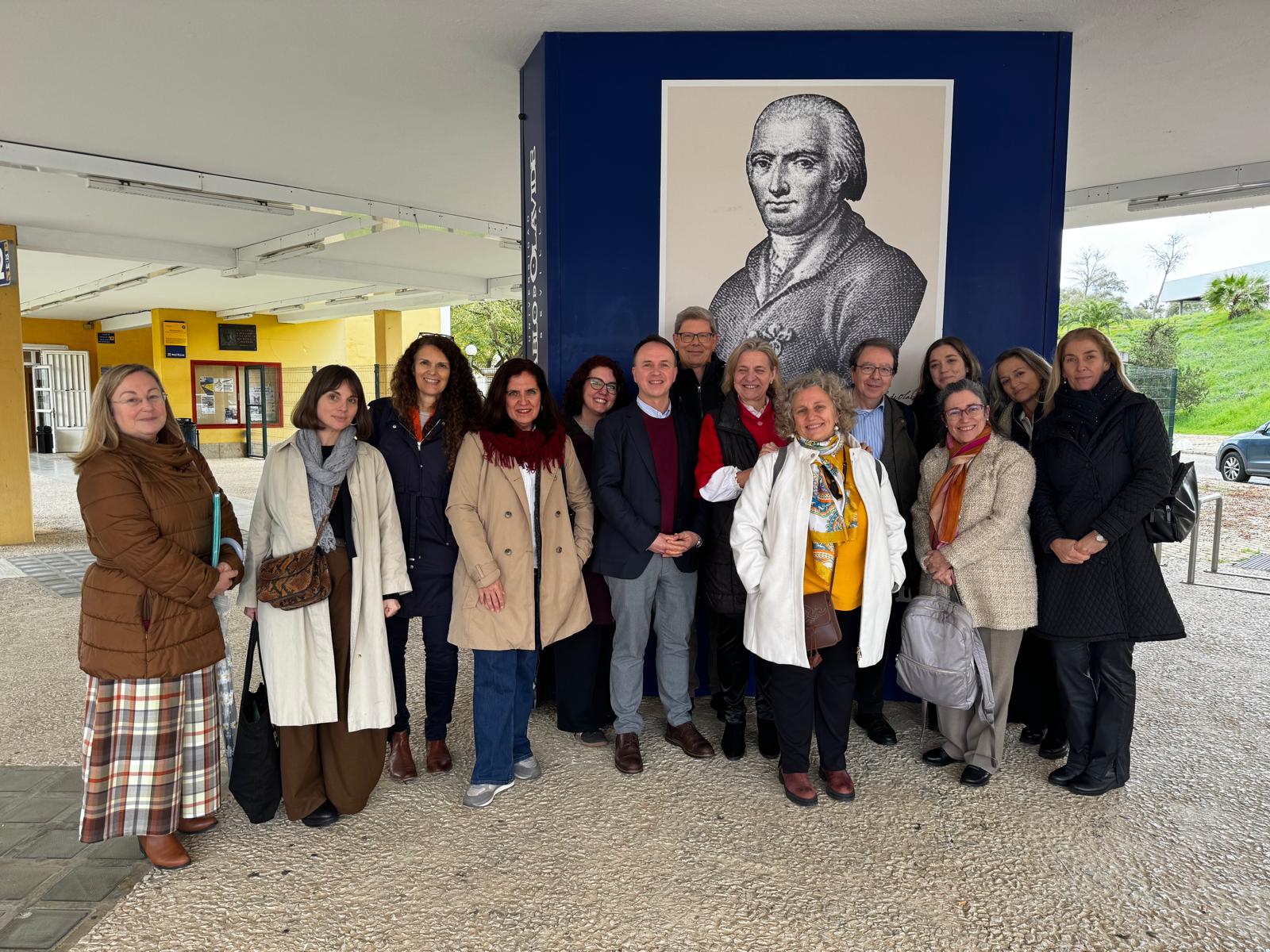
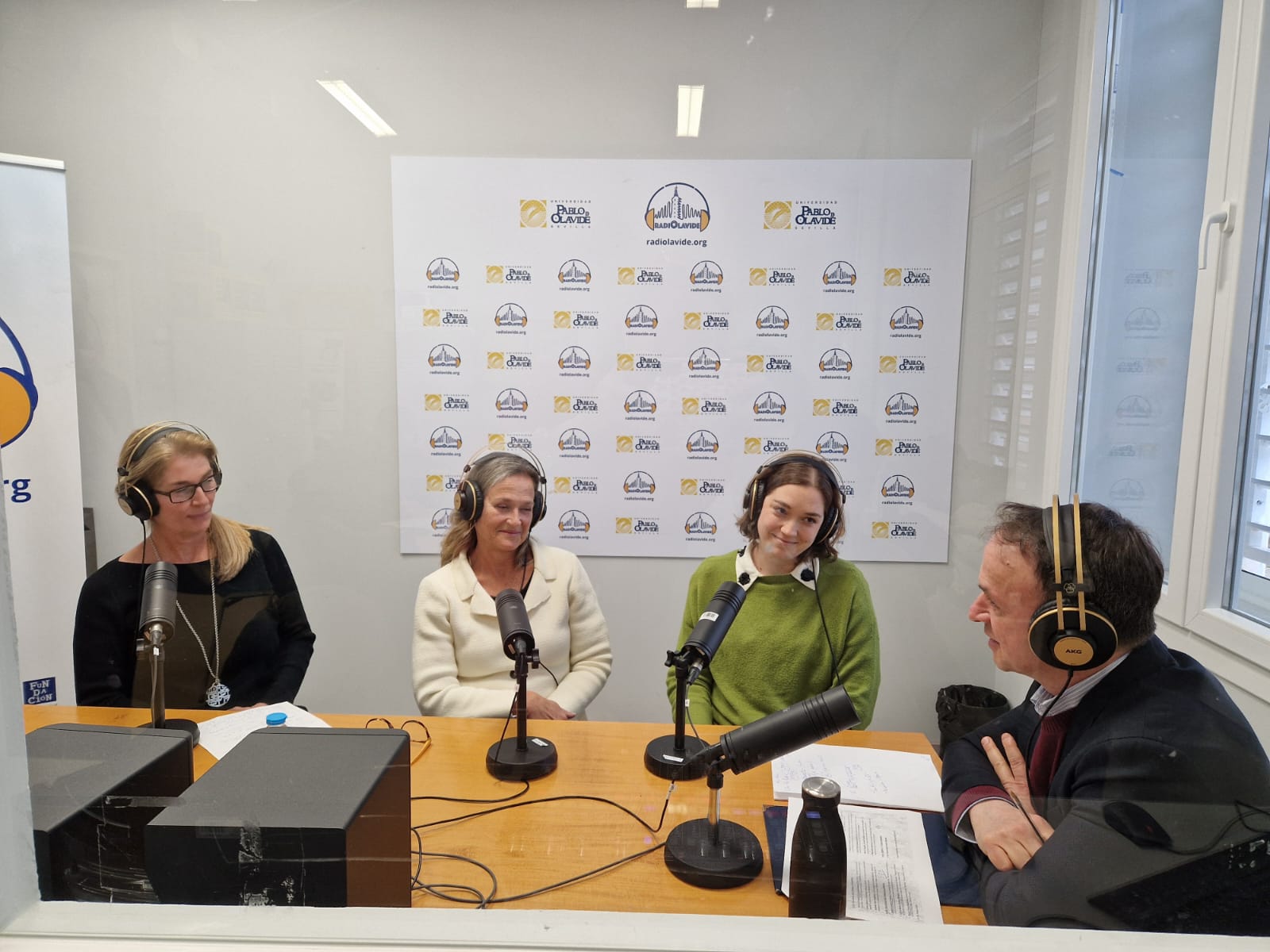
Researchers of the RIALE research group participated in the international seminar “La España de las viajeras extranjeras en lengua inglesa, francesa y alemana (1840-1940): visiones novedosas sobre diversidad territorial, género y la España vaciada” (‘The Spain of foreign women travellers in English, French and German Languages (1840-1940): new perspectives on territorial diversity, gender and depopulated Spain’), held on 6 and 7 March 2026 at the Universidad Pablo de Olavide (Seville). The meeting gathered specialists from different Spanish and European universities to analyse the perspective of the women travellers that went across Spain in the mid-nineteenth century and the first decades of the 20th century.
The seminar, organised by Alberto Egea Fernández-Montesinos and María Losada Friend, is part of the research initiatives promoted by the Plan Propio de Investigación (University Research Plan) of the Sevillian university, which is aimed at revising and valuing texts written by women travellers in English, French and German, offering an alternative perspective on Spanish reality from 1840 to 1940. Compared with the academic attention paid to the stories of men travellers, women’s written production remains being relatively unknown and unstudied, despite having a great literary, historical and anthropological value.
Among the participants, several researchers from the Universitat de València stood out. Isabel Gutiérrez Koester gave the lecture “Una España redescubierta: la visión femenina alemana en el espejo de la transformación europea” (‘The rediscovered Spain: German female vision in the mirror of European transformation’), in which she analysed how German-speaking women travellers reinterpreted the image of Spain within a context of cultural and political changes in the 19th-century Europe. In turn, Ingrid María García Wistädt tackled in her intervention “España en los relatos de viajeras de lengua alemana en el siglo XIX: una lectura interseccional” (‘Spain in the stories of German-speaking women travellers in the 19tyh century: an intersectional reading’) the complex relations between gender, identity and cultural representation in these travel testimonies. Additionally, Mireia Vives Martínez presented the communication “Cuerpos políticos: Amalie von Sachsen, Clara Biller y Bettina Ringseis” (‘Governing bodies: Amalie von Schsen, Clara Biller, and Bettina Ringseis’), focused on the role of female body and identity in travel stories of German women authors in the 10th century.
During the academic event, it was also analysed the perspective of French and English women travellers, who travelled through different Spanish territories, from Catalonia and Balearic Islands to Andalusia and Levante, paying special attention to cultural heritage, landscapes, and daily life in local communities.
Sessions included studies on some authors such as Marie Bashkirtseff, Katharine Atholl, Sylvia Townsend Warner, or Georgiana Goddard King, among others.
The seminar suggests making a triple methodological approach to these texts: the study of Spanish territorial diversity, gender perspective and attention to rural or less represented spaces, in relation to which is now called ‘depopulated Spain’. From this point of view, travel stories written by women enable to reconsider traditional stories about the country and provide new interpretations on the cultural and social history of the contemporary Spain.
The participation of researchers from the Universitat de València in this meeting reinforces the university presence in international networks focused on the comparative study of travel literature, and underlines the growing academic interest in recovering and analysing the female voices that contributed to build the image of Spain in the modern Europe.
Images:
.jpeg)