On the occasion of the book "Senderos que se bifurcan. Una breve historia del poder de los neandertales a Trump". Centre Cultural La Nau
José Luis Villacañas
Discussion on the occasion of the publication of the book "Senderos que se bifurcan. Una breve historia del poder de los neandertales a Trump" ("Paths that Diverge. A Brief History of Power from the Neanderthals to Trump")
Presented by:
Cristina García Pascual. Head of Initiatives, Aula de Narratives UV
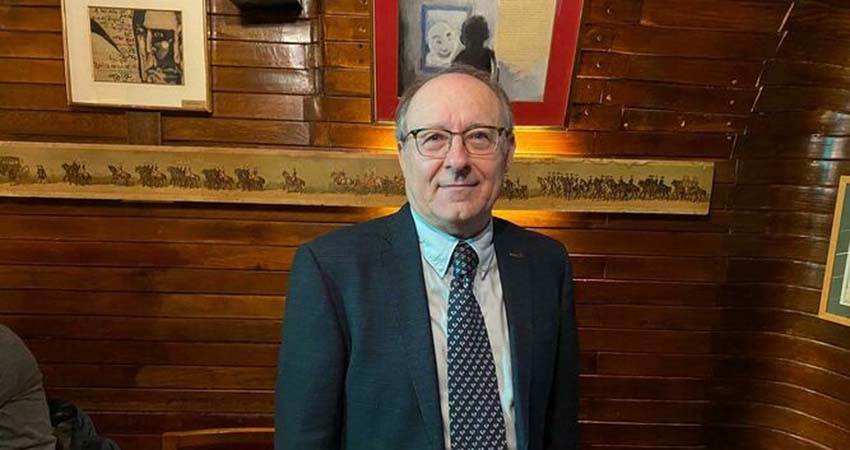
José Luis Villacañas
Úbeda, 1955, is Emeritus Professor of Philosophy at the Universidad Complutense de Madrid and Visiting Professor at Universidad Diego Portales in Santiago de Chile. He taught at the Universitat de València (1977–1986), at the Universidad de Murcia (1986–2009), and at the Complutense University of Madrid, where he chaired the Department of Philosophy and Society until 2022.
He is the founding director of Revista Res Publica and honorary director of Anales de Historia de la Filosofía.
His most recent publications include Max Weber en Contexto (Barcelona, 2024), Ortega y Gasset, una experiencia filosófica española (Madrid, 2023), Diego Saavedra Fajardo, la lealtad conocida (Madrid, 2025), and Tierra o Ser. La gran decisión de la filosofía contemporánea (Madrid, 2026).
He has been a regular columnist for Levante-EMV since 2009 and served as director of the Biblioteca Valenciana from 1999 to 2003.
He is one of the most influential voices in political thought in the Spanish-speaking world.
Synopsis "Senderos que se bifurcan. Una breve historia del poder de los neandertales a Trump" ("Paths that Diverge. A Brief History of Power from the Neanderthals to Trump")
History is a succession of crossroads between empire and shared government. Villacañas shows how the human destiny has repeatedly been decided in this dialectic between domination and democracy.
A work that combines history, philosophy, and politics to help us navigate the crossroads of the present.
It contrasts figures such as Neanderthals and Sapiens, Caligula and Philo, Muhammad and Charlemagne, Luther and Charles V, Schmitt and Kelsen, Fukuyama and Trump, among others.
Free admission, limited seating