Resultados de la búsqueda67 resultados
-
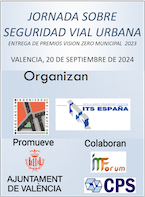
Jornada sobre Seguridad Vial Urbana
Francisco Alonso
(2024). Participació en congressosEl Dr. Francisco Alonso, Director del INTRAS, ha participado en la Jornada sobre Seguridad Vial Urbana que se ha celebrado en Valencia el 20 de septiembre de 2024. El Dr. Alonso ha presentado la ponencia "Factor humano en la seguridad vial urbana" dentro de la sección "Soluciones técnicas", tras la cual se ha hecho entrega de los premios Visión Zero Municipal 2023 que reconoce a los Municipios de más de 100.000 habitantes que lograron CERO fallecidos en siniestros de tráfico durante el año 2023. La jornada ha sido organizada por la Asociación de Ingenieros de Tráfico y Técnicos de Movilidad e ITS España en colaboración con el Foro de Movilidad Inteligente.
-
Estrategias de comunicación en salud pública: estudio de su efectividad
Mireia Faus, Francisco Alonso, Cesáreo Fernández
(2024). ArticleInfonomy. Num.2(5):e24054
Hablar de salud pública conlleva necesariamente, aparte de otras consideraciones, hablar de comunicación. Sin una comunicación efectiva orientada a la población, la salud pública tendrá importantes impedimentos para su correcto desarrollo e implementación, más allá de otros aspectos de índole económicos, sociales, de planificación, políticos, etc. El presente artículo se centra en discernir, desde las evidencias y el análisis científicos, sobre las mejores prácticas y estrategias de comunicación relativas a la salud pública, a la vez que identificar carencias y posibles errores al respecto, para tratar de proporcionar recomendaciones o guías que mejoren su efectividad.
DOI: 10.3145/infonomy.24.054ISSN: 2990-2290 -
Exploring the causes of frequent accidents at highway tunnel exits: Coupling analysis of the slack effect and white hole effect in extra-long tunnels
Yongzheng Yang, Zhigang Du, Francisco Alonso, Mireia Faus, Jialin Mei
(2024). ArticleTransportation Research Part F: Psychology and Behaviour. Num.106:288-305
In this paper, the causes of frequent traffic accidents at the exits of highway tunnels are inves-tigated. This study recruited 34 subjects to conduct vehicle experiments using an illuminationmeter, eye tracker, Smarter Eye and OBD to measure the illumination, eye movement charac-teristics, driving trajectory, and speed while driving in a tunnel exit. A questionnaire was used toinvestigate drivers’ subjective feelings while driving. The change trend of each indicator in thearea near the tunnel exit was analyzed, and the relationships among the light environment, driverphysiology, driving behavior, and driver psychology were explored. The psychological andphysiological inconsistency...
In this paper, the causes of frequent traffic accidents at the exits of highway tunnels are inves-tigated. This study recruited 34 subjects to conduct vehicle experiments using an illuminationmeter, eye tracker, Smarter Eye and OBD to measure the illumination, eye movement charac-teristics, driving trajectory, and speed while driving in a tunnel exit. A questionnaire was used toinvestigate drivers’ subjective feelings while driving. The change trend of each indicator in thearea near the tunnel exit was analyzed, and the relationships among the light environment, driverphysiology, driving behavior, and driver psychology were explored. The psychological andphysiological inconsistency phenomenon and abnormal acceleration behavior were observed atthe tunnel exit, and the slack effect was verified. As the tunnel exit area is driven through, withthe rapid increase in illumination, the rate of change of the driver’s pupil area increases, and thedistance between the vehicle and the tunnel sidewall increases. It is unreasonable that in a tunnelexit with a poor traffic environment, some drivers experience psychological slack and tend toincrease their speed and accelerate out of the tunnel. The slack effect is observed in most drivers,approximately 79.4% of the total. The white hole effect interferes with drivers’ vision and reducestheir ability to obtain traffic information. The slack effect reduces drivers’ attention and increasesvehicle speed. A coupling effect exists between the white hole and slack effects, which togetherthreaten traffic safety at the tunnel exit
Leer más Ocultar DOI: 10.1016/j.trf.2024.08.018ISSN: 1369-8478 -
La empresa frente a la accidentalidad laboral de tráfico: Fundamentación de planes de movilidad y Seguridad Vial como estrategia clave de prevención
Cosme Fernández Beneitez
(2024). TesisDirectors: Francisco Alonso y Francisco Tortosa.
Calificación: Sobresaliente "cum laude"
-
Aggressiveness in Driving: A View From the Spanish Driver’s Perception
Francisco Alonso, Cristina Esteban, Andrea Serge, Mireia Faus
(2024). ArticleViolence and Victims. Num.39(3)
Aggressiveness is a concerning issue due to its contribution to road crashes. This study aims to provide an overview on how Spanish drivers perceive aggressive driving, analyzing how this perception is linked to sociodemographic features. Thus, a cross-sectional study was designed, where 1,079 Spanish drivers took part in a telephone survey on aggressiveness’ importance, influence on traffic accidents, and frequency of performance. For data processing, Exploratory Data Analysis and Unifactorial Variance Analysis were conducted. The results showed that the perception of aggressive driving has a high valuation and a high-perceived risk, with differences for sex, age, and driving experience....
Aggressiveness is a concerning issue due to its contribution to road crashes. This study aims to provide an overview on how Spanish drivers perceive aggressive driving, analyzing how this perception is linked to sociodemographic features. Thus, a cross-sectional study was designed, where 1,079 Spanish drivers took part in a telephone survey on aggressiveness’ importance, influence on traffic accidents, and frequency of performance. For data processing, Exploratory Data Analysis and Unifactorial Variance Analysis were conducted. The results showed that the perception of aggressive driving has a high valuation and a high-perceived risk, with differences for sex, age, and driving experience. The findings suggest that some groups perceive more aggressiveness than others, meaning it is necessary to develop measures to reduce biases through a gender perspective.
Leer más Ocultar DOI: 10.1891/VV-2021-0038ISSN: 1945-7073 -
Why frequent traffic accidents at highway tunnel exit? – An experimental analysis of the slack effect
Yongzheng Yang, Zhigang Du, Francisco Alonso, Mireia Faus, Shiming He
(2024). ArticleTunnelling and Underground Space Technology. Num.152:105927
This study analyzes the causes of frequent traffic accidents at the exit areas of highway tunnels. Vehicle experiments were conducted to collect data on the light environment, vehicle speed, and driver eye movement. The distribution patterns of the illumination, vehicle speed, and gaze location occupancy were analyzed, and highway tunnels of different lengths were compared. The tunnel exit area is divided into the transition, exit, and departure zones. It was observed that there was an obvious white-hole effect at the exit zone, with drastic changes in the light environment. The presence of abnormal acceleration behavior in the transition zone and decreased attention in the departure zone...
This study analyzes the causes of frequent traffic accidents at the exit areas of highway tunnels. Vehicle experiments were conducted to collect data on the light environment, vehicle speed, and driver eye movement. The distribution patterns of the illumination, vehicle speed, and gaze location occupancy were analyzed, and highway tunnels of different lengths were compared. The tunnel exit area is divided into the transition, exit, and departure zones. It was observed that there was an obvious white-hole effect at the exit zone, with drastic changes in the light environment. The presence of abnormal acceleration behavior in the transition zone and decreased attention in the departure zone demonstrate the existence of psychological and physiological slack in drivers. Additionally, the tunnel length positively correlates to the slack effect, which is stronger in extra-long tunnels than in the short and medium tunnels. Multiple control scenarios were established and driving simulation experiments were conducted to further analyze the impact of the slack effect on the traffic safety. The experimental results demonstrated that the slack effect of the extra-long tunnels exhibited an evident lag which was still present after leaving the tunnel exit. The average vehicle speed and trajectory offset were larger and more discrete in the post-tunnel zone than on an ordinary open road. The speed of the curve in the post-tunnel zone is 5.1 % higher than that of the curve in the ordinary road, and the maximum trajectory offset is 54.3 % higher. Thus, this study reveals the slack effect at tunnel exits and explains the abnormal phenomenon of relatively good traffic environments but high traffic accident rates in the transition and departure zones of tunnel exits. These results present considerable practical significance for the safe operation of highway tunnels, particularly extra-long tunnels.
Leer más Ocultar DOI: 10.1016/j.tust.2024.105927ISSN: 1878-4364 -
Analysis of Commuting Habits and Perceived Risks: An Empirical Case Study in a Large Spanish Company
Cosme Fernández, Francisco Alonso, Francisco Tortosa, Mireia Faus
(2024). ArticleSustainability. Num.16(12):5245
Commuting road accidents have a direct impact on workers as well as companies. Therefore, analyzing the characteristics of commuting to and from work and workers’ perceptions of their potential risk is necessary. This study analyzes these factors in a sample of employees in a large Spanish company. A questionnaire was distributed to a total of 665 workers, assessing variables such as means of transport used and preferred in this type of commuting, perceived risks, assessment of preventive measures, involvement in a road accident during commuting, and road safety training received by the company, among others. There is a difference between preferred and used modes of transport, with factors...
Commuting road accidents have a direct impact on workers as well as companies. Therefore, analyzing the characteristics of commuting to and from work and workers’ perceptions of their potential risk is necessary. This study analyzes these factors in a sample of employees in a large Spanish company. A questionnaire was distributed to a total of 665 workers, assessing variables such as means of transport used and preferred in this type of commuting, perceived risks, assessment of preventive measures, involvement in a road accident during commuting, and road safety training received by the company, among others. There is a difference between preferred and used modes of transport, with factors limiting the use of soft modes. People who have experienced an accident on the way to work have a higher risk perception of this type of journey. The time and distance of the journey also have a significant influence on the perceived risk. The most highly rated preventive actions are mainly related to the accessibility and comfort of the workers’ daily commute, which helps minimize the time spent on journeys. This analysis provides relevant information on the social acceptability of different measures for the development and implementation of future actions of the prevention services that contribute to reducing this type of accident and designing strategies to promote more sustainable commuting mobility.
Leer más Ocultar DOI: 10.3390/su16125245ISSN: 2071-1050 -
Velo-city 2024
Sergio Useche, Francisco Alonso, Mireia Faus
(2024). Participació en congressosLos Drs. Sergio Useche, Francisco Alonso y Mireia Faus participan en el Congreso Velo-city 2024, que se celebra del 18 al 21 de junio de 2024 en Ghent (Bélgica), con la presentación del póster “Better late than tomorrow”: Relationships between cycling enrollment ages, health-related expectations, and riding outcomes:A cross-cultural study. Velo-city es el acontecimiento anual más importante de la Federación Europea de Ciclistas y se organiza en colaboración con una ciudad diferente cada año. En Velo-city se reúnen defensores de la bicicleta, ciudades, responsables políticos, investigadores y líderes de la industria para dar forma al futuro del ciclismo y del desarrollo urbano...
Los Drs. Sergio Useche, Francisco Alonso y Mireia Faus participan en el Congreso Velo-city 2024, que se celebra del 18 al 21 de junio de 2024 en Ghent (Bélgica), con la presentación del póster “Better late than tomorrow”: Relationships between cycling enrollment ages, health-related expectations, and riding outcomes:A cross-cultural study. Velo-city es el acontecimiento anual más importante de la Federación Europea de Ciclistas y se organiza en colaboración con una ciudad diferente cada año. En Velo-city se reúnen defensores de la bicicleta, ciudades, responsables políticos, investigadores y líderes de la industria para dar forma al futuro del ciclismo y del desarrollo urbano sostenible. Las conferencias Velo-city atraen actualmente a unos 1.500 delegados de más de 60 países diferentes. Como acontecimiento emblemático de la Federación Europea de Ciclistas, Velo-city desempeña un papel vital en la promoción del ciclismo como medio de transporte sostenible y saludable para todos.
Leer más Ocultar -
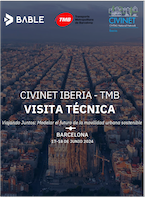
Viajando Juntos: Modelar el futuro de la movilidad urbana sostenible
Francisco Alonso
(2024). Participació en congressosEl Dr. Francisco Alonso, Director del INTRAS, ha participado en la 1ª Visita Técnica CIVINET "Viajando Juntos: Modelar el futuro de la movilidad urbana sostenible", celebrada los días 17 y 18 de junio de 2024 en Barcelona. El Dr. Alonso ha formado parte de la mesa redonda "Persistencia: Hacer del coche un problema del pasado" desde el enfoque "Compartir historias de fracaso de políticas o proyectos que fracasaron en la reducción del uso del automóvil" Esta visita técnica promueve el intercambio de conocimientos y se dedica a configurar el futuro de la movilidad urbana sostenible, convirtiéndola en una prioridad mientras se exploran soluciones de transporte sostenible que reduzcan la...
El Dr. Francisco Alonso, Director del INTRAS, ha participado en la 1ª Visita Técnica CIVINET "Viajando Juntos: Modelar el futuro de la movilidad urbana sostenible", celebrada los días 17 y 18 de junio de 2024 en Barcelona. El Dr. Alonso ha formado parte de la mesa redonda "Persistencia: Hacer del coche un problema del pasado" desde el enfoque "Compartir historias de fracaso de políticas o proyectos que fracasaron en la reducción del uso del automóvil" Esta visita técnica promueve el intercambio de conocimientos y se dedica a configurar el futuro de la movilidad urbana sostenible, convirtiéndola en una prioridad mientras se exploran soluciones de transporte sostenible que reduzcan la dependencia del automóvil. Los participantes han discutido temas clave y soluciones, fomentando un espacio de transferencia de conocimiento tecnológico y colaboración.
Leer más Ocultar -

Public Transportation Means as seen by Citizens: approaching the case of the Dominican Republic
Francisco Alonso, Cristina Esteban, Mireia Faus, Sergio Useche
(2024). ArticleHeliyon. Num.10:e32363
Especially in low and middle-income countries, key constraints such as dense traffic flows, jams, and pollution constitute frequent issues that potentially explain many negative consequences in terms of (e.g.) efficiency, sustainability, and mobility safety. In this regard, recent evidence supports the idea that fostering public transportation is crucial to offering solutions for this difficult panorama. However, transport mode-related choices and shifts have been proven to depend highly on key perceptions and needs of potential users. The aim of this study was to analyze a set of key users’ perceptions, usage, and perceived quality of public transportation in the Dominican Republic, as...
Especially in low and middle-income countries, key constraints such as dense traffic flows, jams, and pollution constitute frequent issues that potentially explain many negative consequences in terms of (e.g.) efficiency, sustainability, and mobility safety. In this regard, recent evidence supports the idea that fostering public transportation is crucial to offering solutions for this difficult panorama. However, transport mode-related choices and shifts have been proven to depend highly on key perceptions and needs of potential users. The aim of this study was to analyze a set of key users’ perceptions, usage, and perceived quality of public transportation in the Dominican Republic, as well as to explore the most relevant features for Dominicans from the “desired quality” paradigm. For this research at a national level, data retrieved from a nationwide sample of 1254 inhabitants of the Dominican Republic was used, proportional to the ONE census in terms of sex, age, habitat, and region. Overall, the results show that the general quality of transportation is 6.70 points out of 10. The use of public transportation in the Dominican Republic has a medium-low rating and is very focused on urban buses (41 %) and public cars (27.1 %). Nonetheless, the metro remains the most highly rated means of transport (M = 8.75). Concerning the quality variables analyzed, the highest scores are for accessibility (M = 7.08) and frequency of service (M = 6.99). Further, Dominicans focus on improving comfort, vehicle conditions, and safety. This study constitutes a first approximation to the desired quality of public transportation for Dominican Citizens, which may help policymakers scope user-based needs in public transportation systems and encourage a more frequent (and friendlier) public transport use in the country.
Leer más Ocultar DOI: 10.1016/j.heliyon.2024.e32363ISSN: 2405-8440