

Resultados de la búsqueda67 resultados
-

Could driving help us to “see better”? A comparative assessment of saccadic efficiency, visual speed, and attention
Andrés Gené, Francisco Alonso, Javier Gené, Pedro Monteiro, Sergio Useche
(2024). ArticleBMC Ophthalmology. Num.24:90
Background This study aimed at comparing drivers’ and non-drivers’ results in the Adult Developmental Eye Movement with Distractors test (ADEMd) and the Useful Field of View test (UFOV). Methods One hundred and twenty Spaniards (mean age 50.90 ± 17.32 years) without eye disease voluntarily participated in this cross-sectional descriptive study. Participants in a single experimental session completed a questionnaire on sociodemographic, health, eyesight, and driving information. They also performed the ADEMd and UFOV tests randomly following standardized protocols. The ADEMd is a visual-verbal test that measures saccadic efficiency and visual attention. Brown-Forsythe (B–F) tests with...
Background This study aimed at comparing drivers’ and non-drivers’ results in the Adult Developmental Eye Movement with Distractors test (ADEMd) and the Useful Field of View test (UFOV). Methods One hundred and twenty Spaniards (mean age 50.90 ± 17.32 years) without eye disease voluntarily participated in this cross-sectional descriptive study. Participants in a single experimental session completed a questionnaire on sociodemographic, health, eyesight, and driving information. They also performed the ADEMd and UFOV tests randomly following standardized protocols. The ADEMd is a visual-verbal test that measures saccadic efficiency and visual attention. Brown-Forsythe (B–F) tests with Games-Howell post-hoc adjustments were conducted to assess differences between groups. Groups were formed according to sex, age (young adults, adults, and older adults), and driver/non-driver for further analysis. Additionally, associations between dependent variables were assessed through Spearman’s correlations. Results Drivers obtained significantly better results in the ADEMd compared with non-drivers. Non-significant differences between drivers and non-drivers were encountered in the UFOV. Additionally, significant differences were observed between sexes and age groups. It is worth highlighting that non-driver’s age significantly correlated with worse ADEMd performance (rho = .637 to .716). This correlation was non-significant in drivers. Similarly, reading hours significantly correlated with better ADEMd performance in non-drivers (rho = − .291 to − .363), but not in drivers. The only significant correlations between ADEMd and UFOV tests were found in drivers (rho = .307 to .410). Conclusion Considering all the discussed results, it could be hypothesized that the driving task promotes abilities, such as oculomotor and cognitive function, which are relevant for the performance in the ADEMd. However, this hypothesis is based on correlational outcomes and further studies should causally assess this possible relation.
Leer más Ocultar DOI: 10.1186/s12886-024-03349-1ISSN: 1471-2415 -

“It’s okay because I’m just driving”: an exploration of self-reported mobile phone use among Mexican drivers
Sergio Useche, Francisco Alonso, Mireia Faus, Arturo Cervantes Trejo, Isaac Castañeda, Oscar Oviedo-Trespalacios
(2024). ArticlePeerJ. Num.12:e16899
Introduction Technological advancements have the potential to enhance people’s quality of life, but their misuse can have a detrimental impact on safety. A notable example is the escalating issue of distracted driving resulting from the use of mobile phones behind the wheel, leading to severe crashes and injuries. Despite these concerns, both drivers’ usage patterns and their risk-related associations remain scarcely documented in Mexico. Therefore, this descriptive study aimed to examine the mobile phone usage of Mexican drivers, its relationships to risk awareness and near-miss/crash involvement, and the self-reported underlying reasons for this behavior. Methods This cross-sectional...
Introduction Technological advancements have the potential to enhance people’s quality of life, but their misuse can have a detrimental impact on safety. A notable example is the escalating issue of distracted driving resulting from the use of mobile phones behind the wheel, leading to severe crashes and injuries. Despite these concerns, both drivers’ usage patterns and their risk-related associations remain scarcely documented in Mexico. Therefore, this descriptive study aimed to examine the mobile phone usage of Mexican drivers, its relationships to risk awareness and near-miss/crash involvement, and the self-reported underlying reasons for this behavior. Methods This cross-sectional study utilized a sample of 1,353 licensed Mexican drivers who took part in a nationwide series of interviews regarding their onboard phone use settings. Results A significant percentage of drivers (96.8%) recognize using a mobile phone while driving as high-risk behavior. However, only 7.4% reported completely avoiding its use while driving, with 22.4% identified as high-frequency users. Frequency was also found positively associated with the self-reported rate of near-misses and crashes. Furthermore, qualitative data analysis highlights the emergence of a ‘sense of urgency’ to attend to phone-related tasks in response to daily demands and life dynamics, offering a potential explanation for this behavior. Conclusion The results of this study suggest common patterns of onboard mobile use among Mexican drivers concerning driving situations and associated risks. This underscores the need for increased efforts to discourage onboard phone use in the country.
Leer más Ocultar DOI: 10.7717/peerj.16899ISSN: 2167-8359 -

"Cyclist at 12 o’clock!”: a systematic review of in-vehicle advanced driver assistance systems (ADAS) for preventing car-rider crashes
Sergio Useche, Mireia Faus, Francisco Alonso
(2024). ArticleFrontiers in Public Health. Num.12:1335209
Introduction: While Advanced Driver Assistance Systems (ADAS) have become aprominent topic in road safety research, there has been relatively little discussionabout their effectiveness in preventing car collisions involving specific vulnerableroad users, such as cyclists. Therefore, the primary objective of this systematicliterature review is to analyze the available evidence regarding the effectivenessof in-vehicle ADAS in preventing vehicle collisions with cyclists.Methods: To achieve this goal, this systematic review analyzed a selection oforiginal research papers that examined the effectiveness of ADAS systems inpreventing car-cyclist collisions. The review followed the PRISMA...
Introduction: While Advanced Driver Assistance Systems (ADAS) have become aprominent topic in road safety research, there has been relatively little discussionabout their effectiveness in preventing car collisions involving specific vulnerableroad users, such as cyclists. Therefore, the primary objective of this systematicliterature review is to analyze the available evidence regarding the effectivenessof in-vehicle ADAS in preventing vehicle collisions with cyclists.Methods: To achieve this goal, this systematic review analyzed a selection oforiginal research papers that examined the effectiveness of ADAS systems inpreventing car-cyclist collisions. The review followed the PRISMA protocol,which led to the extraction of 21 eligible studies from an initial pool of 289sources indexed in the primary scientific literature databases. Additionally, wordcommunity-based content analyses were used to examine the research topicsand their links within the current scientific literature on the matter.Results: Although the current number of studies available is still scarce (mostsources focus on car-motorcyclist or car-pedestrian crashes), the overall qualityof the available studies has been reasonably good, as determined by the selectedevaluation methods. In terms of studies’ outcomes, the literature supports thevalue of in-vehicle ADAS for preventing car-cyclist crashes. However, threatfulside effects such as unrealistic expectations of these systems and users’overconfidence or desensitization are also highlighted, as well as the need toincrease driver training and road user awareness.Conclusion: The results of this study suggest that Advanced Driver AssistanceSystems have significant potential to contribute to the prevention of drivingcrashes involving cyclists. However, the literature emphasizes the importanceof concurrently enhancing user-related skills in both ADAS use and road-userinteraction through educational and training initiatives. Future research shouldalso address emerging issues, such as ADAS-related behavioral ergonomics,and conduct long-term effectiveness assessments of ADAS in preventing car-cycling crashes and their subsequent injuries
Leer más Ocultar DOI: 10.3389/fpubh.2024.1335209ISSN: 2296-2565 -

eMobility Expo & World Congress
Francisco Alonso
(2024). Participació en congressosEl Dr. Francisco Alonso, Director del INTRAS, participa en el eMobility Expo & World Congress (EME VLC) que se celebra del 13 al 15 de febrero de 2024 en Feria Valencia. El Dr Alonso presentará la ponencia "La consideración del usuario en la movilidad eléctrica desde la I+D+i" el día 13, en la que se exponen algunas líneas y procedimientos para acometer la Investigación, el Desarrollo y la Innovación en la temática de la “movilidad eléctrica” sobre las implicaciones del “factor humano”, así como ciertas evidencias que permiten dibujar un marco estratégico y las consiguientes derivadas medidas y contramedidas. Por otro lado, participará en la mesa redonda "Educación y empleo: Conectando...
El Dr. Francisco Alonso, Director del INTRAS, participa en el eMobility Expo & World Congress (EME VLC) que se celebra del 13 al 15 de febrero de 2024 en Feria Valencia. El Dr Alonso presentará la ponencia "La consideración del usuario en la movilidad eléctrica desde la I+D+i" el día 13, en la que se exponen algunas líneas y procedimientos para acometer la Investigación, el Desarrollo y la Innovación en la temática de la “movilidad eléctrica” sobre las implicaciones del “factor humano”, así como ciertas evidencias que permiten dibujar un marco estratégico y las consiguientes derivadas medidas y contramedidas. Por otro lado, participará en la mesa redonda "Educación y empleo: Conectando talentos con la movilidad del futuro", que se celebrará el día 15, donde se debatirá cómo mejorar la conexión entre la formación académica y las oportunidades laborales en el campo de la movilidad sostenible, discutiendo iniciativas para garantizar que los graduados estén listos para enfrentar los desafíos de este sector en evolución. El eMobility World Congress 2024 es una conferencia internacional que proporciona la plataforma más relevante e influyente para el futuro de la movilidad, a través de la sostenibilidad y la tecnología.
Leer más Ocultar -
Publicidad social de campañas sobre tráfico, movilidad, transporte y seguridad vial: Evolución histórica de las estrategias comunicativas y percepción social de su impacto
Mireia Faus Real
(2024). TesisDirectores: Francisco Alonso y Cesáreo Fernández.
Calificación: Sobresaliente "cum laude", con mención "Internacional"
-

Assessing the “virality” of a road safety communication campaign intended to change behavior: a case study in Spain
Mireia Faus, Francisco Alonso, Cesáreo Fernández, Sergio Useche
(2024). ArticleFrontiers in Sustainable Cities. Num.5:1295516
Introduction: The relationships between above-the-line (ATL) and below-the-line (BTL) communication and advertising strategies have been studied in many fields and procedures. Likewise, the interrelationships between both communicative typologies, when they exist, either strategically induced or spontaneously, are also known concerning their reinforcing eects.However, in the social communication field, specifically road safety communication, these interrelationships have been little studied, and few case studies have been done, particularly of those that have stood out as particularly significant. Methods: Thus, this paper investigates the implementation process of an ATL awareness...
Introduction: The relationships between above-the-line (ATL) and below-the-line (BTL) communication and advertising strategies have been studied in many fields and procedures. Likewise, the interrelationships between both communicative typologies, when they exist, either strategically induced or spontaneously, are also known concerning their reinforcing eects.However, in the social communication field, specifically road safety communication, these interrelationships have been little studied, and few case studies have been done, particularly of those that have stood out as particularly significant. Methods: Thus, this paper investigates the implementation process of an ATL awareness campaign of the Spanish Tra c Authority (DGT-General Directorate of Tra c) through the analysis of key digital reach indicators. Results: Despite the foreseeable limitations of this research regarding the repercussions and positive impact on society of the DGT communication campaign, it is nevertheless a contribution of interest regarding the digital impact that has been generated in networks (BTL communication) from a DGT campaign broadcast on variousmedia such as television, radio, posters, and social networks. Discussion: Thus, from a methodology based on an exact delimitation (two DGT TV spots -from 2022- generating a quantitative activity on X (formally Twitter) that had never before produced DGT spots), significant conclusions and results have been reached related to issues of age groups, loyalty and distortion of messages, communication impact strategies, among others.
Leer más Ocultar DOI: 10.3389/frsc.2023.1295516ISSN: 2624-9634 -
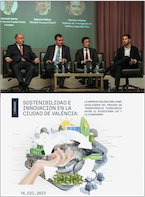
I Jornada "Sostenibilidad e Innovación en la ciudad de Valencia"
Francisco Alonso
(2023). Participació en congressosEl Dr. Francisco Alonso, Director del INTRAS, ha participado en la I Jornada "Sostenibilidad e Innovación en la ciudad de Valencia", que se ha celebrado el 14 de diciembre de 2023. El Dr. Alonso ha formado parte de la Mesa Redonda "La nueva movilidad como paradigma para la descarbonización", dentro de la jornada "Sostenibilidad e Innovación en la ciudad de València: la empresa valenciana como catalizador del proceso de transferencia tecnológica entre el ecosistema I+D y la ciudadanía", organizada por I2Con, una entidad sin ánimo de lucro que busca Impulsar la Sostenibilidad ambiental e Innovación tecnológica a través de una filosofía de constante innovación.
-
Cross-culturally approaching cycling safety from a behavioural perspective: a study in 19 countries
Sergio A. Useche, Francisco Alonso, Aleksey Boyko, Polina Buyvol, Isaac Castañeda, Boris Cendales, Arturo Cervantes, Tomas Echiburu, Mireia Faus, Zuleide Feitosa, Jozef Gnap, Mohd K. Ibrahim, Kira H. Janstrup, Ignacio Lijarcio, Irina Makarova, Cristina Marin, Rich McIlroy, Miroslava Mikusova, Mette Møller, Luis Montoro, Sylvain G. Ngueuteu-Fouaka, Steve O'Hern, Mauricio Orozco-Fontalvo, Ksenia Shubenkova, Jose Soto, Amanda Stephens, Yonggang Wang, Ellias Willberg, Phillip Wintersberger, Linus Zeuwts, Zahir H. Zulkipli, Felix Siebert
(2023). ArticleTransportation Research Procedia. Num.72:4143-4150
While promoting urban cycling has shown to represent several benefits for public health, risky behaviours might endanger cycling safety outcomes and discourage people from shifting to active transportation. Therefore, examining the relationships among riding behaviour, safety, and country-based figures seems valuable for promoting a safer and sustainable development of urban cycling worldwide. For this study, 7,001 urban cyclists from 19 countries provided data on their mobility patterns, cycling behaviours and safety outcomes. The results show that positive behaviours are overall more prevalent than risky ones. However, behavioural patterns largely vary depending on riders’ demographics...
While promoting urban cycling has shown to represent several benefits for public health, risky behaviours might endanger cycling safety outcomes and discourage people from shifting to active transportation. Therefore, examining the relationships among riding behaviour, safety, and country-based figures seems valuable for promoting a safer and sustainable development of urban cycling worldwide. For this study, 7,001 urban cyclists from 19 countries provided data on their mobility patterns, cycling behaviours and safety outcomes. The results show that positive behaviours are overall more prevalent than risky ones. However, behavioural patterns largely vary depending on riders’ demographics and country-based indexes. It supports the idea that cycling behaviour remains a key contributor to cycling outcomes, as well as the need to fill many gaps endangering riding safety across many countries.
Leer más Ocultar DOI: 10.1016/j.trpro.2023.11.361ISSN: 2352-1465 -
Yes, size does matter (for cycling safety)! Assessing self-reported cycling behavioral factors and crash outcomes among S, M, L, and XL cities from 18 countries
Sergio A. Useche, Francisco Alonso, Aleksey Boyko, Polina Buyvol, Isaac D. Castañeda, Boris Cendales, Arturo Cervantes, Tomas Echiburu, Mireia Faus, Javier Gene-Morales, Jozef Gnap, Victor Gonzalez, Mohd K.A. Ibrahim, Kira H. Janstrup, Irina Makarova, Miroslava Mikusova, Mette Møller, Steve O'Hern, Mauricio Orozco-Fontalvo, Ksenia Shubenkova, Felix W. Siebert, Jose J. Soto, Amanda N. Stephens, Yonggang Wang, Elias S. Willberg, Philipp Wintersberger, Linus Zeuwts, Zarir H. Zulkipli, Rich C. McIlroy
(2023). ArticleJournal of Transport Geography. Num.114:103754
Abstract Although most actions aimed at promoting the use of active transport means have been conducted in ‘large’ cities, recent studies suggest that their cycling dynamics could hinder the efforts put into infrastructural, modal share, and cycling culture improvements. Aim The present study aimed to assess the role of city sizes on riding behavioral and crash-related cycling outcomes in an extensive sample of urban bicycle users. Methods For this purpose, a full sample of 5705 cyclists from >300 cities in 18 countries responded to the Cycling Behavior Questionnaire (CBQ), one of the most widely used behavioral questionnaires to assess risky and positive riding behaviors. Following...
Abstract Although most actions aimed at promoting the use of active transport means have been conducted in ‘large’ cities, recent studies suggest that their cycling dynamics could hinder the efforts put into infrastructural, modal share, and cycling culture improvements. Aim The present study aimed to assess the role of city sizes on riding behavioral and crash-related cycling outcomes in an extensive sample of urban bicycle users. Methods For this purpose, a full sample of 5705 cyclists from >300 cities in 18 countries responded to the Cycling Behavior Questionnaire (CBQ), one of the most widely used behavioral questionnaires to assess risky and positive riding behaviors. Following objective criteria, data were grouped according to small cities (S; population of 50,000 or fewer), medium cities (M; population between 50,000 and 200,000), large cities (L; population between 200,000 and one million), and megacities (XL; population larger than one million). Results Descriptive analyses endorsed the associations between city size, cycling behavioral patterns, and mid-term self-reported crash outcomes. Also, it was observed a significant effect of the city size on cyclists' traffic violations and errors (all p < .001). However, no significant effects of the city size on positive behaviors were found. Also, it stands out that cyclists from megacities self-reported significantly more violations and errors than any of the other groups. Further, the outcomes of this study suggest that city sizes account for cycling safety outcomes through statistical associations, differences, and confirmatory predictive relationships through the mediation of risky cycling behavioral patterns. Conclusion The results of the present study highlight the need for authorities to promote road safety education and awareness plans aimed at cyclists in larger cities. Furthermore, path analysis suggests that “size does matter”, and it statistically accounts for cycling crashes, but only through the mediation of riders' risky behaviors.
Leer más Ocultar DOI: 10.1016/j.jtrangeo.2023.103754ISSN: 1873-1236 -

29º Foro Barcelona de Seguridad Vial
Francisco Alonso
(2023). Participació en congressosEl Dr. Francisco Alonso, Director del INTRAS, ha impartido la Conferencia inaugural del 29º Foro Barcelona de Seguridad Vial, que se ha celebrado el 30 de noviembre de 2023. La Conferencia del Dr. Alonso, "La influencia de las sustancias psicoactivas en la seguridad vial: evidencias de la investigación y la intervención”, ha dado inicio al 29º Foro Barcelona de Seguridad Vial que, con el tema "La conducción temeraria: la influencia del alcohol y las drogas", ha querido compartir diferentes enfoques, tanto desde la perspectiva policial y legal como desde la social, institucional y de salud. Un reto que llama a la corresponsabilidad entre usuarios y administraciones.



