

Resultados de la búsqueda67 resultados
-
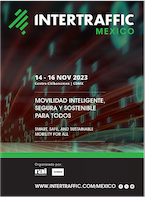
Intertraffic 2023
Francisco Alonso
(2023). Participació en congressosEl Dr. Francisco Alonso, Director del INTRAS y Miembro del Comité Consultivo de la Fundación Aleatica para la Seguridad Vial, ha participado en Intertraffic México 2023, que se celebra del 14 al 16 de noviembre de 2023 en Ciudad de México. El Dr. Alonso ha asistido a la inauguración del Congreso y Expo, ha hecho acto de presencia en el stand de la Fundación Aleática para ser entrevistado por los medios de comunicación y ha impartido la Conferencia "Lecciones aprendidas para re pensar la movilidad". Después a participado en la actividad "Meet de expert" donde los asistentes tienen la oportunidad de acercarse a los expertos del sector para que puedan ayudarles a responder las dudas que...
El Dr. Francisco Alonso, Director del INTRAS y Miembro del Comité Consultivo de la Fundación Aleatica para la Seguridad Vial, ha participado en Intertraffic México 2023, que se celebra del 14 al 16 de noviembre de 2023 en Ciudad de México. El Dr. Alonso ha asistido a la inauguración del Congreso y Expo, ha hecho acto de presencia en el stand de la Fundación Aleática para ser entrevistado por los medios de comunicación y ha impartido la Conferencia "Lecciones aprendidas para re pensar la movilidad". Después a participado en la actividad "Meet de expert" donde los asistentes tienen la oportunidad de acercarse a los expertos del sector para que puedan ayudarles a responder las dudas que tengan. Intertraffic Mexico es la plataforma para empresas y profesionales de la industria del tráfico de todo el mundo, que desean explorar oportunidades de negocios en la region de Latinoamérica. El evento permite el establecimiento de asociaciones, creación de alianzas e intercambio de mejores prácticas entre empresas locales e internacionales. Así mismo, a través de sus conferencias, las principales empresas nacionales e internacionales, las instituciones públicas y privadas comparten sus conocimientos, tecnología y soluciones sobre movilidad inteligente, segura, inclusiva y sostenible con las autoridades locales y de América Latina.
Leer más Ocultar -
Aniversario de Fundación Aleatica para la seguridad vial
Francisco Alonso
(2023). Participació en congressosEl Dr. Francisco Alonso, Director del INTRAS y Miembro del Comité Consultivo de la Fundación Aleatica para la Seguridad Vial, ha participado en el evento que, con motivo del primer aniversario de Fundación Aleatica para la seguridad vial, se ha celebrado en México el 8 de noviembre de 2023 El Dr. Alonso ha intervenido en la sesión para analizar desde una perspectiva global la "Implementación del sistema de Licencia por Puntos: desafíos, perspectivas y experiencias en el mundo", donde ha desarrollado cuáles son los principales factores que hacen que el sistema de licencia de conducir por puntos sea diferencialmente eficaz en la promoción de la seguridad vial en comparación con otras medidas...
El Dr. Francisco Alonso, Director del INTRAS y Miembro del Comité Consultivo de la Fundación Aleatica para la Seguridad Vial, ha participado en el evento que, con motivo del primer aniversario de Fundación Aleatica para la seguridad vial, se ha celebrado en México el 8 de noviembre de 2023 El Dr. Alonso ha intervenido en la sesión para analizar desde una perspectiva global la "Implementación del sistema de Licencia por Puntos: desafíos, perspectivas y experiencias en el mundo", donde ha desarrollado cuáles son los principales factores que hacen que el sistema de licencia de conducir por puntos sea diferencialmente eficaz en la promoción de la seguridad vial en comparación con otras medidas preventivas y ha compartido los hallazgos más relevantes del estudio comparado que le encomendó la Fundación Aleatica al INTRAS sobre este tema. El permiso por puntos es una medida diferencialmente eficaz para incrementar la seguridad vial al fomentar la responsabilidad individual de los conductores, promover un comportamiento más seguro en la carretera y disuadir a los conductores de cometer infracciones de tráfico, según demuestran diversas investigaciones e informes internacionales.
Leer más Ocultar -

Cátedra Magistral de Turismo Frank R. Rainieri
Francisco Alonso
(2023). Participació en congressosEl Dr. Francisco Alonso, Director del INTRAS, ha participado en la "Cátedra Magistral de Turismo Frank R. Rainieri", de la Universidad Central del Este (UCE), realizada en Punta Cana el 30 de octubre de 2023. El Dr. Alonso impartió la conferencia magistral "Movilidad y Seguridad Vial en el Sector Turístico Dominicano: Situación y Oportunidades", en la jornada patrocinada por la UCE, el Grupo Puntacana y la Universidad de Valencia. Alonso realizó un diagnóstico de la situación de la movilidad y la seguridad vial en la República Dominicana, calificando los niveles de mortalidad como "inaceptables", resultados que atribuye a la deficiencia de concienciación y educación de los ciudadanos....
El Dr. Francisco Alonso, Director del INTRAS, ha participado en la "Cátedra Magistral de Turismo Frank R. Rainieri", de la Universidad Central del Este (UCE), realizada en Punta Cana el 30 de octubre de 2023. El Dr. Alonso impartió la conferencia magistral "Movilidad y Seguridad Vial en el Sector Turístico Dominicano: Situación y Oportunidades", en la jornada patrocinada por la UCE, el Grupo Puntacana y la Universidad de Valencia. Alonso realizó un diagnóstico de la situación de la movilidad y la seguridad vial en la República Dominicana, calificando los niveles de mortalidad como "inaceptables", resultados que atribuye a la deficiencia de concienciación y educación de los ciudadanos. También, a la deficiencia en los datos para elaborar políticas efectivas, impidiendo una correcta evaluación de las medidas y contramedidas que se ponen en marcha. Propuso implementar un "Plan de Transporte Turístico" que incluya todos los aspectos de movilidad, transporte terrestre, tránsito y seguridad vial, con especial atención al desarrollo urbano y a las distintas infraestructuras necesarias. Sobre Punta Cana, dijo que se hace necesario intervenir con cierta urgencia y mayor eficacia para mejorar la calidad de vida de turistas, trabajadores y ciudadanos en general, permitiendo un desarrollo sostenible y garantizando de esta importante fuente de ingresos para el presente y el futuro. La Cátedra Magistral de Turismo Frank R. Rainieri es una oportunidad para fortalecer el compromiso con la movilidad segura en el país y promover un sector turístico más fiable y próspero.
Leer más Ocultar -

2º Global Mobility Call
Francisco Alonso
(2023). Participació en congressosEl Dr. Francisco Alonso, Director de l'INTRAS, participa al 2n Global Mobility Call, que se celebra del 24 al 26 d'octubre del 2023 a Madrid. El Dr. Alonso forma part de la taula rodona "La mobilitat que cerca el ciutadà, ciutats més habitables", que figura dins del programa d'activitats del dia 26. Global Mobility Call és un esdeveniment internacional sobre Mobilitat Sostenible de persones i béns que connecta a totes les indústries i parts interessades que tenen com a objectiu generar experiències, networking i negoci entre Empreses, Ajuntaments, Institucions, Administracions i altres organitzacions.
-
Principles of risk management for prevention
Francisco Alonso, Mireia Faus, Sergio Useche, Cristina Esteban
(2023). LlibrePsychology and Risk Prevention: Current Research.
Although it may sound exaggerated at first, almost all the activities we perform, both on a daily and exceptional basis, have a series of associated risks. Some of them are more serious, common and obvious, while others materialize less frequently. Nevertheless, and often without being fully aware of it, we use risk management tools and strategies on a daily basis to prevent risks from having a negative impact on our well-being. Driving a car and stepping on the brakes is in itself an action to mitigate the risk of an accident. Likewise, given that the management of all risks is not always so simple and every day, some risks require more complex management, and even interventions can be...
Although it may sound exaggerated at first, almost all the activities we perform, both on a daily and exceptional basis, have a series of associated risks. Some of them are more serious, common and obvious, while others materialize less frequently. Nevertheless, and often without being fully aware of it, we use risk management tools and strategies on a daily basis to prevent risks from having a negative impact on our well-being. Driving a car and stepping on the brakes is in itself an action to mitigate the risk of an accident. Likewise, given that the management of all risks is not always so simple and every day, some risks require more complex management, and even interventions can be either prevented or their consequences minimized when it is difficult for us to avoid their impact. In this chapter, we will describe some of the most important risk management concepts, sources, interventions and strategies, seeking to generate an integrating vision that will allow us to better understand this complex facet of behavior and safety in general.
Leer más Ocultar DOI: 10.52305/RQEE8626ISBN: 979-8-89113-007-4 -
Who wants to change their transport habits to help reduce air pollution? A nationwide study in the caribbean
Francisco Alonso, Mireia Faus, Cristina Esteban, Sergio Useche
(2023). ArticleJournal of Transport & Health. Num.33:101703
Given its detrimental role in sustainability and community health, air pollution constitutes a global challenge nowadays, and urban transport has been proven to be a key contributor to the problem. At a population level, and especially in Low- and Middle-Income Countries (LMICs), measures for reducing contamination usually require deep behavioral changes and “sacrifices” among individuals who may (or may not) be willing to modify their habits. Objective: This research, conducted in the Dominican Republic, aimed to assess the effect of individual factors, transport habits, and pollution-related concerns on the individual’s will to act to reduce air pollution. Methods: For this study, we...
Given its detrimental role in sustainability and community health, air pollution constitutes a global challenge nowadays, and urban transport has been proven to be a key contributor to the problem. At a population level, and especially in Low- and Middle-Income Countries (LMICs), measures for reducing contamination usually require deep behavioral changes and “sacrifices” among individuals who may (or may not) be willing to modify their habits. Objective: This research, conducted in the Dominican Republic, aimed to assess the effect of individual factors, transport habits, and pollution-related concerns on the individual’s will to act to reduce air pollution. Methods: For this study, we counted on the participation of a nationwide sample of 1250 adult Dominican citizens (50% females; 50% males) with a mean age of 36.7 years. Results: Overall, Dominicans tend to self-report a considerably high concern about transport air pollution, especially among women and inhabitants of urban areas. The willingness to act was significantly influenced by demographic factors, travel frequency, and pollution-related concerns. Also, both individual and socially perceived environmental concerns exert a statistical mediation between individual factors and the self-reported predisposition to help reduce pollution through behavioral changes. Conclusions: The results of this study suggest that both individual and social pollution-related concerns influence the personal willingness to act against air pollution, although in different ways. Interestingly, while peoples’ own concerns increase their willingness to act, solely perceiving a greater collective concern seems to dispirit individuals’ will to take further action. Accordingly, developing further individual and collective initiatives to increase pollution-related responsiveness could be essential to face this growing problem in the Dominican Republic and the Caribbean.
Leer más Ocultar DOI: 10.1016/j.jth.2023.101703ISSN: 2214-1405 -

Different ways… same message? Road safety-targeted communication strategies in Spain throughout 61 years (1960-2021)
Mireia Faus, Cesáreo Fernández, Francisco Alonso, Sergio Useche
(2023). ArticleHeliyon. Num.9(8)
Among the most generalised preventive measures against traffic crashes, advertisements and broadcast campaigns in the media have stood out over the last six decades. The core aim of this paper is to describe the evolution of the subject matter and typology of road safety-related advertisements used in Spain during 62 years (1960–2021). Thus, this paper assesses their role in reducing road fatalities, while keeping in mind the potential effect of the many other road safety-related preventive measures carried out in the country during this period. The results of this study allow us to target five key time periods, all of them with clear particular communication strategies to be...
Among the most generalised preventive measures against traffic crashes, advertisements and broadcast campaigns in the media have stood out over the last six decades. The core aim of this paper is to describe the evolution of the subject matter and typology of road safety-related advertisements used in Spain during 62 years (1960–2021). Thus, this paper assesses their role in reducing road fatalities, while keeping in mind the potential effect of the many other road safety-related preventive measures carried out in the country during this period. The results of this study allow us to target five key time periods, all of them with clear particular communication strategies to be differentiated, using specific types of advertisements and informative, persuasive, emotional, and humorous techniques (among others) to reach the audience. Additionally, some key practical implications and guidelines are provided.
Leer más Ocultar DOI: 10.17583/ijep.8805ISSN: 2405-8440 -

III Congreso Iberoamericano Presevilab
Francisco Alonso
(2023). Participació en congressosEl Dr. Francisco Alonso, Director del INTRAS, ha participado en la Mesa 4 "Las municipalidades. Buenas prácticas aplicadas para mejorar la siniestralidad local", en el III Congreso Iberoamericano de prevención de riesgos laborales y seguridad vial Presevilab que se ha celebrado en Santa Cruz (Bolivia) los días 11 y 12 de mayo de 2023. Organizado por Fesvial (Fundación Española para la Seguridad Vial), el congreso tiene por objetivo generar un foro internacional en el que Gobiernos, ministerios de trabajo, expertos en seguridad vial y salud ocupacional, direcciones generales de tránsito, empresas privadas, instituciones, etc., cuenten sus experiencias e intercambien conocimientos, aunando...
El Dr. Francisco Alonso, Director del INTRAS, ha participado en la Mesa 4 "Las municipalidades. Buenas prácticas aplicadas para mejorar la siniestralidad local", en el III Congreso Iberoamericano de prevención de riesgos laborales y seguridad vial Presevilab que se ha celebrado en Santa Cruz (Bolivia) los días 11 y 12 de mayo de 2023. Organizado por Fesvial (Fundación Española para la Seguridad Vial), el congreso tiene por objetivo generar un foro internacional en el que Gobiernos, ministerios de trabajo, expertos en seguridad vial y salud ocupacional, direcciones generales de tránsito, empresas privadas, instituciones, etc., cuenten sus experiencias e intercambien conocimientos, aunando esfuerzos en la lucha contra todo tipo de accidente de tránsito, incluidos los producidos en el ámbito laboral.
Leer más Ocultar -

Effectiveness of driving simulators for drivers’ training: A systematic review
Francisco Alonso, Mireia Faus, José V. Riera, Marcos Fernandez-Marin, Sergio A. Useche
(2023). ArticleApplied Sciences. Num.13(9):5266
Although driving simulators could be commonly assumed as very useful technological resources for both novel and experienced drivers’ instruction under risk control settings, the evidence addressing their actual effectiveness seems substantially limited. Therefore, this study aimed to analyze the existing original literature on driving simulators as a tool for driver training/instruction, considering study features, their quality, and the established degree of effectiveness of simulators for these purposes. Methods: This study covered a final number of 17 empirical studies, filtered and analyzed in the light of the PRISMA methodology for systematic reviews of the literature. Results: Among a...
Although driving simulators could be commonly assumed as very useful technological resources for both novel and experienced drivers’ instruction under risk control settings, the evidence addressing their actual effectiveness seems substantially limited. Therefore, this study aimed to analyze the existing original literature on driving simulators as a tool for driver training/instruction, considering study features, their quality, and the established degree of effectiveness of simulators for these purposes. Methods: This study covered a final number of 17 empirical studies, filtered and analyzed in the light of the PRISMA methodology for systematic reviews of the literature. Results: Among a considerably reduced set of original research studies assessing the effectiveness of driving simulators for training purposes, most sources assessing the issue provided reasonably good insights into their value for improving human-based road safety under risk control settings. On the other hand, there are common limitations which stand out, such as the use of very limited research samples, infrequent follow-up of the training outcomes, and reduced information about the limitations targeted during the simulator-based training processes. Conclusions: Despite the key shortcomings highlighted here, studies have commonly provided empirical support on the training value of simulators, as well as endorsed the need for further evaluations of their effectiveness. The data provided by the studies included in this systematic review and those to be carried out in the coming years might provide data of interest for the development and performance improvement of specific training programs using simulators for driver instruction.
Leer más Ocultar DOI: 10.3390/app13095266ISSN: 2076-3417 -

Far from reality, or somehow accurate? Social beliefs and perceptions about traffic crashes in the Dominican Republic
Francisco Alonso, Mireia Faus, Sergio Useche
(2023). ArticlePLoS ONE. Num.14(18):e0282601
Background Despite the considerable effort made during the last decades, emerging countries are still among the highest road safety concerns because they still account for most of the deaths caused by traffic crashes. Various studies suggest that one of the factors involved in this negative outcome could be road safety. However, this issue remains pending to be addressed in most emerging countries, including the Dominican Republic. Aim This study aimed to assess the beliefs and perceptions of Dominicans regarding some key road risky-related issues and to discuss them in the light of objective data. Methods For this cross-sectional study, the responses by a full sample of 1,260...
Background Despite the considerable effort made during the last decades, emerging countries are still among the highest road safety concerns because they still account for most of the deaths caused by traffic crashes. Various studies suggest that one of the factors involved in this negative outcome could be road safety. However, this issue remains pending to be addressed in most emerging countries, including the Dominican Republic. Aim This study aimed to assess the beliefs and perceptions of Dominicans regarding some key road risky-related issues and to discuss them in the light of objective data. Methods For this cross-sectional study, the responses by a full sample of 1,260 Dominicans (50.1% men, 49.9% women) with a mean age of 39.4 years participating in a set of surveys conducted across the country, were used. Results Although Dominicans (especially women) seem to attribute high importance to road crashes, there is a low perceived likelihood of getting involved in a traffic crash. As for subjective versus objective data comparisons, perceived crash features and objective crash report data considerably match. However, the numbers largely differ in terms of crash frequency and importance and relevance given to road crashes, and their consequences. Further, perceptions of traffic violations and lack of law enforcement were pertinent predictors of the degree of relevance attributed to traffic crashes. Conclusions Overall, the results of this study suggest that, despite a relative awareness of their actual traffic crash features, Dominicans systematically underestimate the causes, frequency, and consequences of these crashes, including yearly fatality rates. These outcomes suggest the need to strengthen road safety awareness and beliefs in further road safety actions and policymaking in the region.
Leer más Ocultar DOI: 10.1371/journal.pone.0282601ISSN: 1932-6203



