

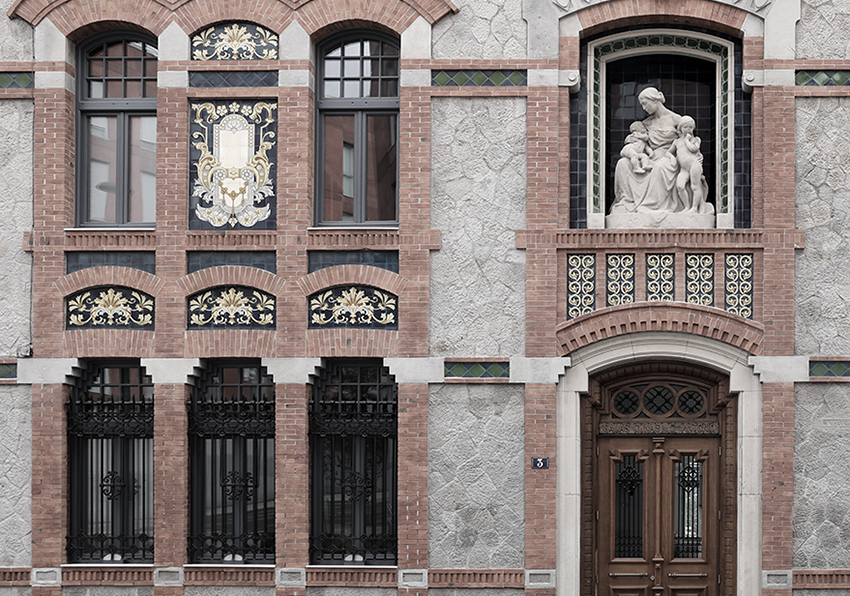
Con adivinaciones del amor construía tu rostro. Arquitecturas cómplices (1939-1999) (With Love Guessings I Built Your Face. Accomplice Architecture) is a research project by the artist Ana Teresa Ortega, commissioned by Pep Benlloch. Through photographs of architectural spaces, it reveals the reality of thousands of children who were separated by force from their mothers during the Franco dictatorship until well into the democratic era.
The project is based on three core themes: "Cárceles de mujeres" (Women prisons), "Clínicas, hospitales, casas cuna" (Clinics, hospitals, foundling homes) y "Reformatorios del Patronato de Protección a la Mujer" (Reformatories of the Board for the Protection of Women).
The misappropriation of minors started in prisons and was later extended to maternity clinics. This phenomenon was possible due to the convergence of various political, cultural, religious and economic factors, as well as certain conceptions of gender and the influence of postulations connected to eugenics.
The peculiar forms of "legal" child abduction in prisons and the subsequent thefts in hospitals and maternity clinics largely remain on the sidelines of historical research and institutional acknowledgement. Even after the restoration of democracy, these practices have not received the attention that these severe incidents require which, within the framework of international law, are connected to enforced disappearance, considered a crime against humanity.
The architectural spaces here act as bonds with our, still open, past. They are quiet witnesses of the political violence against women. A past whose memory keeps calling for the truth. The testimonies and the complaints of the victims provide sense and context to those places, facing the mechanisms of oblivion which remain today in the hegemonic tale.
The images do not restore what is lost or closes wounds, but they do highlight the places where violence took place. They are testimonies of resistance against silence and forgetfulness.
The documents that accompany these architectures aim to restore their historical identity and generate a dialogue that revive the dignity and the truth of the victims. Moreover, they are expected to assist the symbolic reconstruction of the memory and open processes of resignification of the past which continues to be a part of our present.



