

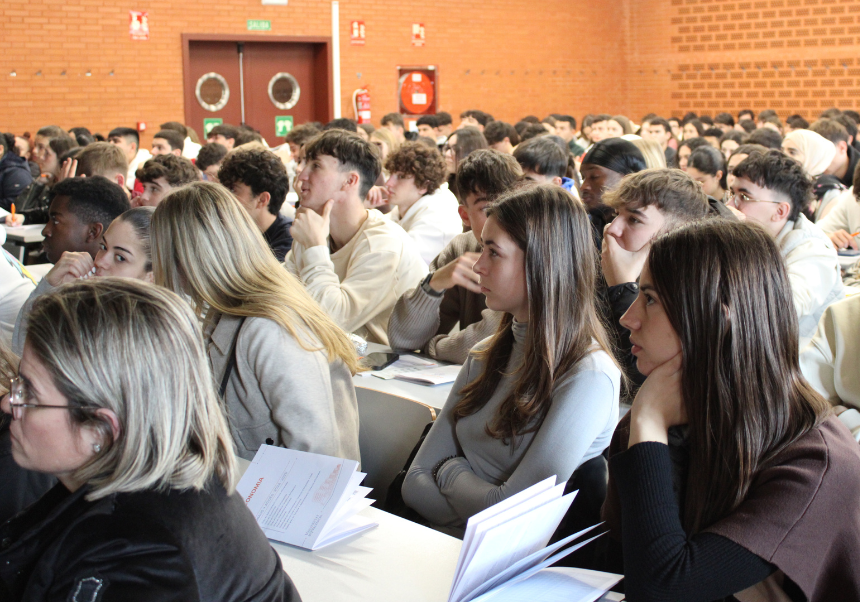
With the aim of improving the organisation and delivery of teaching to increase academic performance and satisfaction among all university groups (students, faculty, and staff), the Faculty Board agreed at its meeting on 29 January 2026 to change the size and format of teaching groups, making them theoretical-practical with a capacity of 40 students per group.
After evaluating the undesirable deviations from various quality, organisational and human resource indicators that have been recorded with the current planning based on groups of 80 students (one theory group divided into two practical groups), the Board members voted overwhelmingly in favour of the theoretical-practical group model with a capacity of 40, as opposed to the alternative model of groups of 50 students split into one theory and two practical groups, which received four votes. There were also five abstentions.
This agreement provides for the gradual implementation of the new teaching organisation model, beginning with the OCA in the 2027/28 academic year. To this end, the Faculty's representatives will request that the Universitat de València’s decision-making bodies make the necessary adjustments to the ‘Criteria for the development of official undergraduate and master's degree programmes for the 2027–28 academic year’ and subsequent years.
Currently, the Facultat d’Economia offers 1,345 places on its bachelor's and double bachelor's degree programmes, representing 15% of the total number of places available on these programmes at the Universitat de València. This quota implies a great deal of shared responsibility for the effective fulfilment of the core functions of university activity: teaching, research, and disseminating and transferring knowledge.
In this context, the decision taken by the Faculty Board, as the centre's highest governing body, clearly reflects the commitment of all its constituent university groups to moving towards an academic model that contributes more effectively to quality higher education. This will be achieved by promoting methodologies compatible with disruptive technological advances, encouraging critical thinking, and developing the personal and professional skills necessary for accessing quality jobs and promoting innovation and entrepreneurship initiatives.



