

Resultats de la cerca67 resultats
-

“It’s okay because I’m just driving”: an exploration of self-reported mobile phone use among Mexican drivers
Sergio Useche, Francisco Alonso, Mireia Faus, Arturo Cervantes Trejo, Isaac Castañeda, Oscar Oviedo-Trespalacios
(2024). ArticlePeerJ. Num.12:e16899
Introduction Technological advancements have the potential to enhance people’s quality of life, but their misuse can have a detrimental impact on safety. A notable example is the escalating issue of distracted driving resulting from the use of mobile phones behind the wheel, leading to severe crashes and injuries. Despite these concerns, both drivers’ usage patterns and their risk-related associations remain scarcely documented in Mexico. Therefore, this descriptive study aimed to examine the mobile phone usage of Mexican drivers, its relationships to risk awareness and near-miss/crash involvement, and the self-reported underlying reasons for this behavior. Methods This cross-sectional...
Introduction Technological advancements have the potential to enhance people’s quality of life, but their misuse can have a detrimental impact on safety. A notable example is the escalating issue of distracted driving resulting from the use of mobile phones behind the wheel, leading to severe crashes and injuries. Despite these concerns, both drivers’ usage patterns and their risk-related associations remain scarcely documented in Mexico. Therefore, this descriptive study aimed to examine the mobile phone usage of Mexican drivers, its relationships to risk awareness and near-miss/crash involvement, and the self-reported underlying reasons for this behavior. Methods This cross-sectional study utilized a sample of 1,353 licensed Mexican drivers who took part in a nationwide series of interviews regarding their onboard phone use settings. Results A significant percentage of drivers (96.8%) recognize using a mobile phone while driving as high-risk behavior. However, only 7.4% reported completely avoiding its use while driving, with 22.4% identified as high-frequency users. Frequency was also found positively associated with the self-reported rate of near-misses and crashes. Furthermore, qualitative data analysis highlights the emergence of a ‘sense of urgency’ to attend to phone-related tasks in response to daily demands and life dynamics, offering a potential explanation for this behavior. Conclusion The results of this study suggest common patterns of onboard mobile use among Mexican drivers concerning driving situations and associated risks. This underscores the need for increased efforts to discourage onboard phone use in the country.
Llegir més Ocultar DOI: 10.7717/peerj.16899ISSN: 2167-8359 -

"Cyclist at 12 o’clock!”: a systematic review of in-vehicle advanced driver assistance systems (ADAS) for preventing car-rider crashes
Sergio Useche, Mireia Faus, Francisco Alonso
(2024). ArticleFrontiers in Public Health. Num.12:1335209
Introduction: While Advanced Driver Assistance Systems (ADAS) have become aprominent topic in road safety research, there has been relatively little discussionabout their effectiveness in preventing car collisions involving specific vulnerableroad users, such as cyclists. Therefore, the primary objective of this systematicliterature review is to analyze the available evidence regarding the effectivenessof in-vehicle ADAS in preventing vehicle collisions with cyclists.Methods: To achieve this goal, this systematic review analyzed a selection oforiginal research papers that examined the effectiveness of ADAS systems inpreventing car-cyclist collisions. The review followed the PRISMA...
Introduction: While Advanced Driver Assistance Systems (ADAS) have become aprominent topic in road safety research, there has been relatively little discussionabout their effectiveness in preventing car collisions involving specific vulnerableroad users, such as cyclists. Therefore, the primary objective of this systematicliterature review is to analyze the available evidence regarding the effectivenessof in-vehicle ADAS in preventing vehicle collisions with cyclists.Methods: To achieve this goal, this systematic review analyzed a selection oforiginal research papers that examined the effectiveness of ADAS systems inpreventing car-cyclist collisions. The review followed the PRISMA protocol,which led to the extraction of 21 eligible studies from an initial pool of 289sources indexed in the primary scientific literature databases. Additionally, wordcommunity-based content analyses were used to examine the research topicsand their links within the current scientific literature on the matter.Results: Although the current number of studies available is still scarce (mostsources focus on car-motorcyclist or car-pedestrian crashes), the overall qualityof the available studies has been reasonably good, as determined by the selectedevaluation methods. In terms of studies’ outcomes, the literature supports thevalue of in-vehicle ADAS for preventing car-cyclist crashes. However, threatfulside effects such as unrealistic expectations of these systems and users’overconfidence or desensitization are also highlighted, as well as the need toincrease driver training and road user awareness.Conclusion: The results of this study suggest that Advanced Driver AssistanceSystems have significant potential to contribute to the prevention of drivingcrashes involving cyclists. However, the literature emphasizes the importanceof concurrently enhancing user-related skills in both ADAS use and road-userinteraction through educational and training initiatives. Future research shouldalso address emerging issues, such as ADAS-related behavioral ergonomics,and conduct long-term effectiveness assessments of ADAS in preventing car-cycling crashes and their subsequent injuries
Llegir més Ocultar DOI: 10.3389/fpubh.2024.1335209ISSN: 2296-2565 -

eMobility Expo & World Congress
Francisco Alonso
(2024). Participació en congressosEl Dr. Francisco Alonso, Director de l'INTRAS, participa a l'eMobility Expo & World Congress (EME VLC) que se celebra del 13 al 15 de febrer de 2024 a Fira València. El Dr Alonso presentarà la ponència "La consideració de l'usuari en la mobilitat elèctrica des de la R+D+i" el dia 13, en què s'exposen algunes línies i procediments per emprendre la Investigació, el Desenvolupament i la Innovació en la temàtica de la “mobilitat elèctrica” sobre les implicacions del “factor humà”, així com certes evidències que permeten dibuixar un marc estratègic i les consegüents derivades mesures i contramesures. D'altra banda, participarà a la taula rodona "Educació i ocupació: Connectant talents amb la...
El Dr. Francisco Alonso, Director de l'INTRAS, participa a l'eMobility Expo & World Congress (EME VLC) que se celebra del 13 al 15 de febrer de 2024 a Fira València. El Dr Alonso presentarà la ponència "La consideració de l'usuari en la mobilitat elèctrica des de la R+D+i" el dia 13, en què s'exposen algunes línies i procediments per emprendre la Investigació, el Desenvolupament i la Innovació en la temàtica de la “mobilitat elèctrica” sobre les implicacions del “factor humà”, així com certes evidències que permeten dibuixar un marc estratègic i les consegüents derivades mesures i contramesures. D'altra banda, participarà a la taula rodona "Educació i ocupació: Connectant talents amb la mobilitat del futur", que se celebrarà el dia 15, on es debatrà com millorar la connexió entre la formació acadèmica i les oportunitats laborals al camp de la mobilitat sostenible, discutint iniciatives per garantir que els graduats estiguin llestos per fer front als reptes d'aquest sector en evolució. L'eMobility World Congress 2024 és una conferència internacional que proporciona la plataforma més rellevant i influent per al futur de la mobilitat a través de la sostenibilitat i la tecnologia.
Llegir més Ocultar -
Publicidad social de campañas sobre tráfico, movilidad, transporte y seguridad vial: Evolución histórica de las estrategias comunicativas y percepción social de su impacto
Mireia Faus Real
(2024). TesiDirectors: Francisco Alonso i Cesáreo Fernández.
Qualificació: Excel·lent "cum laude", amb menció "Internacional"
-
Assessing the “virality” of a road safety communication campaign intended to change behavior: a case study in Spain
Mireia Faus, Francisco Alonso, Cesáreo Fernández, Sergio Useche
(2024). ArticleFrontiers in Sustainable Cities. Num.5:1295516
Introduction: The relationships between above-the-line (ATL) and below-the-line (BTL) communication and advertising strategies have been studied in many fields and procedures. Likewise, the interrelationships between both communicative typologies, when they exist, either strategically induced or spontaneously, are also known concerning their reinforcing eects.However, in the social communication field, specifically road safety communication, these interrelationships have been little studied, and few case studies have been done, particularly of those that have stood out as particularly significant. Methods: Thus, this paper investigates the implementation process of an ATL awareness...
Introduction: The relationships between above-the-line (ATL) and below-the-line (BTL) communication and advertising strategies have been studied in many fields and procedures. Likewise, the interrelationships between both communicative typologies, when they exist, either strategically induced or spontaneously, are also known concerning their reinforcing eects.However, in the social communication field, specifically road safety communication, these interrelationships have been little studied, and few case studies have been done, particularly of those that have stood out as particularly significant. Methods: Thus, this paper investigates the implementation process of an ATL awareness campaign of the Spanish Tra c Authority (DGT-General Directorate of Tra c) through the analysis of key digital reach indicators. Results: Despite the foreseeable limitations of this research regarding the repercussions and positive impact on society of the DGT communication campaign, it is nevertheless a contribution of interest regarding the digital impact that has been generated in networks (BTL communication) from a DGT campaign broadcast on variousmedia such as television, radio, posters, and social networks. Discussion: Thus, from a methodology based on an exact delimitation (two DGT TV spots -from 2022- generating a quantitative activity on X (formally Twitter) that had never before produced DGT spots), significant conclusions and results have been reached related to issues of age groups, loyalty and distortion of messages, communication impact strategies, among others.
Llegir més Ocultar DOI: 10.3389/frsc.2023.1295516ISSN: 2624-9634 -
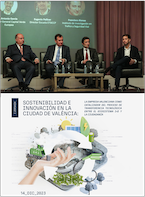
I Jornada "Sostenibilitat i Innovació a la ciutat de València"
Francisco Alonso
(2023). Participació en congressosEl Dr. Francisco Alonso, Director de l'INTRAS, ha participat a la I Jornada "Sostenibilitat i Innovació a la ciutat de València", que s'ha celebrat el 14 de desembre de 2023. El Dr. Alonso ha format part de la Taula Rodona "La nova mobilitat com a paradigma per a la descarbonització", dins de la jornada "Sostenibilitat i Innovació a la ciutat de València: l'empresa valenciana com a catalitzador del procés de transferència tecnològica entre l'ecosistema I +D i la ciutadania", organitzada per I2Con, una entitat sense ànim de lucre que busca Impulsar la Sostenibilitat ambiental i Innovació tecnològica a través d'una filosofia de constant innovació.
-
Cross-culturally approaching cycling safety from a behavioural perspective: a study in 19 countries
Sergio A. Useche, Francisco Alonso, Aleksey Boyko, Polina Buyvol, Isaac Castañeda, Boris Cendales, Arturo Cervantes, Tomas Echiburu, Mireia Faus, Zuleide Feitosa, Jozef Gnap, Mohd K. Ibrahim, Kira H. Janstrup, Ignacio Lijarcio, Irina Makarova, Cristina Marin, Rich McIlroy, Miroslava Mikusova, Mette Møller, Luis Montoro, Sylvain G. Ngueuteu-Fouaka, Steve O'Hern, Mauricio Orozco-Fontalvo, Ksenia Shubenkova, Jose Soto, Amanda Stephens, Yonggang Wang, Ellias Willberg, Phillip Wintersberger, Linus Zeuwts, Zahir H. Zulkipli, Felix Siebert
(2023). ArticleTransportation Research Procedia. Num.72:4143-4150
While promoting urban cycling has shown to represent several benefits for public health, risky behaviours might endanger cycling safety outcomes and discourage people from shifting to active transportation. Therefore, examining the relationships among riding behaviour, safety, and country-based figures seems valuable for promoting a safer and sustainable development of urban cycling worldwide. For this study, 7,001 urban cyclists from 19 countries provided data on their mobility patterns, cycling behaviours and safety outcomes. The results show that positive behaviours are overall more prevalent than risky ones. However, behavioural patterns largely vary depending on riders’ demographics...
While promoting urban cycling has shown to represent several benefits for public health, risky behaviours might endanger cycling safety outcomes and discourage people from shifting to active transportation. Therefore, examining the relationships among riding behaviour, safety, and country-based figures seems valuable for promoting a safer and sustainable development of urban cycling worldwide. For this study, 7,001 urban cyclists from 19 countries provided data on their mobility patterns, cycling behaviours and safety outcomes. The results show that positive behaviours are overall more prevalent than risky ones. However, behavioural patterns largely vary depending on riders’ demographics and country-based indexes. It supports the idea that cycling behaviour remains a key contributor to cycling outcomes, as well as the need to fill many gaps endangering riding safety across many countries.
Llegir més Ocultar DOI: 10.1016/j.trpro.2023.11.361ISSN: 2352-1465 -
Yes, size does matter (for cycling safety)! Assessing self-reported cycling behavioral factors and crash outcomes among S, M, L, and XL cities from 18 countries
Sergio A. Useche, Francisco Alonso, Aleksey Boyko, Polina Buyvol, Isaac D. Castañeda, Boris Cendales, Arturo Cervantes, Tomas Echiburu, Mireia Faus, Javier Gene-Morales, Jozef Gnap, Victor Gonzalez, Mohd K.A. Ibrahim, Kira H. Janstrup, Irina Makarova, Miroslava Mikusova, Mette Møller, Steve O'Hern, Mauricio Orozco-Fontalvo, Ksenia Shubenkova, Felix W. Siebert, Jose J. Soto, Amanda N. Stephens, Yonggang Wang, Elias S. Willberg, Philipp Wintersberger, Linus Zeuwts, Zarir H. Zulkipli, Rich C. McIlroy
(2023). ArticleJournal of Transport Geography. Num.114:103754
Abstract Although most actions aimed at promoting the use of active transport means have been conducted in ‘large’ cities, recent studies suggest that their cycling dynamics could hinder the efforts put into infrastructural, modal share, and cycling culture improvements. Aim The present study aimed to assess the role of city sizes on riding behavioral and crash-related cycling outcomes in an extensive sample of urban bicycle users. Methods For this purpose, a full sample of 5705 cyclists from >300 cities in 18 countries responded to the Cycling Behavior Questionnaire (CBQ), one of the most widely used behavioral questionnaires to assess risky and positive riding behaviors. Following...
Abstract Although most actions aimed at promoting the use of active transport means have been conducted in ‘large’ cities, recent studies suggest that their cycling dynamics could hinder the efforts put into infrastructural, modal share, and cycling culture improvements. Aim The present study aimed to assess the role of city sizes on riding behavioral and crash-related cycling outcomes in an extensive sample of urban bicycle users. Methods For this purpose, a full sample of 5705 cyclists from >300 cities in 18 countries responded to the Cycling Behavior Questionnaire (CBQ), one of the most widely used behavioral questionnaires to assess risky and positive riding behaviors. Following objective criteria, data were grouped according to small cities (S; population of 50,000 or fewer), medium cities (M; population between 50,000 and 200,000), large cities (L; population between 200,000 and one million), and megacities (XL; population larger than one million). Results Descriptive analyses endorsed the associations between city size, cycling behavioral patterns, and mid-term self-reported crash outcomes. Also, it was observed a significant effect of the city size on cyclists' traffic violations and errors (all p < .001). However, no significant effects of the city size on positive behaviors were found. Also, it stands out that cyclists from megacities self-reported significantly more violations and errors than any of the other groups. Further, the outcomes of this study suggest that city sizes account for cycling safety outcomes through statistical associations, differences, and confirmatory predictive relationships through the mediation of risky cycling behavioral patterns. Conclusion The results of the present study highlight the need for authorities to promote road safety education and awareness plans aimed at cyclists in larger cities. Furthermore, path analysis suggests that “size does matter”, and it statistically accounts for cycling crashes, but only through the mediation of riders' risky behaviors.
Llegir més Ocultar DOI: 10.1016/j.jtrangeo.2023.103754ISSN: 1873-1236 -
29è Fòrum Barcelona de Seguretat Viària
Francisco Alonso
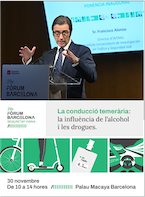
(2023). Participació en congressosEl Dr. Francisco Alonso, Director de l'INTRAS, ha impartit la Conferència inaugural del 29è Fòrum Barcelona de Seguretat Viària, que s'ha celebrat el 30 de novembre del 2023. La Conferència del Dr. Alonso, “La influència de les substàncies psicoactives en la seguretat viària: evidències de la investigació i la intervenció”, ha donat inici al 29è Fòrum Barcelona de Seguretat Viària que, amb el tema “La conducció temerària: la influència de l'alcohol i les drogues", ha volgut compartir diferents enfocaments, tant des de la perspectiva policial i legal com des de la social, institucional i de salut. Un repte que crida a la coresponsabilitat entre usuaris i administracions.
-
Intertraffic 2023
Francisco Alonso
(2023). Participació en congressosEl Dr. Francisco Alonso, Director de l'INTRAS i Membre del Comitè Consultiu de la Fundació Aleatica per a la Seguretat Viària, ha participat a Intertraffic Mèxic 2023, que se celebra del 14 al 16 de novembre de 2023 a Ciutat de Mèxic. El Dr. Alonso ha assistit a la inauguració del Congrés i Expo, ha fet acte de presència a l'estand de la Fundació Aleàtica per ser entrevistat pels mitjans de comunicació i ha impartit la Conferència "Lliçons apreses per repensar la mobilitat". Després ha participat a l'activitat "Meet d'expert" on els assistents tenen l'oportunitat d'apropar-se als experts del sector perquè els puguin ajudar a respondre els dubtes que tinguin. Intertraffic Mexico és la...
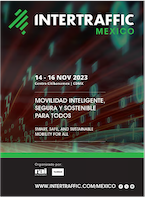
El Dr. Francisco Alonso, Director de l'INTRAS i Membre del Comitè Consultiu de la Fundació Aleatica per a la Seguretat Viària, ha participat a Intertraffic Mèxic 2023, que se celebra del 14 al 16 de novembre de 2023 a Ciutat de Mèxic. El Dr. Alonso ha assistit a la inauguració del Congrés i Expo, ha fet acte de presència a l'estand de la Fundació Aleàtica per ser entrevistat pels mitjans de comunicació i ha impartit la Conferència "Lliçons apreses per repensar la mobilitat". Després ha participat a l'activitat "Meet d'expert" on els assistents tenen l'oportunitat d'apropar-se als experts del sector perquè els puguin ajudar a respondre els dubtes que tinguin. Intertraffic Mexico és la plataforma per a empreses i professionals de la indústria del trànsit de tot el món, que volen explorar oportunitats de negocis a la regió de Llatinoamèrica. L'esdeveniment permet establir associacions, crear aliances i intercanvi de millors pràctiques entre empreses locals i internacionals. Així mateix, a través de les conferències, les principals empreses nacionals i internacionals, les institucions públiques i privades comparteixen els seus coneixements, tecnologia i solucions sobre mobilitat intel·ligent, segura, inclusiva i sostenible amb les autoritats locals i d'Amèrica Llatina.
Llegir més Ocultar



