Global scale of food loss and waste
Almost one third of all food produced each year for human consumption —approximately 1.3 billion tonnes— is lost or wasted, according to a study commissioned by the Food and Agriculture Organization of the United Nations (FAO) in 2011.
Consumers and retailers in industrialized countries waste around 222 million tonnes of food every year, mainly because they throw away perfectly edible products. Fruits and vegetables are the items with the highest waste rates.
The average consumer in Europe and North America wastes between 95 and 115 kilograms of food per year, while their counterparts in sub‑Saharan Africa, South Asia or Southeast Asia waste only between six and 11 kilograms.
Habits that generate waste
For a large part of the world’s population, food waste has become a habit: buying more food than we need at markets, letting fruits and vegetables spoil at home, or serving portions larger than we can eat.
Environmental and resource impact
These practices put greater pressure on our natural resources and harm the environment. When we waste food, we also waste the labor, effort, investment and valuable resources (such as water, seeds, feed, etc.) used in its production, not to mention the resources required for its transport and processing. In short, food waste increases greenhouse gas emissions and contributes to climate change.
Losses along the food chain
This is a major problem. In fact, worldwide, tonnes of edible food are lost or wasted every day. Nearly 14 % of all food produced globally is lost between harvest and the retail level. Enormous quantities of food are also wasted at the retail or consumer level.
The portion of food lost from harvest up to (but not including) the retail stage is known as food loss. The portion wasted at the retail or consumer level is known as food waste. This distinction helps address the root causes of the problem, in which all actors can contribute to the solution—from farmers and producers to customers and shop owners.
An urgent global challenge
Reducing food loss and waste is essential in a world where millions of people go hungry every day.
We encourage you to become a #FoodHeroUV.
It is up to us to change our habits so that not wasting food becomes a way of life.
Commitment of the University of Valencia
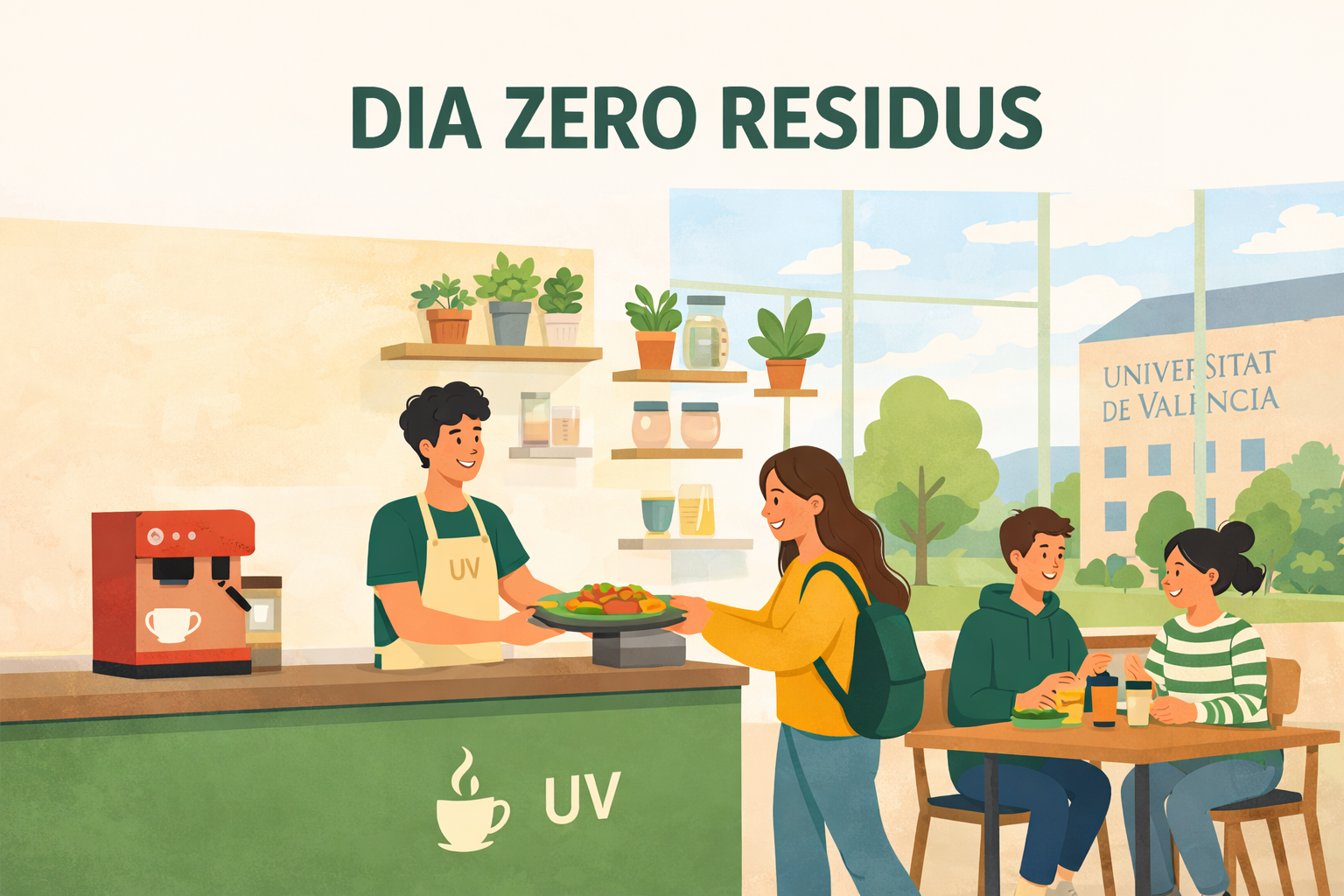
At the University of Valencia, we are committed to healthy and sustainable eating and to reducing waste and food loss. We have included clauses in cafeteria tenders promoting fresh and local products, more organic items, more fruit and vegetables, less meat, the elimination of plastic bottles, the reduction and separation of waste, and the introduction of fair‑trade coffee and other products. We also want the university community to reflect on the waste it generates. Simple actions include not taking bread if we are not going to eat it, adjusting side dishes, adapting portion sizes to what we actually eat, and considering the waste we will generate when choosing between one dish or another. The same applies to the waste generated when eating at the cafeteria versus buying packaged food from the supermarket.
We have also published the book Residuos: ¿Un planeta de usar y tirar? | Publicacions de la Universitat de València
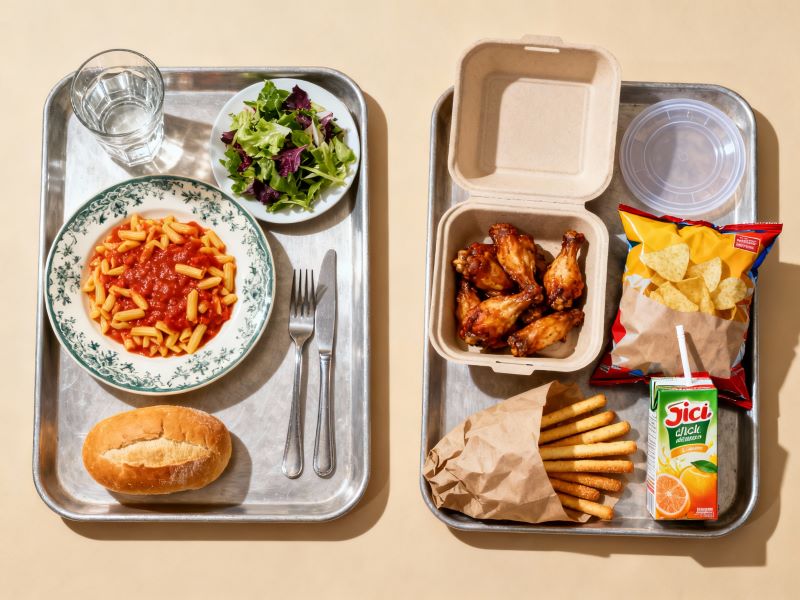
A study measuring food waste in the University of Valencia cafeterias, carried out by Tatiana Pina and María Calero and promoted by the Vice‑Rectorate for Sustainability, Cooperation and Healthy Life, will be published soon.
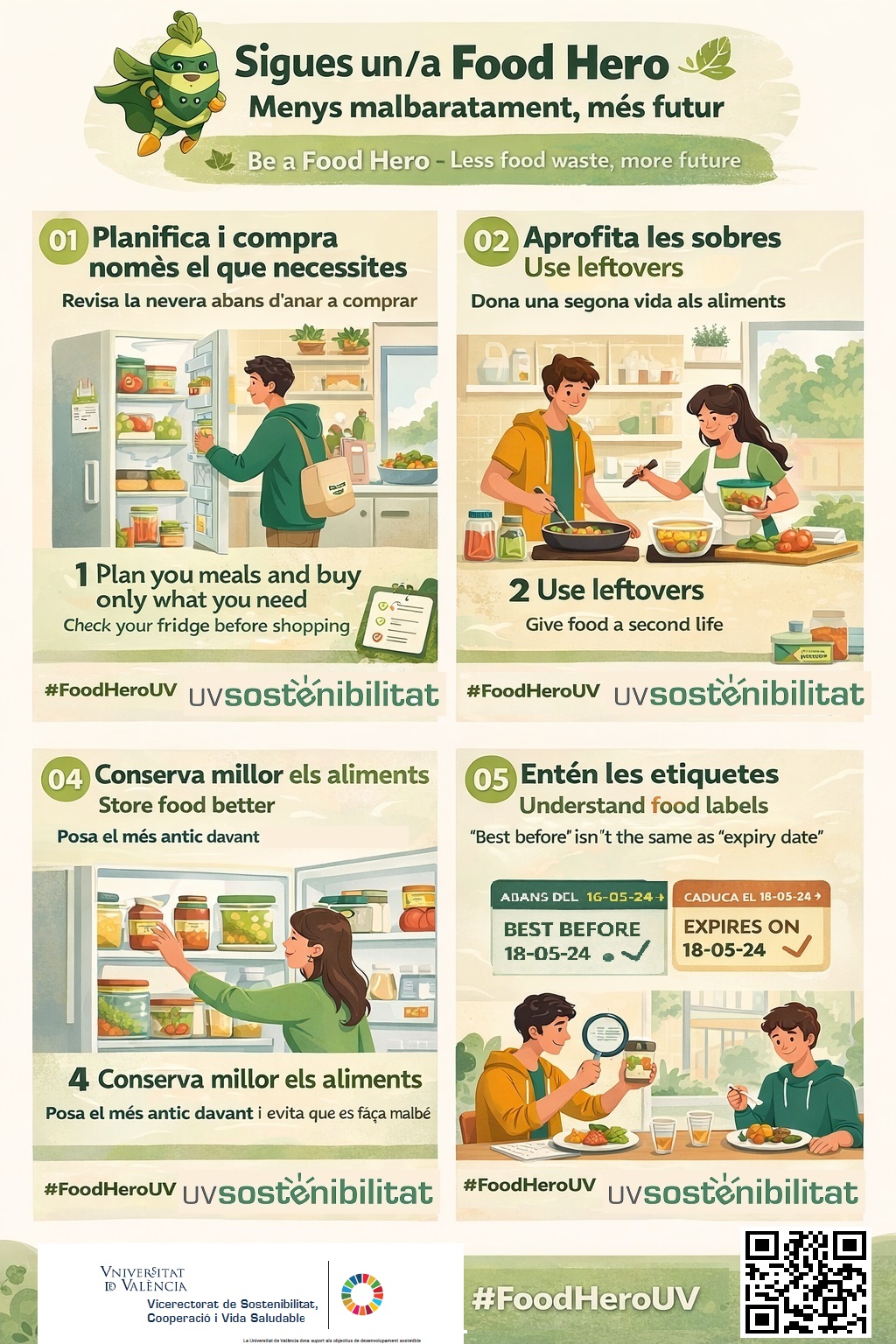
Regarding the home environment, here are some simple FAO recommendations that can help restore our connection with food and what it represents:
-
Adopt a healthier and more sustainable diet Life moves fast, and preparing nutritious meals can be challenging, but healthy meals do not need to be elaborate. The Internet is full of healthy, quick recipes to share with family and friends.
-
Buy only what you need Plan your meals. Make a shopping list and stick to it to avoid impulse purchases. You will waste less food and save money.
-
Choose “ugly” fruits and vegetables Do not judge food by its appearance. Bruised or oddly shaped produce is often thrown away because it does not meet arbitrary cosmetic standards. The taste is the same. Use ripe fruit for smoothies, juices or desserts.
-
Store food wisely Move older products to the front of the cupboard or fridge and place newer ones at the back. Use airtight containers to keep opened food fresh in the fridge and make sure packages are properly closed to keep insects out.
-
Understand food labels There is a big difference between “best before” and “use by” dates. Foods are often still safe to eat after the “best before” date, while the “use by” date indicates when consumption is no longer safe. Check labels for unhealthy ingredients such as trans fats or preservatives, and avoid foods with added sugar or salt.
-
Start with smaller portions Serve smaller portions at home or share large dishes at restaurants.
-
Value leftovers If you do not eat everything you prepare, freeze it for later or use leftovers as ingredients in another meal.
-
Make use of food scraps Instead of throwing food waste in the bin, compost it. This returns nutrients to the soil and reduces your carbon footprint.
-
Respect food Food connects us all. Reconnect with it by learning about how it is produced. Read about food production and get to know local farmers.
-
Support local food producers Buying local products supports family farmers and small businesses in your community. It also helps reduce pollution by shortening transport distances.
-
Keep fish populations afloat Choose more abundant fish species such as mackerel or herring instead of overexploited ones like cod or tuna. Buy sustainably caught or farmed fish, such as those with eco‑labels or certifications.
-
Use less water We cannot produce food without water. While it is important for farmers to use less water in agriculture, reducing food waste also saves all the water used in food production. Reduce water consumption in other ways: fix leaks or turn off the tap while brushing your teeth.
-
Keep soil and water clean Some household waste is potentially hazardous and should never be thrown into general rubbish bins. Items such as batteries, paint, mobile phones, medicines, chemicals, fertilizers, tyres or ink cartridges can contaminate soil and water, harming the natural resources used to produce our food.
-
Eat more legumes and vegetables Try to eat at least one meal a week based on legumes or “ancient” grains such as quinoa.
-
Sharing is caring Donate food that would otherwise be wasted. For example, apps allow neighbours to connect with each other and with local businesses so that surplus food can be shared instead of thrown away.