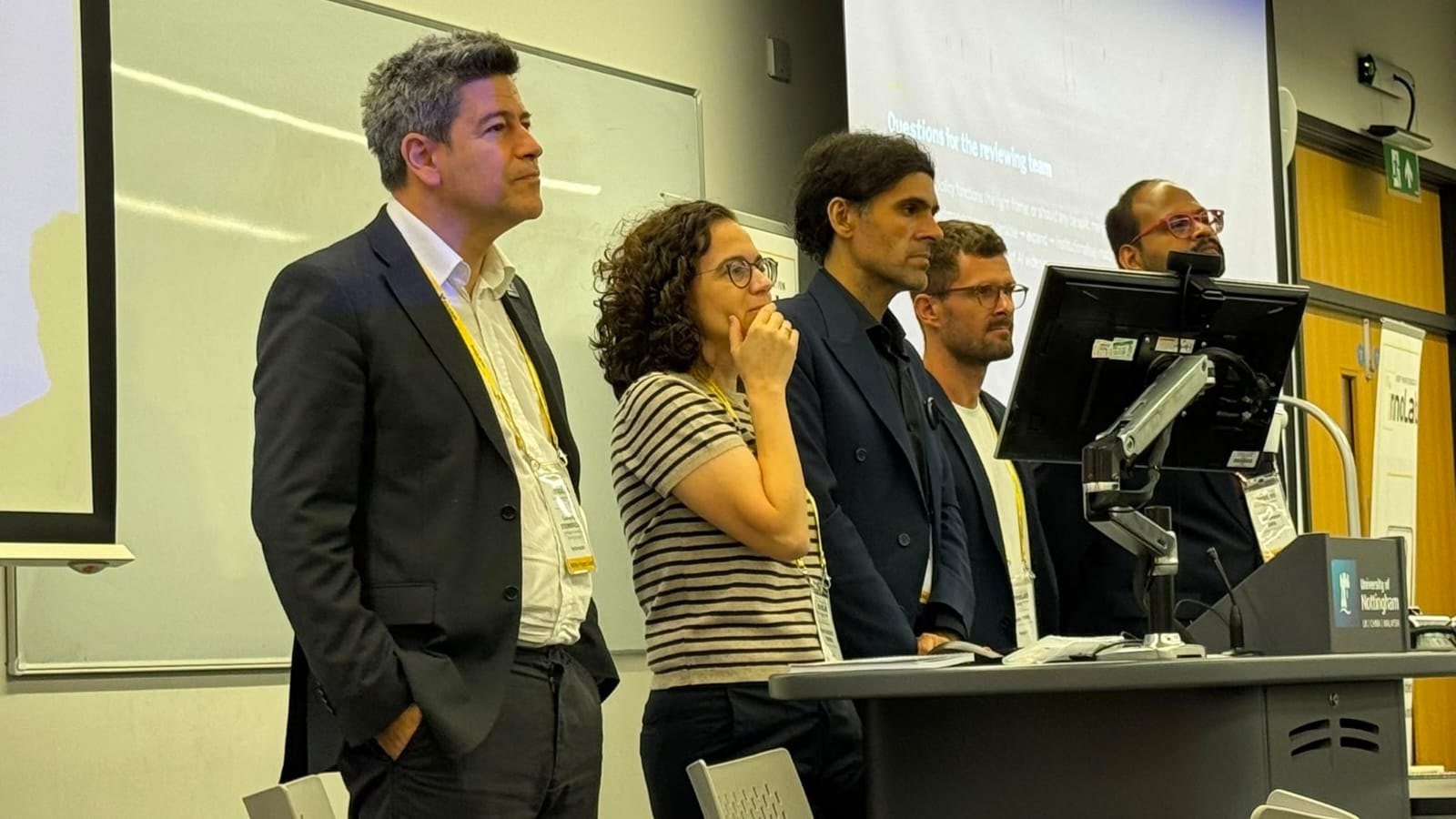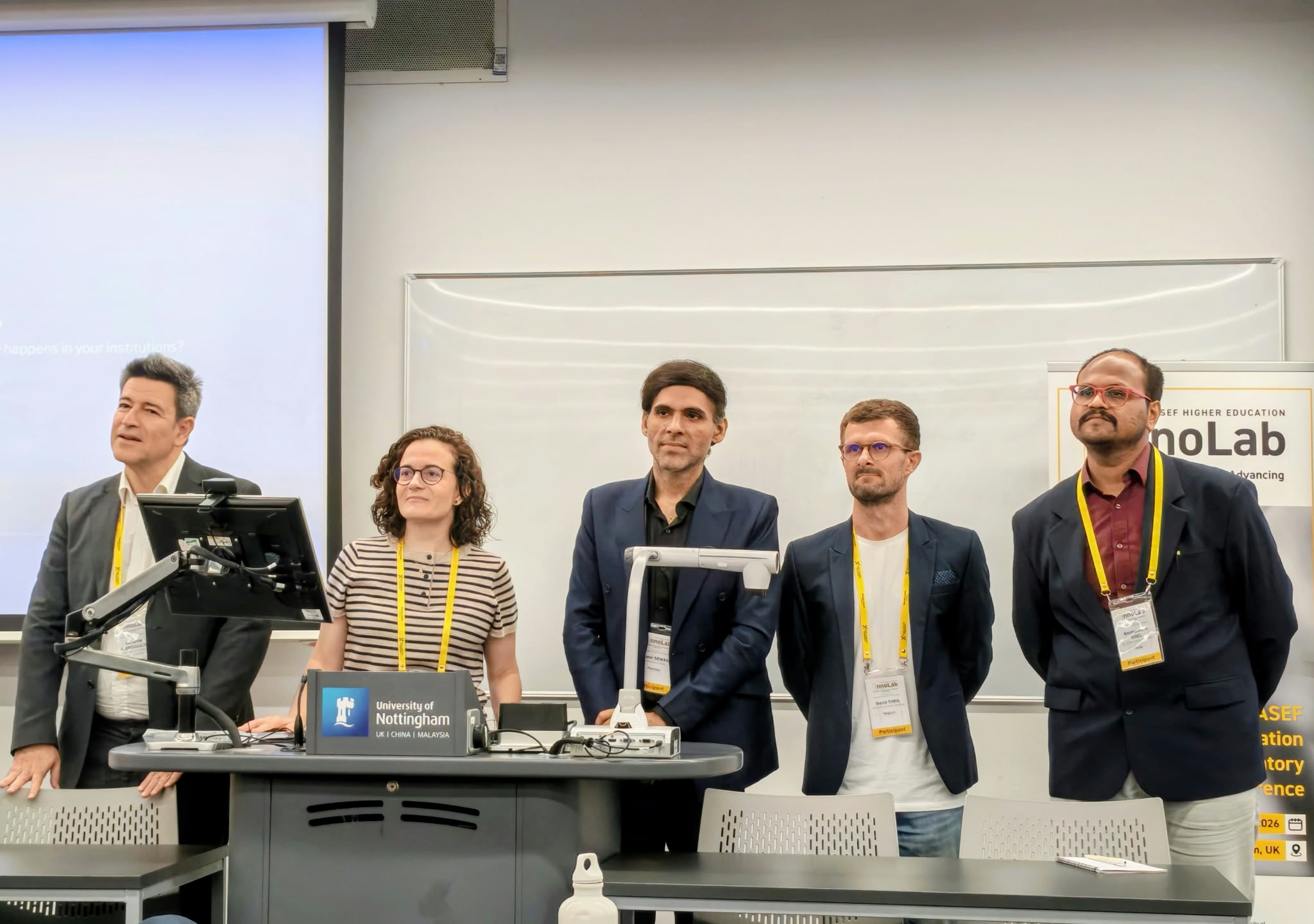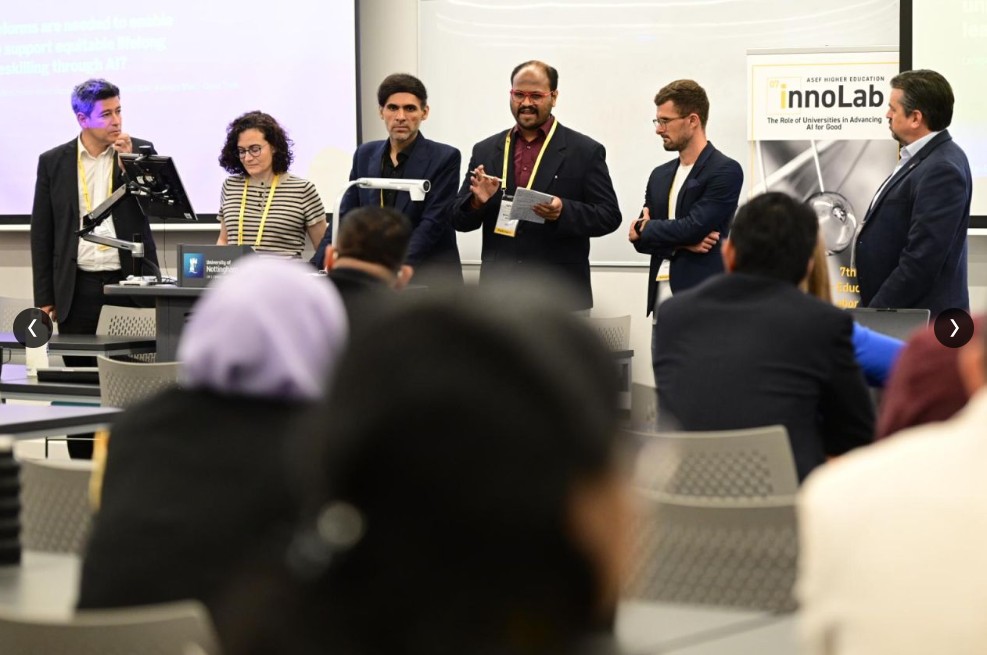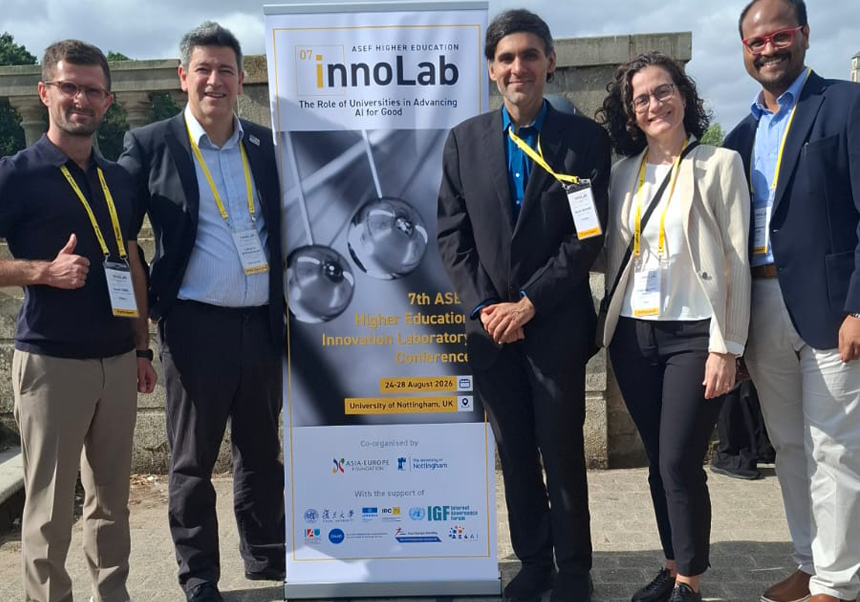
While Bill Gates was sharing his 12-page warning about artificial intelligence, Cinta Gallent-Torres’s team at ASEFInnoLab7 was presenting a position paper on how universities can harness AI to promote more equitable lifelong learning and advance reskilling and upskilling opportunities.
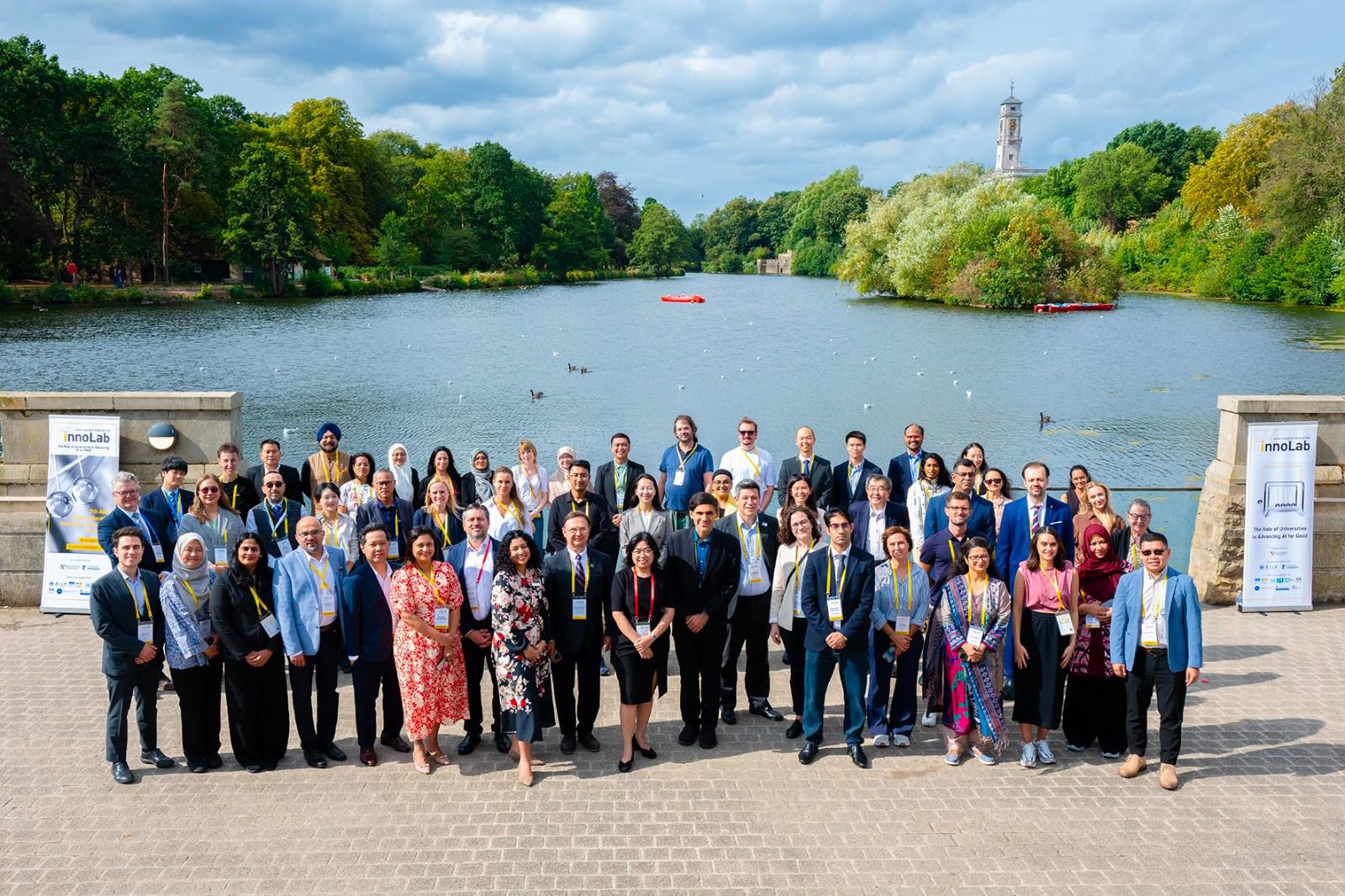
This work is the result of a process that began several months ago with participation in the ASEF Higher Education Innovation Laboratory, an initiative promoted by the Asia-Europe Foundation (ASEF), which this year was held under the theme The Role of Universities in Advancing AI for Good.
Throughout this process, Cinta Gallent-Torres, a lecturer in the Department of French and Italian Philology at the Universitat de València, worked closely with an international team comprising Prof. Lampros Stergioulas (The Hague University of Applied Sciences, the Netherlands), Munir Moosa Sewani (University of Malta, Pakistan), David Timis (Global Governance Institute, Belgium), Anshumaan Goel (OP Jindal Global University, India), and Katerina Makri (University of Thessaly, Greece), exploring an increasingly urgent question: what changes in university policies are needed to ensure equitable lifelong learning and reskilling opportunities in a context shaped by artificial intelligence?
The speed at which AI is transforming tasks, professions and skills makes it necessary to broaden our perspective beyond the technical, ethical, pedagogical and economic approaches through which this technology is usually addressed. Two concepts, in particular, require us to broaden this perspective: lifelong learning and reskilling. The rapid pace at which AI is transforming tasks, professions and skills means that learning can no longer be understood as a stage limited to the early years of education and training. Universities face the challenge of providing opportunities for people to continue learning, update their skills and acquire new ones throughout their lives, while ensuring that this transformation does not widen existing inequalities. The question, therefore, is not simply how to incorporate AI into higher education, but how to ensure that the opportunities it creates are accessible to everyone, at every stage of their professional and educational journey.
This reflection took concrete shape during the 7th edition of ASEFInnoLab, organised by ASEFEdu and hosted by the University of Nottingham, where the team presented the jointly developed white paper. Three particularly relevant ideas emerged from this work:
First, AI governance must go beyond pedagogy. Using artificial intelligence to support lifelong learning is not merely a technological or educational issue, but also a matter of policy and governance. For this transformation to be genuinely inclusive, innovation must be accompanied by funding, flexible certification models and structural reforms that enable universities to respond to emerging training needs.
Second, we need to prevent AI from creating a new structural divide. Access to advanced artificial intelligence tools cannot become a privilege reserved for institutions with greater resources or students with greater financial means. Ensuring equitable access to these technologies is essential to prevent digital transformation from exacerbating existing inequalities.
Finally, the paper highlights algorithmic equity and data sovereignty. In high-risk applications, such as those related to admissions or student monitoring, it is essential to prevent technology from automating processes of exclusion. Human oversight, transparency and explainability, together with support for low-resource languages, are essential to protecting underrepresented groups.
Warnings about the risks and challenges of AI, such as those raised by Bill Gates, highlight the urgency of the current moment. But collaborative initiatives such as ASEFInnoLab7 also show that universities should not simply react to the changes brought about by artificial intelligence. They can anticipate and help shape these changes and contribute to the policies that will determine how we explore this transformation.
Through Cinta Gallent-Torres’s participation in this initiative, the Universitat de València has joined this international debate on the role of universities in the face of AI and has contributed, drawing on its experience and commitment to responsible and inclusive education, to developing proposals aimed at ensuring that the transformation driven by artificial intelligence leaves no one behind.
Links:
Images: