In the spring semester of 2025, a group of students from the University of València set out to design a series of CLIL-focused events that would bring together BA, MA, and PhD students to exchange research insights and innovative teaching practices in bilingual, CLIL, and multilingual education.
To meet the Alliance’s criteria, the project was approached not as a formality, but as a genuine opportunity for co-creation. Through the FORTHEM Lab network, students from the University of Jyväskylä and the University of Opole joined the organising team, turning the initiative into a truly transnational endeavour. External collaboration was further strengthened by the participation of experienced CLIL researchers and practitioners as invited discussants and plenary speakers.
The result was EURO-CLIL, a student-driven project developed jointly by students and staff from València, Jyväskylä, and Opole. Its dual objective was clear: to foster meaningful academic dialogue among students at different stages of their academic journeys, and to offer teachers and other end users practical ideas to support teaching and learning in bilingual and multilingual settings.
From shared concerns to shared dialogue
CLIL and bilingual education are well-established pillars in the European educational landscape, yet they are increasingly questioned in many contexts. Can subject content be effectively learned through a foreign language? Do linguistic demands create barriers for some learners? How can teachers ensure inclusion while maintaining academic rigor?
EURO-CLIL responded to these questions by creating spaces for open, cross-sector dialogue between researchers, future teachers, and in-service educators, with a particular focus on scaffolding practices and the role of technology in supporting both language and content learning.
Event 1: Listening to teachers across Europe
The first step in this dialogue took place on 17 October 2025, with an online roundtable led teachers from bilingual and multilingual schools across Europe. Three teachers from Finland, Spain, and Poland were invited to lead the discussion. They shared the everyday realities of CLIL classrooms: balancing curricular demands, supporting learners with diverse linguistic profiles, and navigating rapid technological change.
The roundtable foregrounded teachers’ voices and set the tone for the project. Rather than presenting ready-made solutions, it highlighted shared challenges and common ground, laying the foundation for deeper discussion during the conference that followed. More than 85 participants attended the roundtable online.
Event 2: The EURO-CLIL hybrid conference
These conversations culminated in the EURO-CLIL hybrid conference, held on 20–21 November 2025 at the Faculty of Philology, Translation and Communication, University of València, with online participation enabling broad international access.
The conference combined plenary talks, teacher contributions, and a rich programme of student presentations, reflecting the project’s commitment to dialogue across experience levels.
Plenary sessions offered complementary perspectives on the current state and future of CLIL at different educational levels. Marisa Pérez Cañado (Universidad de Jaén, Spain) opened the discussion with “So… is CLIL worth the hype? What’s hot and what’s not on the CLIL agenda”, offering a critical overview of current trends, achievements, and unresolved tensions in CLIL research and practice.
A multimodal turn in CLIL pedagogy was then explored by Josephine Moate (University of Jyväskylä, Finland) in her plenary “Towards a multimodal pedagogical model for CLIL”, which examined how meaning-making across modes can enhance both inclusion and learning.
The plenary programme concluded with a forward-looking and practice-oriented contribution by Dorota Kamińska (University of Opole, Poland). In the practical workshops “Beyond the Coursebook: AI-Powered CLIL Activities for EFL Classrooms”, participants explored how artificial intelligence can be used creatively to design scaffolded CLIL tasks that go beyond traditional materials while remaining pedagogically grounded.
Alongside the plenaries, teachers’ contributions grounded the discussion in practice. Experiences shared through 29 presentations by students from Spain, Poland, Latvia, Turkey, Ireland and Finland illustrated how CLIL is implemented in vocational and general education contexts. In total, we had around 80 presenters and more than 100 participants both online and onsite.
Students at the centre
A defining feature of EURO-CLIL was the prominence of student presentations from Spain, Finland, and Poland. Across thematic panels, students showcased research projects and teaching initiatives addressing:
- effective CLIL practices,
- technology as scaffolding,
- inclusive strategies for diverse and special-needs classrooms,
- and language learning through subject content.
These sessions demonstrated not only the breadth of current CLIL-related research, but also the capacity of students to engage critically with real educational challenges and propose informed, innovative responses.
Looking ahead
EURO-CLIL showed what is possible when students are trusted as organisers, researchers, and facilitators of academic exchange. By connecting voices across countries, educational sectors, and stages of expertise, the project transformed shared concerns into shared dialogue and dialogue into collaboration.
What emerged was more than a conference series: it was a learning community, built across borders, committed to making CLIL more reflective, inclusive, and responsive to the realities of today’s classrooms.
A truly student-led initiative
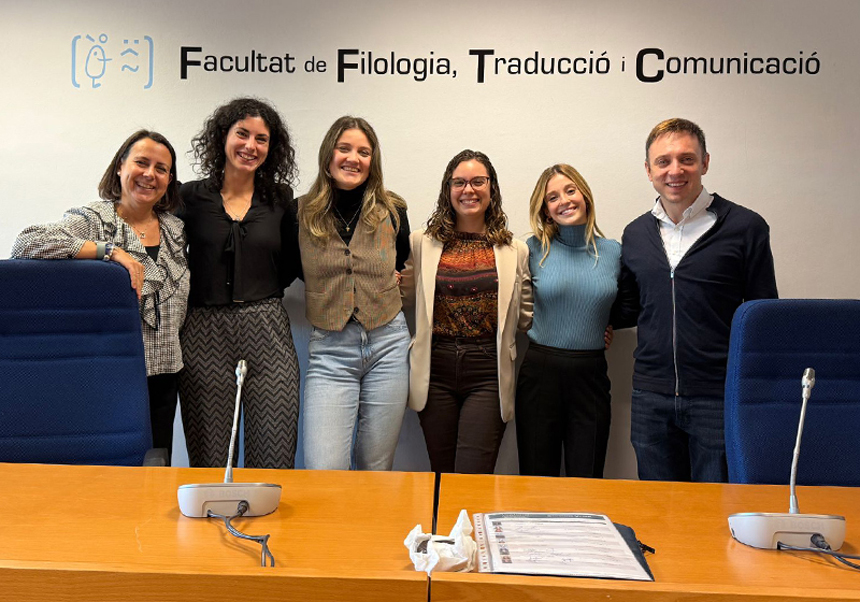
At the heart of EURO-CLIL was a committed and highly collaborative organising committee, whose work shaped the project from its initial idea to its successful implementation. The conference and accompanying events were coordinated by María Martínez Zarzo, Laura Castañe Bassa, Kamila Styś, Noemí Barrera Rioja, Sandra Celda Pérez, and Patricia Guill García, whose collective efforts ensured academic quality, smooth organisation, and an inclusive, dialogic atmosphere throughout the project. Their work exemplified the potential of student-led initiatives to foster meaningful international collaboration in higher education.
Authors: Laura Castañe Bassa, Kamila Styś