

-
Regiones Creativas. Estudiando la atractividad de la Región Metropolitana de Valencia para la clase creativa.
Arestey Pablo, Vicente
València , 2010. Projecte fi de màsterThe aim of this paper is to gauge the opinion of workers in the creative and knowledge sectors in order to clarify to what extent the Valencia Metropolitan Region (RMV) is attractive to them, to the creative class (Florida 2002). According to him, these workers generate more competitive economies and seek attractive urban areas in terms of cultural and leisure activity, tolerant in terms of lifestyles. In other words, in addition to the more easily quantifiable hard factors, we will try to measure soft location factors such as an attractive residential environment, public space and meeting places in order to have the human talent base necessary to turn the RMV into an area whose economy is...
The aim of this paper is to gauge the opinion of workers in the creative and knowledge sectors in order to clarify to what extent the Valencia Metropolitan Region (RMV) is attractive to them, to the creative class (Florida 2002). According to him, these workers generate more competitive economies and seek attractive urban areas in terms of cultural and leisure activity, tolerant in terms of lifestyles. In other words, in addition to the more easily quantifiable hard factors, we will try to measure soft location factors such as an attractive residential environment, public space and meeting places in order to have the human talent base necessary to turn the RMV into an area whose economy is cognitive, based on creative and knowledge sectors. (See point 2.1). Subsequently, the results will be compared with those of the European cities participating in the ACRE project to get a clearer picture. This will help to improve the understanding of the conditions that determine the emergence of a knowledge and creativity economy and its importance for the improvement of competitiveness. This will be the subject of further work, although some employment data are advanced in chapter 5. The methodology used (see chapter 2) is based on the European ACRE project since the usefulness of the study lies in its possibilities for comparison with the other cities involved. Posteriormente, se compararán los resultados con los de las ciudades europeas que participan en el proyecto ACRE para obtener una visión más clara. Esto ayudará a mejorar a la comprensión de las condiciones que determinan la aparición de una economía del conocimiento y la creatividad y de su importancia para la mejora de la competitividad. Esto será objeto de otro trabajo, aunque en el capítulo 5 se adelantan algunos datos relativos al empleo. La metodología utilizada (véase el capítulo 2) está basada en el proyecto europeo ACRE ya que la utilidad del estudio radica en sus posibilidades de comparación con el resto de ciudades implicadas Posteriorment, es compararan els resultats amb els de les ciutats europees que participen en el projecte ACRE per a obtindre una visió més clara. Això ajudarà a millorar a la comprensió de les condicions que determinen l'aparició d'una economia del coneixement i la creativitat i de la seua importància per a la millora de la competitivitat. Això serà objecte d'un altre treball, encara que en el capítol 5 s'avancen algunes dades relatives a l'ocupació. La metodologia utilitzada (vegeu el capítol 2) està basada en el projecte europeu ACRE ja que la utilitat de l'estudi radica en les seues possibilitats de comparació amb la resta de ciutats implicades
Read more Hide -
Valencia desde la Huerta al Ocio. .
Rausell-Köster, Pau
València , 2010. ArticleOn the occasion of the commemoration of the fiftieth anniversary of the flood of 1957, the MuVIM wanted to offer not only a documented exhibition - The laughter that changed Valencia - whose catalogue contains a rigorous, and sometimes new, account of the events - including previous events - and their immediate consequences. As on other occasions, the MuVIM also organized a conference, where the central objective was to analyse some of the processes that were decisive for the transformation experienced by the city in the fifty years after the flood. This book, the fruit of those days in November 2007, aims to open up new perspectives for discussion and contrast that will help define, in the...
On the occasion of the commemoration of the fiftieth anniversary of the flood of 1957, the MuVIM wanted to offer not only a documented exhibition - The laughter that changed Valencia - whose catalogue contains a rigorous, and sometimes new, account of the events - including previous events - and their immediate consequences. As on other occasions, the MuVIM also organized a conference, where the central objective was to analyse some of the processes that were decisive for the transformation experienced by the city in the fifty years after the flood. This book, the fruit of those days in November 2007, aims to open up new perspectives for discussion and contrast that will help define, in the most consensual way possible, sensible and efficient urban policies.
Read more HidePp. 14
HANDLE: 10550/78171 -

El valor económico de la Cultura en la Región de Murcia.
Uriel, Ezequiel Rausell, Pau
Murcia: Murcia Cultural, S.A. , 2010. LlibreObtaining an estimate of the cultural GDP in the Region of Murcia, by means of a regional culture satellite account.
ISBN: 978-84-96898-46-2Legal Deposit: MU-1.407-2009 -
El sector de la cultura como sector estratégico en el cambio del modelo productivo. Análisis de la productividad
Rausell-Köster, Pau Marco-Serrano, Francisod
(2010). LlibreEconomía y empleo en la cultura.
Although the concept of changing the Spanish productive model has been talked and written about since the 2004 elections, reflections on the issue have taken centre stage since the economic crisis has manifested itself with greater virulence. When academics, trade unionists or politicians lie about the issue, they are basically referring to the "desire" that instead of a considerable part of our wealth and jobs originating in the construction or tourism sectors, with very low productivity, this wealth and employment should be located in the aeronautics, renewable energies, ICT sectors, biotechnology, research or other advanced services. There is no doubt that there are some sectors capable...
Although the concept of changing the Spanish productive model has been talked and written about since the 2004 elections, reflections on the issue have taken centre stage since the economic crisis has manifested itself with greater virulence. When academics, trade unionists or politicians lie about the issue, they are basically referring to the "desire" that instead of a considerable part of our wealth and jobs originating in the construction or tourism sectors, with very low productivity, this wealth and employment should be located in the aeronautics, renewable energies, ICT sectors, biotechnology, research or other advanced services. There is no doubt that there are some sectors capable of generating more wealth per worker than others, and there is no doubt that there are sectors that offer more attractive jobs than hotel receptionists, shop assistants in a department store or bricklayers.
Read more HideEditor: Enrique Hernández Pavón
Legal Deposit: SE-8634/2010 -
Inspiring and Manufacturing
Rausell-Köster, Pau
València: Bostezo , 2010. ArticlePublicaciones Econcult: Área de Investigación en Economía de la Cultura y Turismo.
A de-acralising exercise consists of thinking, researching and observing the price, which in the long term does not differ from the value, as a certain popular adage seems to advocate, of symbolic production. This has a price of three Euros. If we divide up the 80 Euros that I am promised to pay by the publishers of Badall magazine, by the 8000 characters that they demand of me, the result is that to the previous point I have produced enough to pay for the country on Sunday 7 February (2.20 Euros), plus the film 16 Calles than for 0.80 cents they are proposing to me today. It's not bad, is it? I have materialised in three lines, my historical investment in reputation – if not Badall’s would...
A de-acralising exercise consists of thinking, researching and observing the price, which in the long term does not differ from the value, as a certain popular adage seems to advocate, of symbolic production. This has a price of three Euros. If we divide up the 80 Euros that I am promised to pay by the publishers of Badall magazine, by the 8000 characters that they demand of me, the result is that to the previous point I have produced enough to pay for the country on Sunday 7 February (2.20 Euros), plus the film 16 Calles than for 0.80 cents they are proposing to me today. It's not bad, is it? I have materialised in three lines, my historical investment in reputation – if not Badall’s would not have sought me out – my investment in human capital and therefore my ability to present structured knowledge, and, finally, those who pay me, I also suppose, pay for my peculiar talent; that is to say for my ability to present this structured information with some wit, so that it is attractive to readers and so that these readers, after experience, will increase their availability to pay for the next numbers of Badall magazine.
Read more HidePp. 4
HANDLE: 10550/78174 -

O mercado dos bens culturais
Rausell, Pau
(2009). LlibreA mercantilización e a regulación do coñecemento.
Podemos encontrar numerosas aproximaciones que desde la Academia traten de acotar qué es un “bien cultural”. De entre todas ellas, la que a nosotros nos interesa es la pone el acento en dos atributos de dicho bien; a) es un bien cultural aquel que o en su producción o en su consumo –más tarde veremos que hay menos diferencias de las previstas entre estos dos procesos - los sujetos que los producen o consumen lo hacen con una deliberada intención de obtener/generar algún impacto estético, cognitivo, espiritual o comunicativo que vaya más allá de la mera utilización del tiempo de ocio. b) es un bien cultural aquel que es imposible detectar con anticipación cuál va a ser la satisfacción –...
Podemos encontrar numerosas aproximaciones que desde la Academia traten de acotar qué es un “bien cultural”. De entre todas ellas, la que a nosotros nos interesa es la pone el acento en dos atributos de dicho bien; a) es un bien cultural aquel que o en su producción o en su consumo –más tarde veremos que hay menos diferencias de las previstas entre estos dos procesos - los sujetos que los producen o consumen lo hacen con una deliberada intención de obtener/generar algún impacto estético, cognitivo, espiritual o comunicativo que vaya más allá de la mera utilización del tiempo de ocio. b) es un bien cultural aquel que es imposible detectar con anticipación cuál va a ser la satisfacción – utilidad - que nos reporte; es decir que se trata de un bien de experiencia en el que sólo después de usado/practicado/consumido tenemos la información suficiente para determinar la “satisfacción” que nos ha proporcionado. Hasta aquí, los atributos señalados no presuponen de ninguna manera que dicho bien sea intercambiado mediante mecanismos de mercado y con esta aproximación bienes culturales podrían ser desde puestas de sol en el Mediterráneo, poemas escritos por un ama de casa en un pueblo de Galicia, la contemplación de unos cuadros en un museo o conversaciones con un librero de lance…. Si alguno/a de los que se exponen a esas situaciones lo hace con la intención deliberada de obtener algún impacto de los reseñados anteriormente. La intencionalidad tampoco presupone que finalmente el impacto estético, cognitivo, espiritual o comunicativo se consiga de alguna forma, sino sólo que dicha finalidad sea perseguida por aquel que se expone al “proceso cultural”. En este sentido se puede señalar que la mayoría de los bienes culturales se convierten en experiencias culturales frustradas que lo único que nos permiten es acumular indicios para evaluar mejor la probabilidad de obtener outputs culturales en las próximas exposiciones similares.
Read more Hide(En gallego la versión publicada)
ISBN: 9788498874044 -
The professional sector of culture in the Region of Murcia. Characteristics of cultural management and the detection of training needs.
Rausell-Köster, Pau Cabañés Martínez, Francesc Abeledo Sanchis, Raül
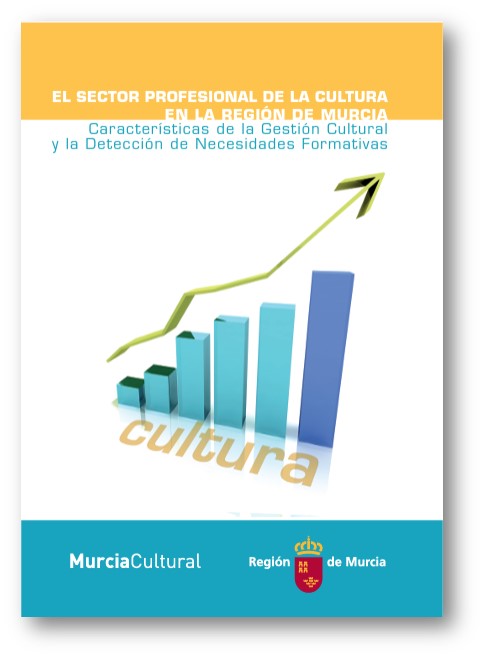
Murcia: Murcia Cultural , 2009. LlibreThe profession of cultural management is an occupational activity that is currently at a real crossroads, as it finds itself, after more than 25 years of development, in a process - we believe definitive - of consolidation and definition. From the reflections of the sector itself -difusely defined-, the dynamics of the professional experience itself and the structuring of the sector on the basis of professional associations, the growing centrality of culture in the public and private spheres, and the consolidation in the training system of regulated proposals make up a whole process that converges towards the definition of a more precise approach to the characteristics, the conditioning...
The profession of cultural management is an occupational activity that is currently at a real crossroads, as it finds itself, after more than 25 years of development, in a process - we believe definitive - of consolidation and definition. From the reflections of the sector itself -difusely defined-, the dynamics of the professional experience itself and the structuring of the sector on the basis of professional associations, the growing centrality of culture in the public and private spheres, and the consolidation in the training system of regulated proposals make up a whole process that converges towards the definition of a more precise approach to the characteristics, the conditioning factors of professional development. In the last 5 years, there has been a notable increase in studies and research on the activity of cultural management, and underlying many of these initiatives is the intention to delimit the margins of the process of transforming "this work" into a profession.
Read more HidePp. 116
HANDLE: 10550/78173ISBN: 978-84-96898-47-9 -
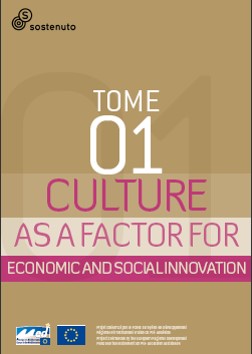
Culture as a factor for Economic and Social Innovation.
Scientific coordination: Pau Rausell Köster Editorial coordination: Raúl Abeledo Sanchis Contributors: Blanco Sierra, Óscar (Econcult, UV) Boix Doménech, Rafael (Economic Structure Department, UV) De Miguel Molina, Blanca (UPV) Hervás Oliver, José Luis (UPV) Marco-Serrano, Francisco (K|P|K, UV) Pérez-Bustamante Yábar, Diana (Universidad Rey Juan Carlos) Pérez Vázquez, Pedro (MC2, UV) Vila Lladosa, Luis (MC2, UV)
(2009). InformesSostenuto, which brought together seven partners of a very different nature,aimed to encourage reflection on social and economic innovation in the Medspace. It enabled the experimentation, modeling and dissemination of newmanagement and organizational models in the cultural sector.With the intent of making a significant contribution and participating in theongoing mutations, all the partners made consistent efforts to open thedebate, confronting opinions, widening the thematic and geographical scopeand taking a stance. The recent crises have only reinforced the need for publicdiscussion and alternative views on development.The publication that puts the final note to the Sostenuto project,...
Sostenuto, which brought together seven partners of a very different nature,aimed to encourage reflection on social and economic innovation in the Medspace. It enabled the experimentation, modeling and dissemination of newmanagement and organizational models in the cultural sector.With the intent of making a significant contribution and participating in theongoing mutations, all the partners made consistent efforts to open thedebate, confronting opinions, widening the thematic and geographical scopeand taking a stance. The recent crises have only reinforced the need for publicdiscussion and alternative views on development.The publication that puts the final note to the Sostenuto project, based on twocomplementary volumes, was also written from this perspective.This first volume, elaborated by the Cultural Economics Research Unit(Econcult) - University of Valencia (Spain), proposes an economic analysis ofthe relationships between culture, innovation and development in Europe andparticularly in the Med space.The results of Econcult’s research are put into perspective in the secondvolume: “Culture & Innovation(s), Europe seen from the South”, coordinated byRelais Culture Europe.
Read more Hide -
La renovación de las políticas públicas y del marco regulatorio para el sector cultural
Rausell Köster, Pau
(2009). LlibreEl sector cultural hoy: oportunidades, desafíos y respuestas. Seminario Internacional. MEMORIAAS.
Pág 117-133
ISBN: 978-958-8387-34-5 -
El Valor Económico de la Cultura en la Isla de Gran Canaria.
Uriel Jiménez, Ezequiel Rausell Köster, Pau Murphy, Tony R.
Gran Canaria: CONSEJERÍA DE DESARROLLO ECONÓMICO, OBRAS PÚBLICAS E INFRAESTRUCTURAS Y TRANSPORTES CABILDO DE GRAN CANARIA , 2009. Informes
 Research Unit in Cultural Economics and Tourism (ECONCULT)


© 2026 UV. - Avinguda dels Tarongers, s/n. 46022 València. Phone number: (+34) 963 828 645