

-
The Calatrava model: reflections on resilience and urban plasticity
Boix, Rafael Rausell, Pau Abeledo, Raül
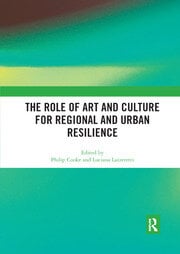
(2019). LlibreThe Role of Art and Culture for Regional and Urban Resilience.
This book analyses the influence of art and culture as an engine to promote the resilience of regional and urban economies. Under a multidiscplinary perspective, the book examines the contribution of some creative regions and cities as places in which processes of transformation, innovation and growth are activated in response to external pressures. Through different theoretical frameworks and empirical investigations and suggesting a critical discussion of the notion of resilience, the authors argue that cultural and creative resources may offer a sustainable model in order to afford different typologies of shocks. The book will appeal scholars of regional and urban science and cultural...
This book analyses the influence of art and culture as an engine to promote the resilience of regional and urban economies. Under a multidiscplinary perspective, the book examines the contribution of some creative regions and cities as places in which processes of transformation, innovation and growth are activated in response to external pressures. Through different theoretical frameworks and empirical investigations and suggesting a critical discussion of the notion of resilience, the authors argue that cultural and creative resources may offer a sustainable model in order to afford different typologies of shocks. The book will appeal scholars of regional and urban science and cultural and creative economies and will open up a number of considerations for policy makers.
Read more Hide ISBN: 9780367892067 -
Cities as Enablers of Innovation
Concilio, Grazia Li, Chuan Rausell, Pau Tosoni, Ilaria
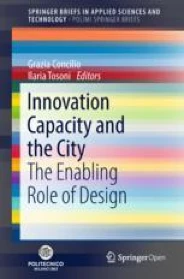
(2019). LlibreInnovation Capacity and the City: The Enabling Role of Design.
The relationship between cities and innovation in present times can be regarded from a distinctive perspective. As it is vital to rethink our development patterns, in order to contrast global warming and its ominous threats, cities are themselves concrete materials for innovation. Therefore, cities challenge the very same concept of innovation by adding the long-term perspective to its social assessment framework. Cities are therefore seen both as hotbeds of creativity and innovative culture and places where different actors (policy makers, civil servants, NGOs, citizens, start-uppers, entrepreneurs, etc.) receive continuous stimuli to engage in innovations that fulfil specific needs (be...
The relationship between cities and innovation in present times can be regarded from a distinctive perspective. As it is vital to rethink our development patterns, in order to contrast global warming and its ominous threats, cities are themselves concrete materials for innovation. Therefore, cities challenge the very same concept of innovation by adding the long-term perspective to its social assessment framework. Cities are therefore seen both as hotbeds of creativity and innovative culture and places where different actors (policy makers, civil servants, NGOs, citizens, start-uppers, entrepreneurs, etc.) receive continuous stimuli to engage in innovations that fulfil specific needs (be they market, organisational or community related).
Read more Hide ISBN: 978-3-030-00123-0 -
Assessing the role of collaboration in the process of museum innovation
Chuan Li, Vicent Coll Serrano
(2019). ArticleJournal of Cultural Economy. No.Volume 12
The relationship between collaboration and innovation in cultural organisations is an emerging topic that has drawn particular attention from scholars and practitioners. The main aim of this study is to assess the role of collaboration in the process of innovation in museum organisations. To achieve this aim, first, we develop a four-domain analytical framework by matching innovation types to cultural production processes to reflect the peculiarities of museum innovation. By applying this framework to the multiple case studies from four Spanish museums, we identify three main motivations (supplementing manpower, compensating for the scarcity of knowledge, improving demand-driven innovation)...
The relationship between collaboration and innovation in cultural organisations is an emerging topic that has drawn particular attention from scholars and practitioners. The main aim of this study is to assess the role of collaboration in the process of innovation in museum organisations. To achieve this aim, first, we develop a four-domain analytical framework by matching innovation types to cultural production processes to reflect the peculiarities of museum innovation. By applying this framework to the multiple case studies from four Spanish museums, we identify three main motivations (supplementing manpower, compensating for the scarcity of knowledge, improving demand-driven innovation) and four forms of collaboration (teamwork, outsourcing, consortium and conversation) and summarise the different modes of collaboration involved in various domains of production and innovation. An assessment is conducted subsequently to evaluate the effectiveness of existing collaborations in achieving technological and cultural innovation in museums. Finally, a list of implications for museums’ innovation management is presented.
Read more Hide DOI: 10.1080/17530350.2019.1643392 -
The cultural and creative sectors in the Valencian Region
Pau Rausell Köster, Chuan Li, Maria Caballero Pons
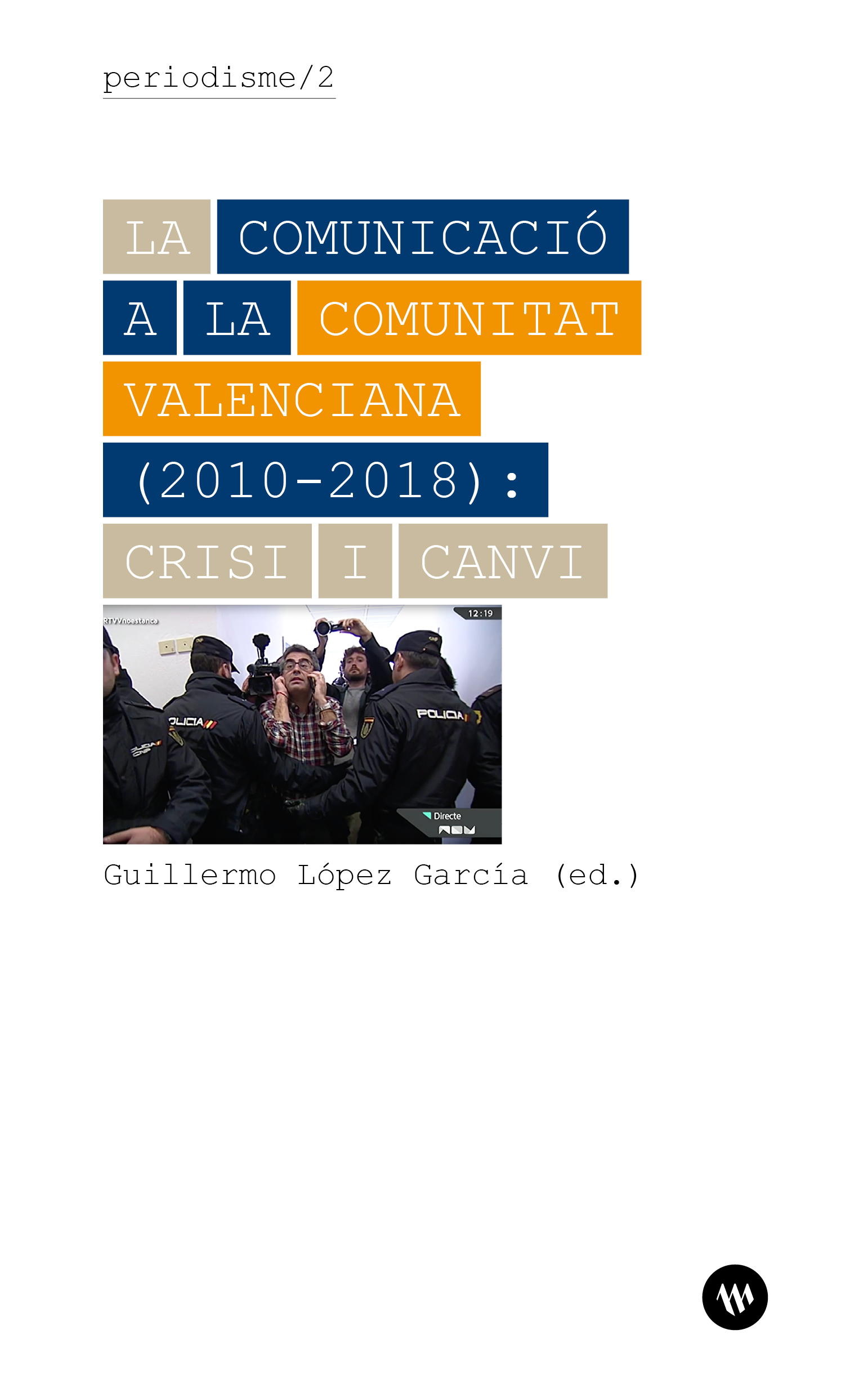
(2019). LlibreLa comunicació a la Comunitat Valenciana (2010-2018): crisi i canvi. No.Págines 253-276
This study shows what the Valencian communication sector is like, what its strengths and weaknesses are, how it has evolved in recent years and how it is likely to evolve in the future. It is a continuation of the work "The Valencian communication ecosystem" (López García, 2010), published at a very different time to the present, when the consequences of the economic crisis and technological reconversion were already visible, and when the influence of new communication technologies, although very important, had not yet affected the entire sector to the degree of depth and with the omnipresence that can be seen today. The figures now show a certain growth in the number of media operating in...
This study shows what the Valencian communication sector is like, what its strengths and weaknesses are, how it has evolved in recent years and how it is likely to evolve in the future. It is a continuation of the work "The Valencian communication ecosystem" (López García, 2010), published at a very different time to the present, when the consequences of the economic crisis and technological reconversion were already visible, and when the influence of new communication technologies, although very important, had not yet affected the entire sector to the degree of depth and with the omnipresence that can be seen today. The figures now show a certain growth in the number of media operating in the Valencian territory, a rise which is based above all on the increase in radio stations and the maintenance of print media, despite the fact that there is a greater presence of exclusively digital media which are gradually taking over the space of print media.
Read more Hide ISBN: 9788478228041 -

Orange economy and the cultural and creative sectors (CCS) in the Valencian Community: situation, potential and definition of proposals for action to promote them.
Pau Rausell-Köster, Rafael Boix-Domènech, Raúl Abeledo-Sanchis, Maria Sendra-Moreno & Sendy Ghirardi
(2019). InformesConselleria d'Hisenda i Model Econòmic.
This report aims to review the situation of the so-called "Orange Economy" in the Valencian Community in order to make an evidence-based diagnosis that will lead to some proposals and recommendations from the perspective of the desire to transform the Valencian production model. The concept of Orange Economy corresponds to the economic activities of the cultural and creative sectors (CCS), which we will define in the first section based on the corresponding codes of the CNAE 2009. The review begins with a conceptual and theoretical approach to the relationships between the cultural and creative sectors and economic dynamics in general, both from a macro perspective (between the evolution of...
This report aims to review the situation of the so-called "Orange Economy" in the Valencian Community in order to make an evidence-based diagnosis that will lead to some proposals and recommendations from the perspective of the desire to transform the Valencian production model. The concept of Orange Economy corresponds to the economic activities of the cultural and creative sectors (CCS), which we will define in the first section based on the corresponding codes of the CNAE 2009. The review begins with a conceptual and theoretical approach to the relationships between the cultural and creative sectors and economic dynamics in general, both from a macro perspective (between the evolution of aggregate variables such as productivity, growth, per capita income and the activity of the SCC) and from a micro perspective (the role of the cultural and creative sectors in the transformation of labour relations, the capacity for innovation of individuals in business organisations or the transformation of corporate culture). This is followed by a description of the Valencian approach, compared to the realities of the rest of Spain and Europe. This is followed by a description of the sectoral and territorial dynamics of the different sectors of the Orange Economy, based on the elaboration of a micro-data base, which allows us to identify and geolocate variables such as companies, employees and turnover of the activities of the cultural and creative sectors, by different territorial units. Subsequently, an analysis is made of the territorial dynamics based on municipal units and local work systems. The following section corresponds to the development of different estimation methodologies to unveil the relationships between CCS and local income, in order to arrive at the results of the analysis of the considerations derived from the interaction with 27 experts in the sector. With all this diagnosis, a series of conclusions are drawn, to be followed by a set of recommendations in terms of public policies, with the aim of stimulating the so-called Orange Economy.
Read more Hide -

How culture feeds industrial innovation? A strategic evaluation from Creativewear project
Raúl Abeledo Sanchis, Óscar M. Blanco Sierra, Maria Sendra Moreno, Guillem Bacete Armengot
(2019). LlibreHow culture feeds industrial innovation? A strategic evaluation from Creativewear project.
How can Cultural and Creative Industries (CCIs) provide innovative solutions to the Textile and Clothing (T&C) industry? CreativeWear is an Interreg MED project (2017-2019) aimed at revitalising the crisis-ridden Textile and Clothing (T&C) industry by tapping into the regional creative potentialities through the involvement of creative communities, the enhancement of cultural heritage and the adoption of customer-oriented value chains. This book evaluates the activities and outcomes of CreativeWear project and its capacity to introduce changes into creative and textile organisations, the regional innovation ecosystem and the transnational cooperation strategies. In this sense, we try to...
How can Cultural and Creative Industries (CCIs) provide innovative solutions to the Textile and Clothing (T&C) industry? CreativeWear is an Interreg MED project (2017-2019) aimed at revitalising the crisis-ridden Textile and Clothing (T&C) industry by tapping into the regional creative potentialities through the involvement of creative communities, the enhancement of cultural heritage and the adoption of customer-oriented value chains. This book evaluates the activities and outcomes of CreativeWear project and its capacity to introduce changes into creative and textile organisations, the regional innovation ecosystem and the transnational cooperation strategies. In this sense, we try to answer to the following questions: What are the key market evidences discovered during the CreativeWear project? Have the expectations and goals of the project been met? What unexpected issues have arisen? What lessons and recommendations do they provide for policy-makers and regional specialization strategies?
Read more Hide ISBN: 978-84-09-12324-7 -
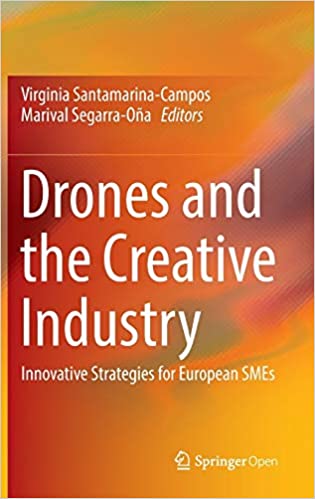
The Economic Impact of the Creative Industry in the European Union
Boix-Domenech, Rafael Rausell-Köster, Pau
(2018). LlibreDrones and the Creative Industry,.
Este trabajo analiza el impacto económico de la industria creativa en la Unión Europea. El trabajo cuantifica los impactos directos e indirectos de la industria creativa, concluyendo que no sólo tienen un impacto directo en el empleo y la producción, sino que también contribuyen al progreso tecnológico y al desarrollo a largo plazo de la Unión Europea. La mayor parte de esta contribución se debe a las industrias creativas de servicios, mientras que la contribución directa de las industrias creativas manufactureras es menor.
ISBN: 978-3319952604 -
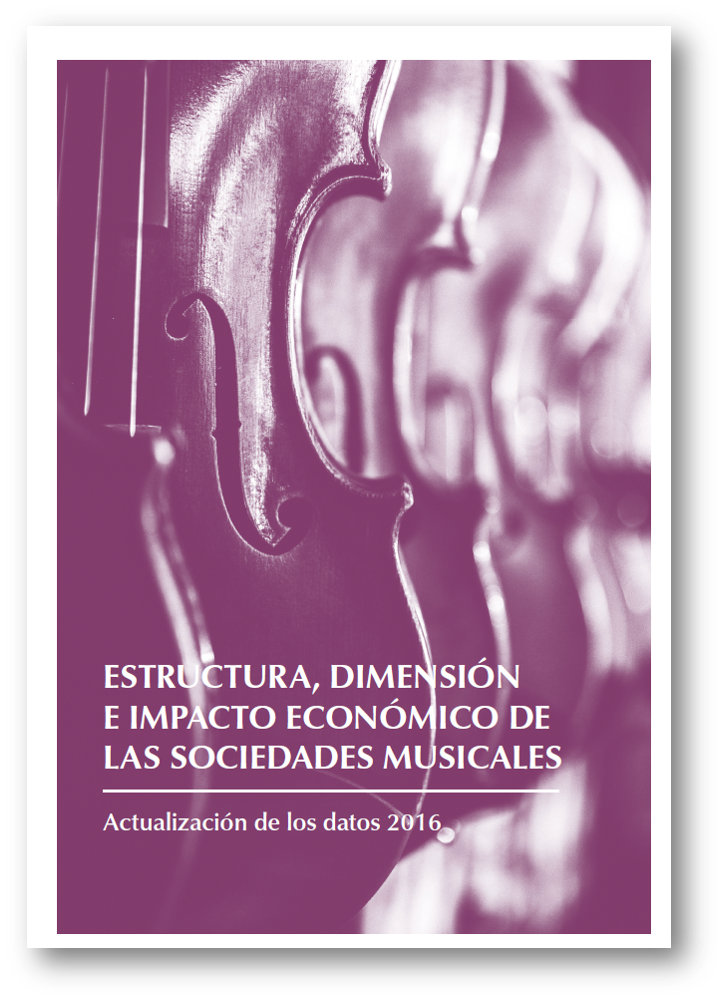
ESTRUCTURA, DIMENSIÓN E IMPACTO ECONÓMICO DE LAS SOCIEDADES MUSICALES. Actualización de los datos 2016.
Rausell, Pau Cervera, Omar Castaño, Juan Vicente Coll, Vicente Montagut, Julio Sendra, Maria
Valencoa: Econcult , 2018. Informes35 páginas
-
Economic and social impact of the musical societies in the Requena-Utiel plateau.
Julio Montagut Marqués, Pau Rausell Köster
(2018). ArticleOleana: Cuadernos de Cultura Comarcal. No.Nº 32, 2018
Musical societies are one of the most important signs of Valencian identity, due to the deep roots they have in our Autonomous Region, which is why they were declared "of local relevance" in 2011, and since then work is being done to have them declared "of cultural interest". The SSMM bring together a series of particularities, properties and concepts that make them unique and that include actions such as associationism, voluntary work, musical production and training, recreational activities, etc., causing with all the output generated an economic and social impact on the population and the region. In this paper, we would like to focus on some of the consequences of the SSMM in the Meseta...
Musical societies are one of the most important signs of Valencian identity, due to the deep roots they have in our Autonomous Region, which is why they were declared "of local relevance" in 2011, and since then work is being done to have them declared "of cultural interest". The SSMM bring together a series of particularities, properties and concepts that make them unique and that include actions such as associationism, voluntary work, musical production and training, recreational activities, etc., causing with all the output generated an economic and social impact on the population and the region. In this paper, we would like to focus on some of the consequences of the SSMM in the Meseta de Requena-Utiel region.
Read more Hide ISSN: 1139-4943 -
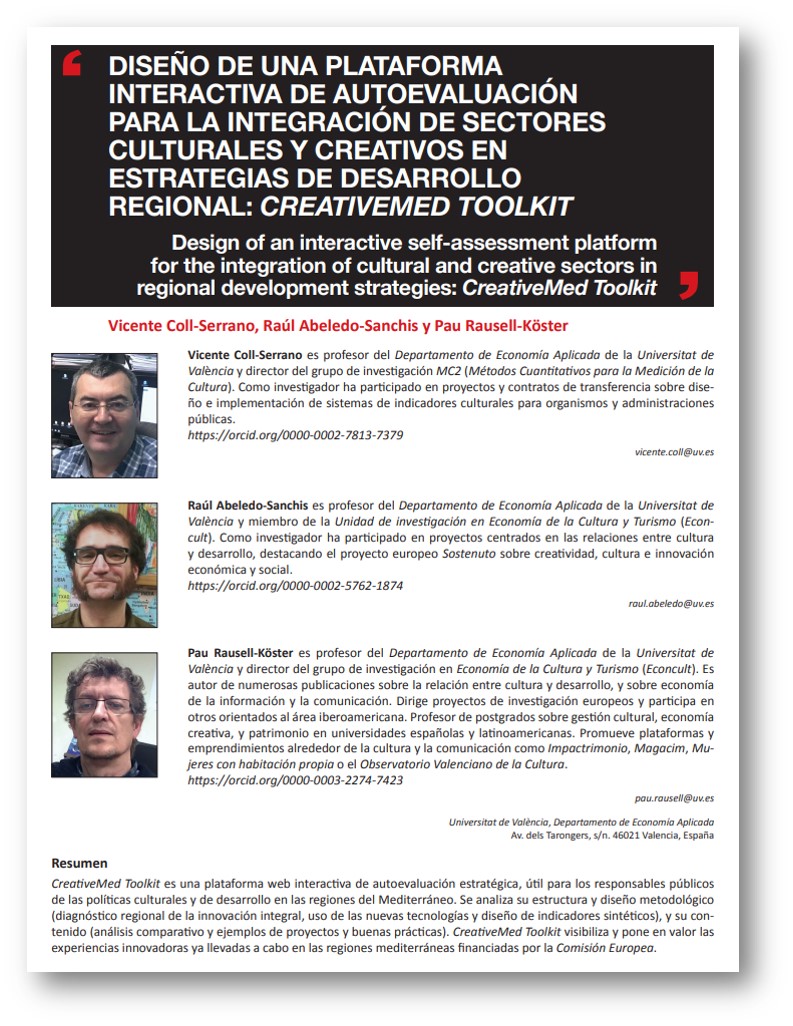
Design of an interactive self-assessment platform for the integration of cultural and creative sectors in regional development strategies: CreativeMed Toolkit.
Coll-Serrano, Vicente Abeledo-Sanchis, Raul Rausell-Köster, Pau
(2018). ArticleCreativeMed Toolkit is a useful, strategic, self-assessment tool for policymakers responsible for cultural and development policies in the Mediterranean regions. Its structure, methodological design (regional diagnosis of integral innovation, use of new technologies, and design of synthetic indicators), and content are discussed. A comparative analysis and examples of projects and good practices are presented. CreativeMed Toolkit reveals and highlights innovative experiences that have already been developed in the Mediterranean regions and funded by the European Commission.
Vol. 27, no. 2, Mar.-Apr. 2018, pp. 395
 Research Unit in Cultural Economics and Tourism (ECONCULT)


© 2026 UV. - Avinguda dels Tarongers, s/n. 46022 València. Phone number: (+34) 963 828 645