


03/06/26
Book presentation: "De la pesta a la grip: la ciutat assetjada"
La gestió municipal de les epidèmies a la Mediterrània, 1348-1918
Eds. Carmel Ferragud - Alfons Zarzoso
https://monografias.editorial.upv.es/index.php/ehl/issue/view/178
June 11th 2026 – 5pm
Saló d'actes. Institut Interuniversitari López Piñero (Palau de Cerveró)
Zoom session: https://uv-es.zoom.us/j/62249733825
Presented by:
- Carmel Ferragud (Universitat de València)
- Alfons Zarzoso (Institució Milà i Fontanals de Investigación en Humanitdades – CSIC)
- Albert Reixach (Universitat de Lleida)
- Pere Salas Vives (Universitat de les Illes Balears)
The book offers a long-term perspective on the impact of epidemics on Mediterranean societies, particularly in the territories of the former Crown of Aragon, from the 15th to the 20th century, emphasising the central role of local authorities. Epidemics are presented as global crises that affect all aspects of social life and reveal both the fragilities and the capacities of collective organisation. The book argues that, in the absence of strong states, local government became the key arena for political, health and social responses, with measures that evolved but maintained a remarkable continuity over the centuries. Through local case studies, it demonstrates how medicine, religion, the economy and municipal power interacted in the management of contagion. The volume covers the great medieval plagues, the plague of 1647–48 and contemporary epidemics such as cholera and the 1918 influenza pandemic, drawing on a wide range of sources. Finally, it highlights the value of a local perspective and dialogue with international historiography to better understand the past and reflect on present and future health challenges.

18/05/26
Library closed in the afternoon of 21 may
The Researchers' Room of the Biblioteca Historicomèdica will be closed on the afternoon of next 21 of May (from 18:00h on). You will have the Study Room on the first floor at your disposal.
If you need to return your book, you can leave it at the concierge desk on the ground floor.
We apologise for any inconvenience

30/03/26
Easter Timetable
The Biblioteca Historicomèdica (Historical Medical Library) will be closed during Holy Week and Easter, between April 3 and April 13, both days included.
We apologize for any inconvenience

27/02/26
Library closed during Fallas
During Fallas the Biblioteca Historicomèdica will remain closed from 14th to 22nd March.
We apologise for the inconveniences.

18/02/26
Library closed in the afternoons of 24 to 27 of February
The Researchers' Room of the Biblioteca Historicomèdica will be closed on the afternoons of next 24 to 27 of February, both included (from 14:00h on). You will have the Study Room on the first floor at your disposal.
If you need to return your book, you can leave it at the concierge desk on the ground floor.
We apologise for any inconvenience
08/01/26
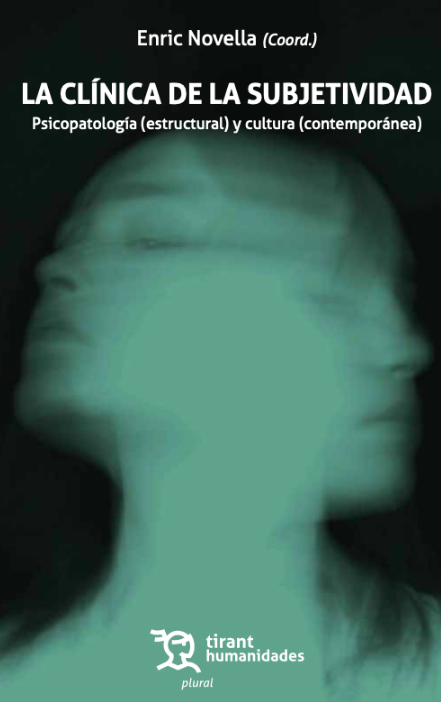
Publication of the collective volume ‘La clínica de la subjetividad’ (The Clinic of Subjectivity), coordinated by Enric Novella
Enric Novella, professor of history of science at the University of Valencia and researcher at the IILP, has coordinated the publication of the collective volume La clínica de la subjetividad. Psychopathology (structural) and culture (contemporary), published at the end of 2025 by Tirant Humanities. Attached is the text of your editorial presentation.
Starting from the widely held view that psychiatry and clinical psychology face a significant crisis of legitimacy stemming from their insistence on tackling the study of subjectivity with the methods and assumptions of the natural sciences, this book examines from a multidisciplinary perspective (historical, clinical, anthropological and literary) the origins, foundations and cultural embedding of the holistic, reconstructive and hermeneutic approach to the experience of madness and psychic suffering advocated by structural psychopathology and, more specifically, by phenomenological-anthropological psychopathology. In this way, its successive chapters address the historical trajectory, the epistemological demands and the current relevance of the (structural) psychopathology project in the context of the prevailing dissatisfaction with the impoverishment (or the very abolition) of psychopathological activity, of the enormous projection of psi knowledge and practices into contemporary societies and of the growing historiographical and cultural interest in the experience of otherness, autobiographical narratives and testimonial literature.


















- Biblioteca d'Educació María Moliner
- Biblioteca d'Humanitats Joan Reglà
- Biblioteca de Ciències Eduard Boscà
- Biblioteca de Ciències de la Salut Pelegrí Casanova
- Biblioteca de Ciències Socials Gregori Maians
- Biblioteca Psicologia i Esport Joan Lluís Vives
- Biblioteca del Jardí Botànic
- Biblioteca Dipòsit
- Biblioteca dipositària de l'ONU (ONUBIB)
- Biblioteca Històrica
- Biblioteca Historicomèdica Vicent Peset Llorca
- Cartoteca
- Biblioteca Campus d'Ontinyent
- Arxiu Històric
- Arxiu Intermedi
- Seccions Centrals
© 2026 UV. - C/ Universitat 2 46003 València. Phones